US court sides with scientists in Johnson & Johnson defamation case over talc-cancer research
A Virginia federal judge ruled that three researchers did not defame Johnson & Johnson in publishing a 2020 study linking cosmetic talc products to mesothelioma, rejecting the company's claims of malice despite data errors in the research.
Three scientists beat J&J lawsuit over research linking talc to cancer
A federal judge in Virginia has dismissed Johnson & Johnson's defamation lawsuit against three medical researchers who published findings connecting cosmetic talcum powder to mesothelioma, a rare and deadly form of cancer.
US District Judge Jamar K. Walker ruled on Wednesday that doctors Theresa Emory, John Maddox and Richard Kradin did not act with malice when they published their 2020 scientific article, which examined 75 mesothelioma patients whose only known asbestos exposure came from cosmetic talc products such as baby powder.
The ruling represents a significant victory for scientific research in an ongoing legal battle that has engulfed Johnson & Johnson for years. The company faces more than 68,000 federal lawsuits related to its talc products, consolidated in what has become the largest active multidistrict litigation in the United States.
Errors found but no malice proven
While the litigation revealed some data errors in the 2020 study, Judge Walker determined there was no evidence suggesting the mistakes were obvious or deliberately ignored during the research process. The three defendants, who run pathology practices and have testified as expert witnesses in asbestos litigation, maintained the integrity of their scientific work throughout the proceedings.
The study in question analysed tissue samples from 11 of the 75 patients, finding the presence of anthophyllite and tremolite asbestos in all examined cases. These are types of asbestos commonly found in talc deposits, as both minerals naturally occur in the same rock formations and can be inseparable during mining.
Johnson & Johnson challenged the study after discovering that eight of the 75 patients had also appeared in a 2019 study by another researcher, despite the 2020 paper describing its participants as an entirely new group. The court ruling acknowledged that researchers were comparing anonymised data sets and information from lawyers, which sometimes made duplicate patient identification difficult.
Company vows to continue legal fight
Johnson & Johnson announced it would appeal the decision and seek a trial on its claims that the researchers made false statements about cosmetic talc and asbestos exposure. The company has also filed a separate lawsuit against the researcher who published the 2019 study.
Liz Lockwood, attorney for the three researchers, said the ruling vindicated her clients and strongly affirmed the importance of protecting scientific speech.
The defamation case emerged as part of Johnson & Johnson's broader legal strategy following three unsuccessful attempts to resolve talc litigation through bankruptcy reorganizations using the controversial 'Texas Two-Step' manoeuvre. Courts rejected all three bankruptcy filings between 2021 and 2025, with the most recent rejection coming in April 2025.
Product discontinuation and massive settlement
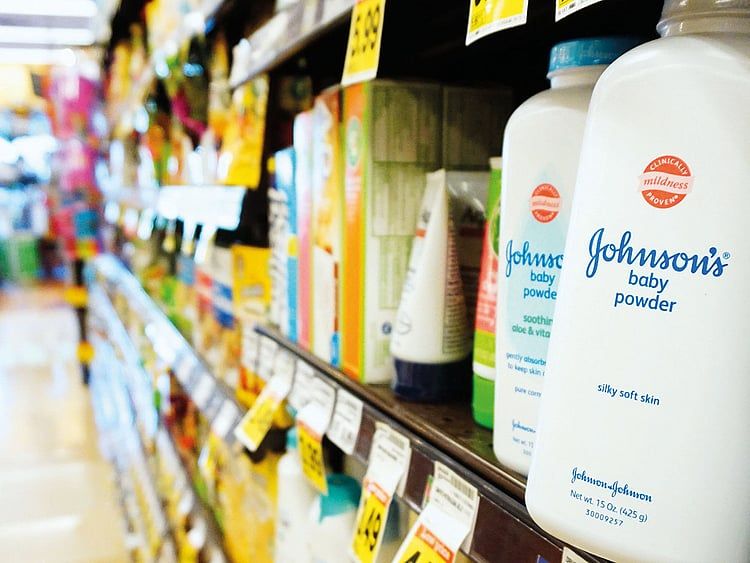
Johnson & Johnson discontinued sales of talc-based baby powder in the United States and Canada in 2020, replacing it with cornstarch-based products. The company extended this discontinuation globally in 2023.
Before filing the defamation lawsuit against the researchers, Johnson & Johnson agreed to settle related talc cases for at least $5.5 billion. However, juries have continued to award substantial damages to mesothelioma plaintiffs, including a record $1.5 billion verdict in Maryland in December 2025.
The issue of asbestos contamination in talc products has drawn regulatory attention. In 2019, the US Food and Drug Administration tested 52 talc-containing cosmetic products and found asbestos in nine of them, prompting recalls. That same year, Johnson & Johnson voluntarily recalled 33,000 bottles of Johnson's Baby Powder after the FDA detected small amounts of asbestos in a tested sample.
The FDA proposed standardized asbestos testing requirements for talc-containing cosmetics in December 2024 but withdrew the proposal in November 2025, stating it would develop a more comprehensive approach to the issue.
The Virginia court ruling adds another chapter to the decade-long legal saga surrounding Johnson & Johnson's talc products, while underscoring the tension between corporate interests and scientific research on matters of public health.