Meta agrees to historic $17 billion settlement over teen social media addiction claims
Meta will pay $17 billion and implement sweeping child-safety reforms to settle claims by 47 states and U.S. territories that its platforms deliberately addicted young users and harmed their mental health. The agreement marks the largest state consumer protection settlement outside the Big Tobacco cases.

Meta reaches $17 billion settlement with states in landmark trial over teen social media addiction
Meta has agreed to pay $17 billion and adopt comprehensive child-safety measures across Facebook and Instagram to settle a landmark lawsuit filed by 47 states, the District of Columbia, and U.S. territories over allegations that the company deliberately designed its platforms to addict teenagers and damage their mental health, state attorneys general announced Wednesday.
The settlement, which represents the largest state consumer protection agreement in U.S. history outside the Big Tobacco settlements of the 1990s, resolves claims that Meta knowingly deployed addictive features while concealing evidence of harm to young users. The payout is more than 12 times larger than the previous record tech settlement of $1.4 billion.
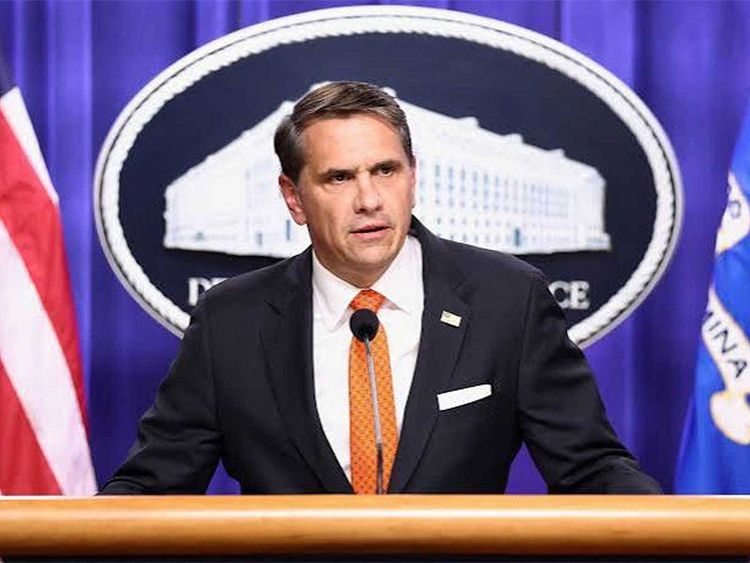
Virginia Attorney General Jay Jones said Meta
intentionally deceived the public about the addictive and harmful design features that have wreaked havoc on youth mental health.He added that the settlement
will put an end to these dangerous practices and deliver meaningful relief that will protect children from online harm.
Financial impact and distribution
The $17 billion will be distributed over 10 years to participating jurisdictions, including Puerto Rico, American Samoa, and the Northern Mariana Islands. California expects to receive at least $1.5 billion, New Jersey at least $525 million, Massachusetts at least $366 million, and Virginia $353 million. The settlement represents approximately 8.5% of Meta's 2025 revenue of $201 billion.
The agreement cuts short an ongoing federal trial in Oakland, California, where CEO Mark Zuckerberg had been expected to testify. Instagram head Adam Mosseri had begun his testimony late Tuesday, defending Meta's safety record before the settlement was reached.
Evidence of harm
The lawsuit was built on evidence including internal Meta research published by The Wall Street Journal in September 2021. That research found that 32% of teen girls who felt bad about their bodies said Instagram made them feel worse, while 13.5% of teen girls reported that Instagram worsened thoughts of suicide. The case also cited Meta's violation of the Children's Online Privacy Protection Act, a federal law since 2000 that requires parental consent before collecting data from children under 13.
More than 40% of Instagram's users are 22 years old and younger, with approximately 22 million teens logging onto the platform daily in the U.S., compared with only 5 million teens using Facebook each day, according to congressional testimony based on Meta's internal data.
Mandated safety features
Under the settlement, Meta must implement a series of protective measures including a daily time limit for young users, elimination of push notifications during weekday school hours, and robust age-verification systems. The company will also introduce age-appropriate content controls to prevent exposure to material related to bullying, eating disorders, and self-harm, along with enhanced parental controls and limits on social comparison features such as like counts.
An independent auditor will assess Meta's implementation and effectiveness of these safety measures. The company said in a blog post that it is
building on our longstanding efforts to empower parents and support teens,calling the changes
a new industry standard.
Conditional payments tied to rivals
Notably, 30% of the settlement amount—approximately $5.3 billion—will only be released to states if competitors TikTok and YouTube adopt similar safety features, including a one-hour daily time limit, nighttime usage blocks, and age-assurance measures, and if the two companies collectively pay an equivalent amount. Meta urged both platforms to implement comparable protections, though neither Google, which owns YouTube, nor TikTok immediately responded to requests for comment.
During the trial, Meta denied wrongdoing and argued that social media addiction is not recognized as a psychiatric condition. The company also contended it was being unfairly singled out among competing platforms.
Broader legal context
The settlement follows a March 2026 Los Angeles jury verdict that found Meta and YouTube negligent for designing platforms to be addictive to children, awarding $6 million in the first verdict of its kind. Earlier in August, a New Mexico judge ordered Meta to pay $567 million in a separate public nuisance case centered on child-safety allegations. Three states—Florida, New Mexico, and Texas—are not part of the current settlement.
The federal lawsuit resulted from an investigation led by a bipartisan coalition of eight attorneys general from California, Florida, Kentucky, Massachusetts, Nebraska, New Jersey, Tennessee, and Vermont. The coalition expanded to include 29 states that filed suit in 2023, with an additional nine attorneys general filing cases in their respective states.
California Attorney General Rob Bonta emphasized that the agreement would fund youth online safety initiatives across participating jurisdictions. Arturo Béjar, a former Meta engineering director who testified last week, said the company consistently prioritized profits over safety, focusing on usage metrics
even if it was detrimental to their mental well-being.