Federal court revokes US citizenship of Indian-born man who concealed rape conviction
A federal court has stripped Gurmeet Singh of his US citizenship after he concealed a rape and kidnapping conviction during the naturalization process, marking part of a broader Justice Department crackdown on fraudulent citizenship applications.
Federal court revokes US citizenship of Indian-born man who concealed rape conviction
A federal court in New York has revoked the United States citizenship of Gurmeet Singh, an Indian-born man who concealed a rape and kidnapping conviction while obtaining naturalization, the Justice Department announced Monday.
The US District Court for the Eastern District of New York issued its judgment on August 26, requiring Singh to surrender his citizenship after determining it was unlawfully obtained through deliberate concealment of serious criminal acts.
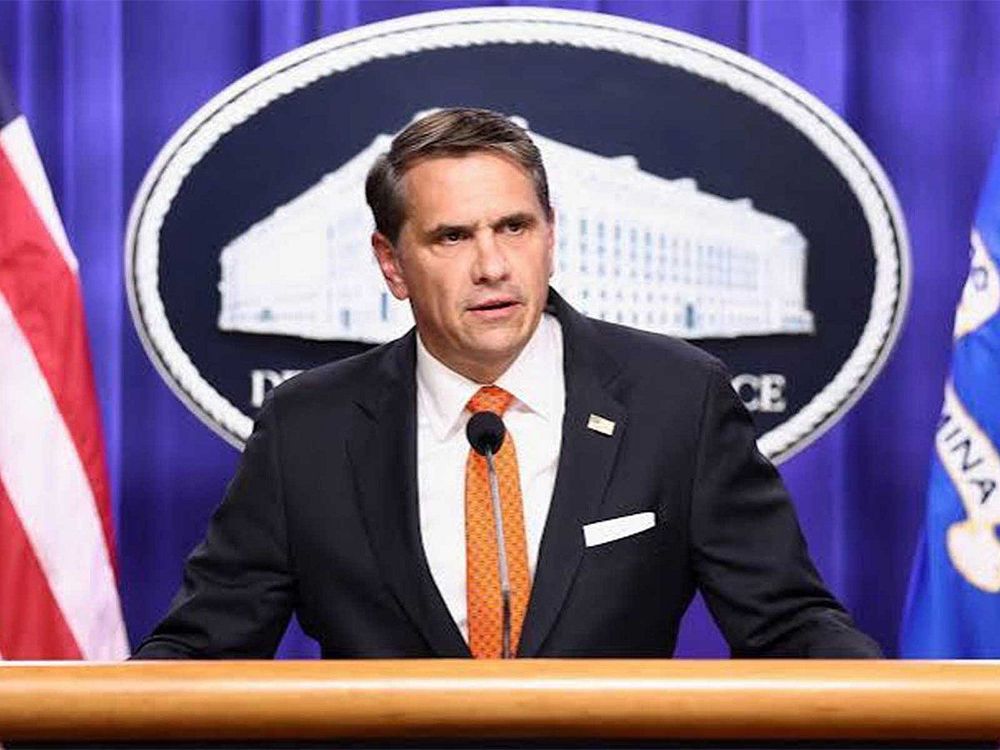
US Attorney General Todd Blanche, who was confirmed to the position in August 2026 by a narrow 50-49 Senate vote, emphasized the administration's commitment to citizenship integrity.
"American citizenship is not a shield for criminals. Fraudulently obtained citizenship will not protect criminals from justice."
The case represents part of an unprecedented enforcement effort. Since January 20, 2025, the Justice Department has filed 123 civil denaturalization complaints, the most in recorded history, as the administration has prioritized investigations into naturalized citizens charged with or convicted of serious crimes.
Timeline of events
Singh entered the United States in February 1992 as a visitor and remained without authorization for several years before becoming a permanent resident in June 2000 through a family-based immigrant visa petition.
In May 2011, weeks before filing his naturalization application, Singh committed a violent crime while working as a taxicab driver. According to court documents, he drove a female passenger who had fallen asleep to an isolated location. When she awoke, Singh was on top of her with a knife at her throat. He threatened, bound, gagged, and blindfolded her before removing her clothes and raping her. The victim escaped at dawn and sought help from a bystander.
Singh concealed these acts throughout his naturalization proceedings and became a US citizen on October 19, 2011. He was subsequently convicted in New York of first-degree rape and second-degree kidnapping as a sexually motivated felony, receiving a 20-year prison sentence.
Legal framework for denaturalization
Under the Immigration and Nationality Act, a naturalized citizen's status may be revoked if citizenship was obtained through concealment of a material fact or willful misrepresentation. The legal standard for civil denaturalization proceedings requires clear, convincing, and unequivocal evidence, and unlike criminal proceedings, carries no statute of limitations.
The 2017 Supreme Court decision in Maslenjak v. United States established that only illegal acts that played a role in acquiring citizenship can lead to denaturalization, ruling that small omissions and minor lies that did not influence the citizenship award do not necessitate revocation. Singh's case involved concealment of serious felonies committed immediately before his naturalization application.
Following denaturalization, individuals may face deportation if they lack lawful immigration status and may serve additional jail time if citizenship was revoked due to criminal convictions.
Broader enforcement context
The Justice Department filed its denaturalization complaint against Singh on February 2, with the August 26 order concluding the case. The action follows a June 2025 policy directive prioritizing denaturalization investigations involving naturalized citizens charged with or convicted of specific crime categories.
In July 2026, the department announced denaturalization actions against 10 naturalized individuals accused of serious crimes including child sexual abuse, healthcare and wire fraud, immigration fraud, and drug conspiracy.
Assistant Attorney General Brett A. Shumate of the Civil Division stated,
"Singh unlawfully obtained the privileges of US citizenship by concealing horrible criminal acts. The Department will continue to protect the integrity of the citizenship process and hold accountable those who defraud our immigration system."
US Attorney Joseph Nocella Jr for the Eastern District of New York added that the court's judgment
"sends a strong message to those who obtain citizenship through deceit, and demonstrates the Administration's resolve to pursue denaturalization proceedings in all cases permitted by law and supported by the evidence."
The case was prosecuted by Trial Attorney Christopher Lyerla of the Civil Division's Office of Immigration Litigation and Assistant US Attorney Layaliza Soloveichik for the Eastern District of New York.
Historical background
Denaturalization has existed as a legal mechanism since the Naturalization Act of 1906, originally established to deter fraud during the naturalization process. The Immigration and Nationality Act of 1952 refined the standard from fraud to procurement by concealment of material facts or willful misrepresentation. A 2016 Department of Homeland Security Inspector General report identified systematic issues in the naturalization system, finding at least 858 cases where individuals obtained citizenship using alternate identities due to non-digitized fingerprint records, ultimately resulting in over 2,500 cases flagged for review.