Guantánamo judge sets June 2028 trial date for 9/11 mastermind Khalid Sheikh Mohammed
Military Judge Lt. Col. Michael Schrama scheduled the trial of alleged 9/11 mastermind Khalid Sheikh Mohammed to begin June 5, 2028, nearly 27 years after the attacks that killed 2,977 people from more than 90 countries.
Guantánamo judge sets June 2028 trial date for 9/11 mastermind Khalid Sheikh Mohammed
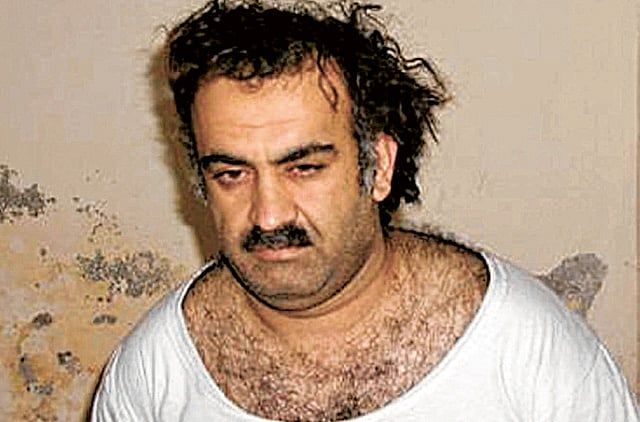
A military judge has scheduled the trial of Khalid Sheikh Mohammed, the alleged mastermind behind the Sept. 11, 2001 terrorist attacks, to begin on June 5, 2028 at the U.S. naval base in Guantánamo Bay, Cuba. The date falls nearly 27 years after the attacks that claimed 2,977 lives, including 2,753 at the World Trade Center, 184 at the Pentagon and 40 in Shanksville, Pennsylvania.
Military Judge Lt. Col. Michael Schrama issued the ruling on Wednesday, Aug. 26, 2026, rejecting prosecutors' request for a January 2027 start date. The decision marks the latest development in one of the most protracted terrorism prosecutions in U.S. history, though significant pretrial disputes over evidence and interrogation practices could still prevent the trial from proceeding as scheduled.
The architect of September 11
Mohammed, commonly referred to as KSM, is accused by U.S. authorities of developing the concept of using hijacked commercial aircraft as weapons and working with al-Qaeda leader Osama bin Laden to execute the plan. A 2011 Justice Department indictment alleged that Mohammed proposed the aircraft-as-missiles strategy to bin Laden in 1999.
The Sept. 11 attacks involved four hijacked airliners. Two struck New York's World Trade Center towers, one hit the Pentagon and a fourth crashed in a Pennsylvania field after passengers resisted the hijackers. Citizens from more than 90 countries perished in the attacks, underscoring the international scope of the tragedy.
Capture and detention
Pakistani and U.S. intelligence officers captured Mohammed in Rawalpindi, Pakistan on March 1, 2003. He was subsequently transferred into the CIA's clandestine detention network, where he spent approximately three and a half years in secret facilities outside the United States.
During this period, Mohammed was subjected to what the CIA termed enhanced interrogation techniques. Between 2002 and 2009, the CIA's detention program held 119 detainees, with at least 39 subjected to techniques that human rights organizations and international law experts characterize as torture. Mohammed himself was waterboarded 183 times and subjected to prolonged sleep deprivation. These interrogation methods have become central to ongoing legal battles over whether statements obtained from Mohammed can be admitted as evidence.
In September 2006, then-President George W. Bush announced Mohammed's transfer from CIA custody to Defense Department control at Guantánamo Bay. The facility, which opened in January 2002, has held approximately 780 detainees from 48 countries over its history. At its peak in 2003, nearly 680 prisoners were detained there. As of January 2025, only 15 detainees remain.
Two decades of legal delays
The prosecution has encountered repeated obstacles since Mohammed's transfer to Guantánamo. Disputes over the military commission system itself, classified evidence, defense access, judicial changes and allegations that CIA torture contaminated confessions have stalled proceedings for years.
Military prosecutors formally charged Mohammed and four co-conspirators in 2008. The Obama administration attempted to move the case to federal court in New York in 2009, but congressional restrictions prevented the transfer. The case returned to the military commission system in 2011, and the defendants were arraigned at Guantánamo in May 2012.
The legal framework governing these proceedings has itself been subject to challenge. In the landmark 2006 case Hamdan v. Rumsfeld, the Supreme Court ruled that the original military commission system established by President Bush was unlawful because Congress had not authorized it. This led to passage of the Military Commissions Act of 2006, which was subsequently revised in 2009. Under this framework, military commissions may admit hearsay evidence and evidence obtained through coercion in certain circumstances, rules that differ substantially from civilian courts.
The military commission system has produced limited results. Since 2002, only eight detainees have been convicted through these tribunals, with three convictions completely overturned and one partially reversed. By comparison, U.S. federal courts have secured more than 660 terrorism-related convictions since Sept. 11.
In July 2024, Mohammed and two co-defendants agreed to plead guilty in exchange for life imprisonment rather than face potential death sentences. However, then-Defense Secretary Lloyd Austin attempted to revoke the plea agreement in August 2024, triggering additional litigation. A federal appeals court ruled in 2025 that Austin had authority to reject the agreement, returning the case to trial track.
Four defendants face capital charges
Mohammed will stand trial alongside three alleged co-conspirators: Walid bin Attash, Ammar al-Baluchi (Mohammed's nephew) and Mustafa al-Hawsawi. Prosecutors are seeking the death penalty for all four defendants.
A fifth original defendant, Ramzi bin al-Shibh, was found mentally incompetent to stand trial after developing severe psychological problems associated with his detention and alleged torture.
Ongoing challenges and costs
Defense attorneys continue to argue that years of CIA detention and coercive interrogation render key evidence unreliable or legally inadmissible. Mohammed's alleged confessions remain particularly contentious given the interrogation methods employed. Military commission filings as recently as July 2026 show active disputes over hearsay, classified material, discovery procedures and trial rules.
The Guantánamo facility itself represents an extraordinary financial burden. Recent estimates indicate the base costs U.S. taxpayers more than $540 million annually to operate, with per-detainee costs exceeding $13 million yearly compared to approximately $78,000 to house a prisoner in a federal maximum security facility.
If the trial proceeds on schedule, opening arguments would begin more than 26 years and eight months after the September 11 attacks. For victims' families, the date offers a potential path toward accountability. However, given the case's history of abandoned trial dates and legal reversals, uncertainty persists about whether proceedings will reach a verdict as planned.
The case has become emblematic of the legal complications arising from the post-Sept. 11 war on terror, involving secret CIA prisons, torture allegations, classified evidence, military tribunals and a defendant held in U.S. custody for more than two decades without final judgment.