Gaza beekeeper nurtures hope on rooftop amid war's devastation
Ibrahim Al Dabba tends his remaining beehives atop a destroyed building in Gaza City, maintaining one of the few surviving operations after war decimated the territory's beekeeping industry, which once produced up to 400 tons of honey annually.
On Gaza rooftop, beekeeper keeps hope alive one hive at a time
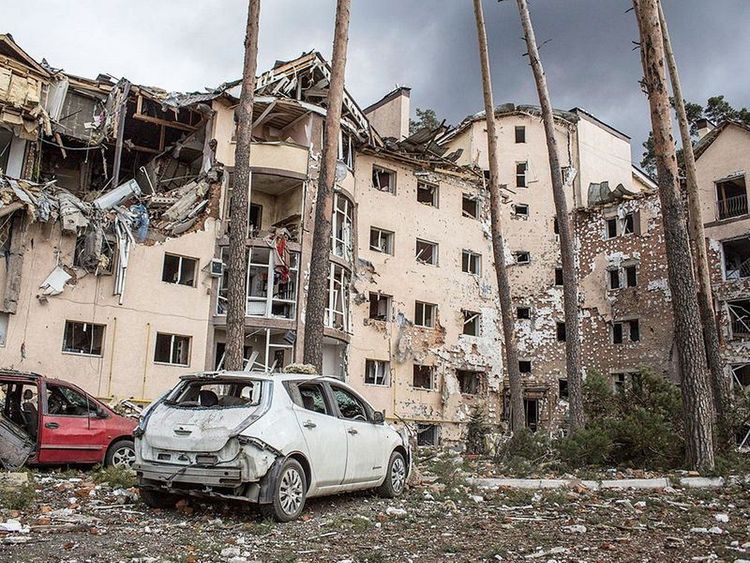
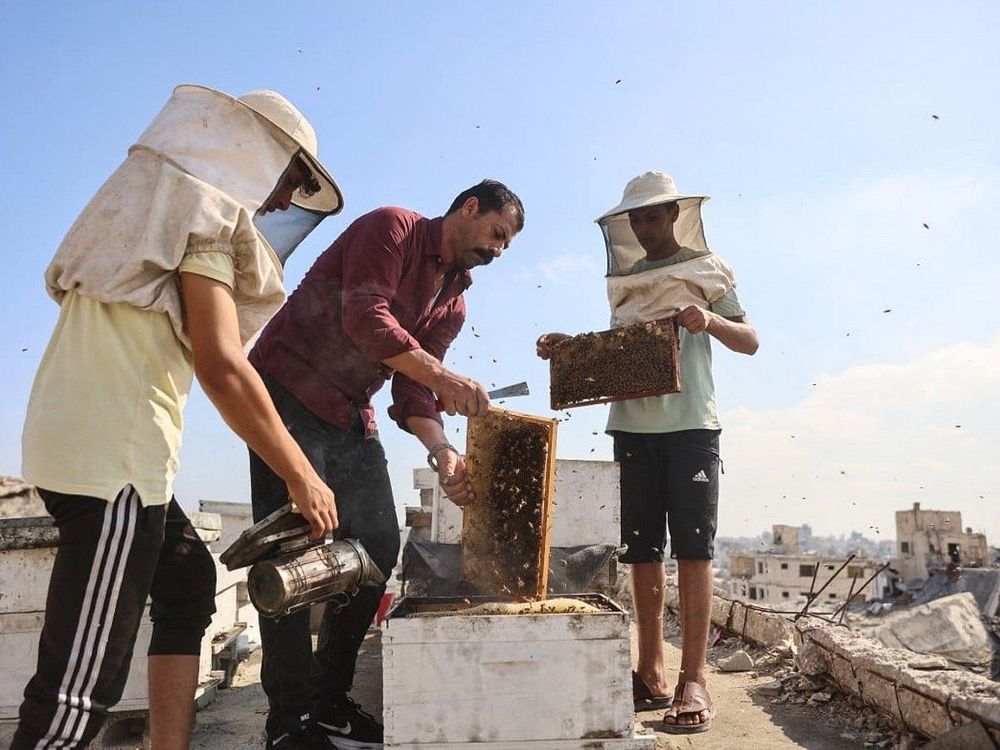
High above the shattered streets of Gaza City, Ibrahim Al Dabba moves carefully among his beehives, tending a fragile community that represents both survival and hope in a landscape transformed by nearly two years of conflict.
Al Dabba and his sons, wearing protective netted hats and carrying metal bee smokers, inspect the rows of hives perched on a rooftop in the Tel Al Hawa neighbourhood. As each honeycomb frame emerges, hundreds of bees drift lazily above the bombed-out urban terrain—an unlikely setting for an apiary, but one the veteran beekeeper had little choice but to adopt.
The war that erupted in October 2023 devastated Gaza's once-thriving beekeeping sector. Al Dabba, who heads the Beekeepers Cooperative in the Gaza Strip, said the industry has been almost completely destroyed.
Before the conflict, more than 40,000 beehives and 450 beekeepers operated across the territory, supplying local markets with 380 to 400 tons of honey annually and providing livelihoods for approximately 10,000 people. The sector supported around 1,000 families directly engaged in beekeeping.
The war came and destroyed the beekeeping sector by more than 95 percent because most beekeepers were near the border areas.
Al Dabba himself lost some 400 hives that he had maintained in agricultural lands east of Gaza City. The destruction has been catastrophic across the industry, with the Cooperative Society of Beekeepers estimating losses of approximately $39 million and nearly 30,000 beehives destroyed since October 2023.
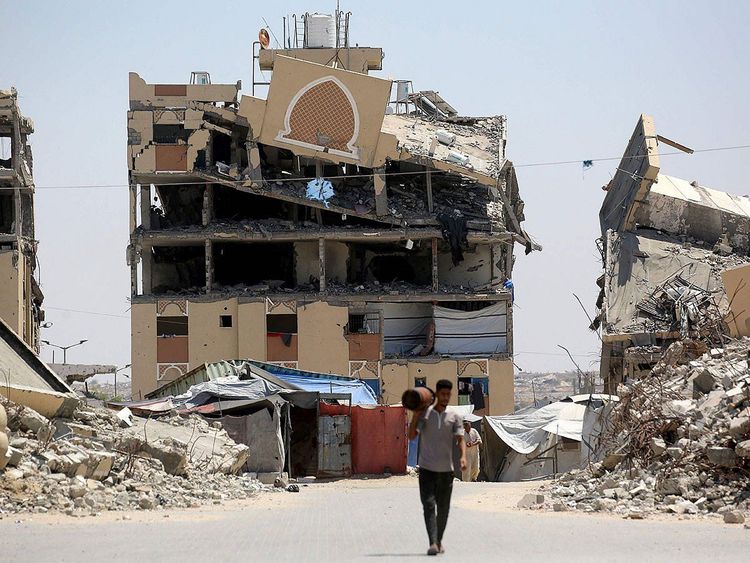
The devastation of Gaza's agricultural landscape has compounded the crisis for beekeepers. More than 85 percent of vegetation and forest grazing areas have been destroyed, leaving over 6,000 beekeeping sector workers without employment. Across the territory, 96 percent of cropland has been either damaged or rendered inaccessible, contributing to total agricultural sector losses of approximately $3.49 billion.
With no viable alternatives, Al Dabba relocated his remaining 35 hives to the residential rooftop, though he acknowledges the situation is far from ideal.
Bees are supposed to be in a safe, suitable agricultural area, but today the bees are suffering just as we are.
The destroyed agricultural lands where his hives once thrived now lie under Israeli military control, making any return impossible. Al Dabba cannot approach or enter the area.
Just as we are displaced in the streets, the bees are also displaced on the rooftops.
Supply shortages and soaring costs
The humanitarian crisis continues to grip Gaza, with approximately 1.9 million out of 2.1 million people remaining displaced as of mid-2026. Israel maintains tight control over all goods entering the territory, creating severe shortages of essential supplies.
For beekeepers attempting to rebuild, the scarcity has driven equipment costs to prohibitive levels. A box of wax sheets that cost around 30 shekels ($9.83) before the war now sells for between 1,200 and 1,500 shekels ($393-$491). Hive frames, once negligible in cost, now reach 15 to 20 shekels ($4.92-$6.55) each.
We lack essential supplies because importing beekeeping equipment from the other side is not permitted.
Al Dabba said he has approached external organisations and ministries in both Gaza and the occupied West Bank seeking assistance, but support remains limited.
Adapting and hoping
Despite the challenges of relocating his hives to an unfamiliar urban environment, Al Dabba has found encouragement in watching his bees adjust to their new reality.
The bees now come and go and feel settled. So we hope that hope, goodness and living in peace and security will come, like in other countries.
A ceasefire that took effect in October 2025 has reduced active fighting, though military operations and restrictions continue. For Al Dabba, the resilience of his bees offers a measure of optimism that recovery, however difficult, remains possible.