Airstrikes target Syrian military airport in first attack since Assad regime collapse
Four airstrikes hit Abu al-Zuhour military airport in Idlib on Tuesday, marking the first assault on the strategic facility since the fall of Bashar al-Assad's government in December 2024.
Airstrikes target Syrian military airport in first attack since Assad regime collapse
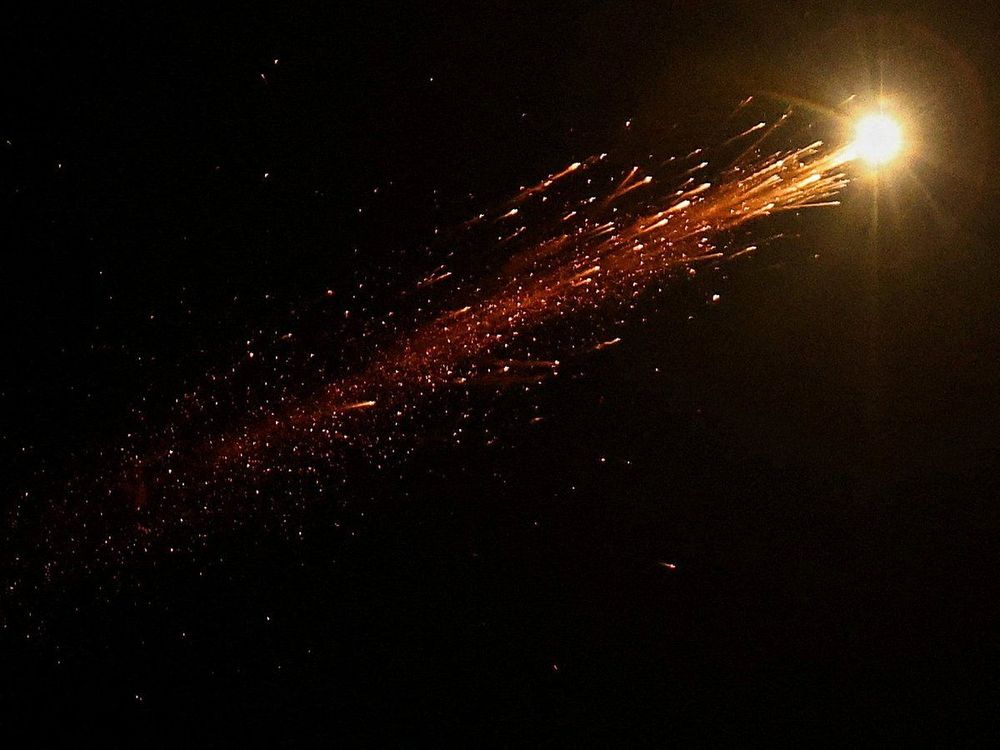
Four airstrikes struck the Abu al-Zuhour military airport in eastern Idlib province on Tuesday, marking the first reported attack on the strategic installation since the collapse of Bashar al-Assad's 53-year family dynasty in December 2024. The aircraft responsible for the strikes remained unidentified, and no group has claimed responsibility for the operation.
No immediate reports of casualties or damage assessments from the base have emerged. The identity of those behind the attack could not be confirmed at the time of reporting.
Rising tensions amid Israeli military activity
The assault occurs against a backdrop of heightened regional tensions and sustained Israeli military operations inside Syria. Following the overthrow of Assad's government in December 2024, Israeli forces have occupied territories in southern Syria, including Mount Hermon and areas of a demilitarized zone. Israel has conducted repeated strikes and incursions throughout 2026, citing security concerns.
Strategic importance of Abu al-Zuhour
Abu al-Zuhour, also known as Abu al-Duhur, has long served as a critical military installation in northeastern Idlib. The facility's control has changed hands multiple times during Syria's protracted conflict, reflecting the broader struggle for territorial dominance in the region.
In September 2015, the al-Nusra Front, which later evolved into Hay'at Tahrir al-Sham (HTS), seized the airport after a siege lasting nearly three years. Syrian government forces recaptured the base on January 10, 2018, during a major offensive. However, on November 30, 2024, rebel forces led by HTS retook the airport during the rapid offensive that would ultimately topple the Assad regime just days later.
The airport subsequently came under the control of forces aligned with Syria's transitional authorities. HTS leader Ahmed al-Sharaa, who became Syria's transitional president in January 2025, presides over a government operating under a constitutional declaration adopted in March 2025 that establishes a five-year transition period.
The location of Abu al-Zuhour makes it strategically significant for monitoring military movements across northern Syria. Idlib province itself played a pivotal role in Syria's conflict, being among the first governorates to join the 2011 uprising against the Assad government.
Pattern of attacks on Syrian airports
Several other airports across Syria have been targeted in recent years, including Aleppo International Airport, Nayrab military airport, al-Shairat airport in Homs, and the airports at Tiyas and al-Dab'a in central Syria. However, Abu al-Zuhour had not been struck since the Assad regime's fall in December 2024, which ended more than five decades of totalitarian hereditary rule that began when Hafez al-Assad assumed power in 1971.
The regime collapsed on December 8, 2024, following an 11-day offensive led by HTS. Bashar al-Assad fled Syria that same day, traveling to Russia where he was granted asylum and reunited with his family already in exile.
Legal proceedings and diplomatic developments
In related developments, a criminal court in Damascus on Tuesday sentenced former Syrian President Bashar al-Assad to death in absentia after convicting him of premeditated murder. Atef Najib, former head of political security in Deraa province, also received a death sentence after being found guilty of premeditated murder and torture.
On Monday, Colombia recognized Israeli sovereignty over the occupied Syrian Golan Heights, becoming only the second country after the United States to formally endorse Israel's annexation of the territory. The announcement came days after far-right President Abelardo de la Espriella took office on August 7, 2026, following a commitment reached between Colombia and Israel on August 8.
Colombia's Ministry of Foreign Affairs stated the decision was made in light of continued Middle East instability and what it described as the strategic importance of the Golan Heights to Israel's security. The United States first recognized Israeli sovereignty over the disputed territory in 2019 during President Donald Trump's first term.
Israel seized most of the Golan Heights from Syria during the 1967 Six-Day War and formally annexed the territory in 1981, a move rejected by most of the international community. Syria attempted unsuccessfully to reclaim the territory during the 1973 Arab-Israeli War, with the two countries subsequently signing an armistice agreement in 1974.