Emailed bomb threats prompt evacuations at Irish media outlets
Staff at RTÉ, the Irish Independent and two Irish radio stations evacuated their workplaces on Friday, November 6, 2026, after receiving bomb threats by email. The alerts interrupted broadcasts and followed threats that had disrupted dozens of flights across Europe.
 Mariam Al Mansoori
Threats interrupt broadcasting
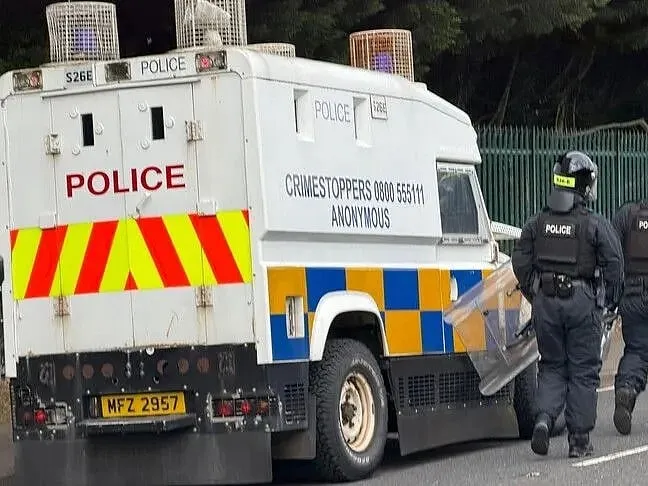
Police responded to RTÉ's headquarters in Donnybrook, Dublin, where presenters and other employees left the broadcaster's buildings. Evacuations also took place at the Irish Independent and Marconi House, home to Newstalk and Today FM.
The messages warned that a bomb would explode on the premises within 45 minutes, according to the Irish Independent. RTÉ Director General Kevin Bakhurst said the email went to RTÉ and other organizations at about 8:33 a.m.; he received it at 8:40 a.m.
RTÉ replaced its live programming with recordings for a time, then used an outside broadcasting unit to resume news coverage. Newstalk interrupted its regular schedule, with employees later returning after the threat was judged to be a hoax. Virgin Media Television received a threat but said its studios remained occupied and broadcasting continued.
Identical emails reached media organizations in Ireland and the UK that morning, the Irish Independent reported. Sky News acknowledged receiving a security threat and said it had assessed security and notified authorities.
Responsibility remains unconfirmed
Irish police said they were investigating the media threats and working with the outlets involved. Neither the identity of those responsible nor whether the incidents were coordinated had been established.
The email to the Irish Independent bore the name "Mikhail Andropov." Its author claimed to be a leader of the group responsible for that week's threats against European airplanes and threatened a "new wave of attacks" targeting airplanes, cruise ships, subway stations and trains.
Separately, AFP reported that some of the week's bomb-threat messages were signed by "fighters of the Male State." That name matches a Russian far-right movement designated an extremist organization by Russian courts in 2021. AFP said it had not verified any connection between the group and the messages.
Prime Minister Micheál Martin described the incidents as worrying and said police and security agencies were trying to identify those responsible. He stressed that the government took the threats seriously, noting their potential to interrupt everyday activities and create public fear and anxiety.
In a November 6 statement, the Irish government said it remained unclear whether an individual was responsible or whether the effort was centralized or coordinated. Its assessment was that "it seems likely that this is a coordinated campaign of disruption". Police, the Defence Forces, and cyber and aviation authorities were working to establish responsibility.
European flights also targeted
Threats against commercial flights across Europe on Thursday and Friday prompted diversions and fighter-jet escorts. TheJournal.ie reported that at least 27 flights were affected on Thursday, November 5, including an Aer Lingus flight from Dublin to Rome that diverted to a French military air base. All flights affected that day landed safely, and no bombs were found. Inspections following the broader series of flight alerts had uncovered no explosives.
Justice Minister Jim O'Callaghan said the threats were being treated "extremely seriously" and urged a coordinated response at the EU level. He placed them in the context of Europe increasingly facing "hybrid attacks" that are "evolving in complexity and sophistication". O'Callaghan had been in Montenegro that week for the annual EU-Western Balkans Ministerial Forum.
Dublin prepares for European leaders
The alerts come before the ninth European Political Community summit, scheduled for November 12 at the Convention Centre Dublin. Around 50 European heads of state or government and leaders of European and international institutions are expected. An Garda Síochána, Ireland's police service, described it as the largest gathering of heads of state and government the country has hosted. EU heads of state or government are due to hold an informal meeting on November 13.
Martin said Irish security agencies were cooperating closely with European counterparts ahead of the gathering. An Garda Síochána said the policing and security operation for the two meetings would be the largest in the Irish State's history.
The operation is scheduled to begin and build incrementally over November 10 and 11. Plans include a security cordon around the Convention Centre Dublin, with disruptions to traffic and public transportation in the city center.