Iran overturns Leila Abolhasani's death sentence, orders retrial
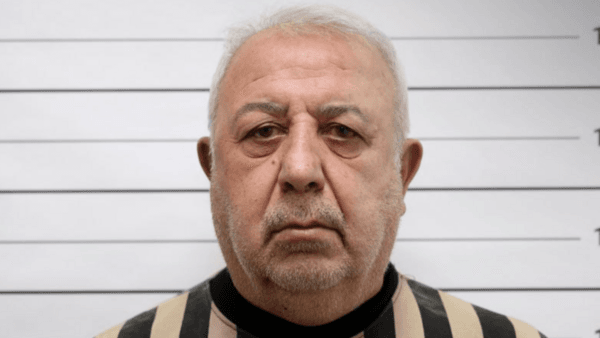
Iran's Supreme Court has ordered a retrial for Leila Abolhasani, a 43-year-old nail technician sentenced to death over a shop fire during January's anti-regime protests. Prosecutors accused her of involvement in setting the fire; supporters say she only recorded it.
 Mariam Al Mansoori

Disputed account of the shop fire
Human Rights Activists in Iran reported the Supreme Court's decision on October 29, saying the case had been returned to a lower court. Activists say neither a court ruling nor evidence in the case has been made public.
Abolhasani, a mother of two, received the death sentence in August after being convicted of moharebeh, or enmity against God, The National reported. Campaigners outside Iran dispute the prosecution's account of her role in the fire.
According to a source close to her family quoted by Human Rights Activists in Iran, an Ofogh Kourosh chain store in Shahin Shahr was already burning when Abolhasani was at the protest site filming the scene.
IranWire, citing informed sources, dates her arrest in Shahin Shahr to January 8, 2026, and reports that she has been held at Dowlatabad Prison in Isfahan ever since. The estimated number of people detained during the protests ranges from 25,000 to 50,000.
Other protesters remain at risk of execution
The Supreme Court has upheld death sentences in other protest-related cases. Amnesty International reported on October 16 that, since April 2026, the court had affirmed both the convictions and death sentences of at least 20 people whose cases were linked to the January uprising. Amnesty said they faced imminent execution.
In a separate count dated October 9, the Norway-based Hengaw Organization for Human Rights documented at least 106 people sentenced to death after being arrested during the January protests. It reported that 35 had been executed, 63 remained at serious and imminent risk of execution, and eight had had their death sentences overturned.
Amnesty said in October that at least 34 people had been executed in cases connected to the January protests. The National also reported executions on espionage charges during the US and Israeli war on Iran.
UN findings on the crackdown
Protests initially driven by high prices and Iran's weak currency began in late 2025. They grew into one of the largest revolts against the regime since the 1979 revolution.
In September, the UN Independent International Fact-Finding Mission on Iran concluded that the authorities' response amounted to crimes against humanity. Its findings described government personnel shooting into crowds from rooftops and using tear gas to trap protesters in alleys, with killings taking place across all 31 provinces.
The mission reported that the crackdown on the 2025-2026 protests killed at least 221 children, including children as young as two. It also described attacks on health care facilities where security forces beat and arrested wounded protesters and arrested some health care workers.
The September findings recorded at least 29 men executed after summary trials in protest-related cases; five of those executions were public. At the time, the mission warned that more than 70 people were still at imminent risk of execution, including five women and three boys.