Syrian authorities detain paramilitary commander linked to 2013 Baniyas killings
Ali Kayali, accused of orchestrating mass executions that killed hundreds of civilians during Syria's civil war, was arrested while attempting to flee the country. He is also implicated in deadly bombings across the Turkish border.
 Mariam Al Mansoori
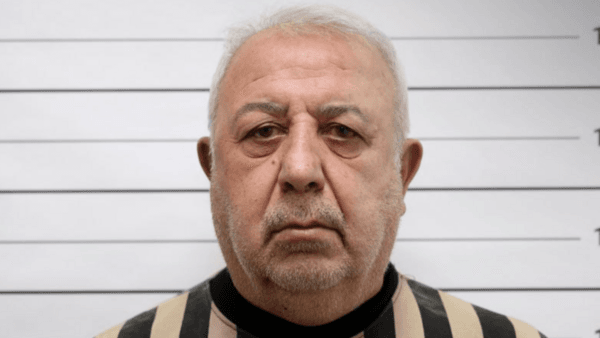
Syria announces arrest of al-Assad-era paramilitary leader
Syrian intelligence services have arrested Ali Kayali, a paramilitary leader accused of orchestrating one of the deadliest massacres during the country's civil war, state news agency SANA announced Thursday. Kayali, who operated under the alias Mihrac Ural, was detained while attempting to cross the border, though authorities did not specify which neighboring country he was trying to reach.
Kayali stands accused as the principal perpetrator behind the May 2013 killings in the coastal towns of al-Bayda and Baniyas, located in Tartus province. According to the Syrian Network for Human Rights, 264 civilians were killed in al-Bayda, including 43 children and 28 women, while 196 people died in the nearby area of Ras al-Nabaa, among them 63 children and 43 women. Human Rights Watch documented at least 248 deaths in mass executions carried out by government and pro-government forces during May 2-4, 2013, describing the killings as among the most severe instances of mass execution during Syria's increasingly violent conflict.
The massacres reportedly occurred in retaliation for a rebel attack that killed at least six government soldiers and pro-government militants near the towns. The Syrian Observatory for Human Rights has placed the combined death toll at approximately 400 people.
Cross-border allegations
Beyond the Baniyas massacre, Kayali is also identified as the main suspect in twin bombings that struck the Turkish border town of Reyhanli on May 11, 2013. Those explosions killed at least 52 people and represented one of the deadliest terrorist attacks in Turkey's recent history, according to Turkey's state-run Anadolu news agency.
From Turkish fugitive to Syrian militia commander
Born in 1956 in Turkey's Hatay Province, Kayali studied philosophy at Istanbul University before his imprisonment in 1978 for bank robbery. In 1980, he escaped from Adana prison through a 150-meter tunnel and fled to Syria, where he received Syrian citizenship granted by then-President Hafez al-Assad. He subsequently developed close ties to Jamil al-Assad, uncle of Bashar al-Assad, which afforded him significant influence and protection within the regime's power structure.
In Syria, Kayali founded a paramilitary force initially known as the Popular Front for the Liberation of the Sanjak of Alexandretta, referring to the disputed Hatay region. The organization, later renamed Syrian Resistance, maintained links to far-left Turkish militant groups and fought alongside forces loyal to Bashar al-Assad throughout the civil war that began in 2011.
Syria's conflict, which erupted in March 2011 following the brutal suppression of pro-democracy protests during the Arab Spring, resulted in an estimated 580,000 to 656,493 total deaths, with more than 300,000 civilian casualties documented by international monitors. The war concluded with the overthrow of Bashar al-Assad on December 8, 2024, after an 11-day rebel offensive that ended more than 53 years of Assad family rule.
New government pursues accountability
President Ahmed al-Sharaa, formerly known by his nom de guerre Abu Mohammad al-Jolani, who led the forces that toppled Assad and formally assumed the presidency on January 29, 2025, has prioritized accountability for crimes committed during the Assad era. Since taking power, Syrian authorities have arrested dozens of former security officials, with trials commencing in April.
Al-Sharaa's media adviser, Ahmed Zeydan, welcomed Kayali's arrest, describing him as a criminal who committed massacres during the Syrian war, including those in al-Bayda and Baniyas.
Every murderous criminal will be hunted down
Zeydan stated.