Broker acquitted as businessman gets prison term in Dh10.5 million UAE fraud case
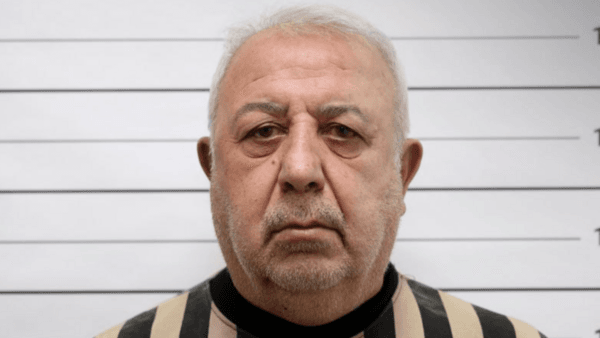
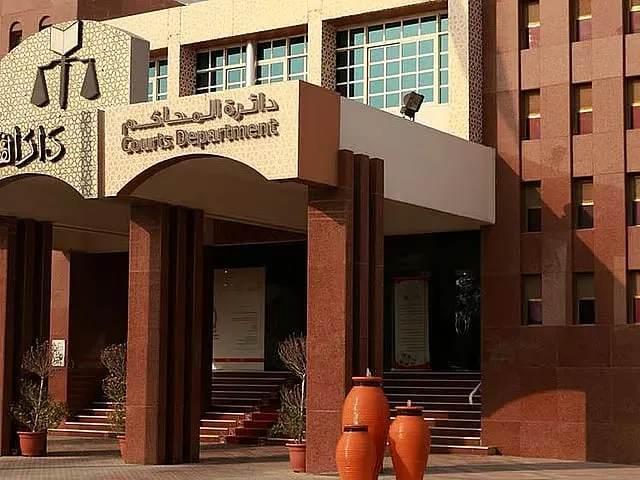
A Ras Al Khaimah court sentenced a European businessman to one year in prison followed by deportation over fraudulent sugar and financing deals, while clearing the broker who introduced the parties. The court found no proof that the broker knew of the deception or intentionally assisted it.
 Mariam Al Mansoori
Different verdicts for the seller and intermediary
The case concerned Dh10,505,375 obtained from a trading company through an undelivered sugar shipment and a fictitious bank financing arrangement, Gulf News reported. The court convicted the 48-year-old businessman of fraud in both transactions and ordered him to pay the prescribed court fees.
The businessman's company received a separate Dh500,000 fine. The court found that the transactions had been carried out in the company's name and that its bank accounts had received the disputed payments. It held the company responsible for offenses its management committed in its name and on its behalf.
The defendants had faced allegations of fraud, criminal participation and obtaining money unlawfully through deception. But the court concluded that the evidence did not establish criminal involvement by the 51-year-old Asian broker.
Sugar payments without a delivery
Court records described an agreement to buy 12,500 metric tons of ICUMSA 45 refined white sugar for $6.31 million, with delivery from Abu Dhabi Port. To persuade the buyer that the cargo was available, the businessman supplied documents and video purportedly depicting sugar in storage awaiting delivery.
The buyer paid $1.2625 million in advance and later sent another $600,000. Neither a sugar delivery nor a refund followed. The court found that the businessman had induced the payments through deceptive documents, footage and representations.
The ICUMSA 45 designation describes the sugar's color, not its percentage purity. According to the GOV+ commodity reference, it means a solution color of no more than 45 ICUMSA units, measured using methods of the International Commission for Uniform Methods of Sugar Analysis. The benchmark international white sugar futures contract applies that color ceiling alongside minimum polarization of 99.8° and a maximum moisture content of 0.06%.
In its broader guidance on fraudulent commodity offers, GOV+ describes schemes involving refined sugar and other physical goods in which a broker or self-described mandate presents impressive-looking paperwork, then requires the buyer to pay, sign or issue something before the seller has substantiated the offer. The guide also cites the ICC International Maritime Bureau's finding that most modern maritime frauds involve fake or false trade and transport documents.
A promised return within 48 hours
A second agreement, reached in May, called for the buyer to help fund the issuance of a standby letter of credit, or SBLC. The buyer transferred $1 million, equivalent to Dh3.67 million, into the seller company's account.
Under that arrangement, the principal was to be repaid within 48 hours together with an expected $500,000 profit, for a total return of $1.5 million. No bank credit facility was opened, however, and the seller retained the payment.
Separately, the FBI's Internet Crime Complaint Center warned in a March 18, 2019, public service announcement that SBLCs are neither investment vehicles nor instruments that are traded, bought or sold. The agency said fraudsters invent access to international commodity markets and bolster fictitious SBLC schemes with counterfeit SWIFT messages, including "MT 799" and "MT 760."
Defense traced the money and the broker's role
Hanan Salem Al Shimili, the broker's lawyer, contested the prosecution's assertion that her client knowingly joined the fraud and shared the businessman's criminal intent. She described his work as introducing buyer and seller, without drafting contracts, managing payments or carrying out either transaction.
The payment terms and bank records were central to that defense. The agreements directed payments to the seller company's accounts, and one explicitly barred payments to third parties, including brokers and the intermediary's business. Records showed no transfer of the disputed funds to the broker or his company.
Although the broker had been promised 33% of the profits if the deals succeeded, he received no commission. Al Shimili said there was no evidence that he obtained any of the money or otherwise benefited financially.
She also told the court that her client believed the seller's cargo documents and video were genuine. He had not inspected the sugar or created the material presented to the buyer.
Correspondence submitted by the defense showed that the buyer and seller negotiated directly after the transactions failed. The businessman proposed a $2.66 million settlement and supplied a personal guarantee covering the outstanding obligations. Al Shimili argued that these exchanges showed he was managing the financial commitments without the broker's involvement.
During Public Prosecution questioning, the buyer's legal representative acknowledged that the alleged agreement between the defendants had been inferred rather than supported by direct evidence. Al Shimili argued that assumptions could not establish criminal liability, especially without proof that her client knew the cargo did not exist or intentionally helped deceive the buyer. She also challenged the police and prosecution investigations for failing to establish a financial connection, a prior agreement or independent evidence of collusion.
Why the court cleared the broker
In acquitting the broker, the court found no evidence that he had taken any of the disputed money or agreed with the businessman to defraud the trading company. It determined that he had introduced the parties and relayed the seller's information and documents while believing them to be authentic.
The court explained that arranging business introductions, promoting a transaction or helping companies develop trust is not, by itself, criminal participation. Holding an intermediary criminally responsible requires proof that the person knew of the fraud and deliberately helped carry it out.
That distinction separated the businessman who organized the fraudulent deals and the company that received the funds from the broker, whose involvement in the crime was not established. With no proof of the required knowledge or intent, the court acquitted him on all charges under Article 212 of the Criminal Procedure Law.