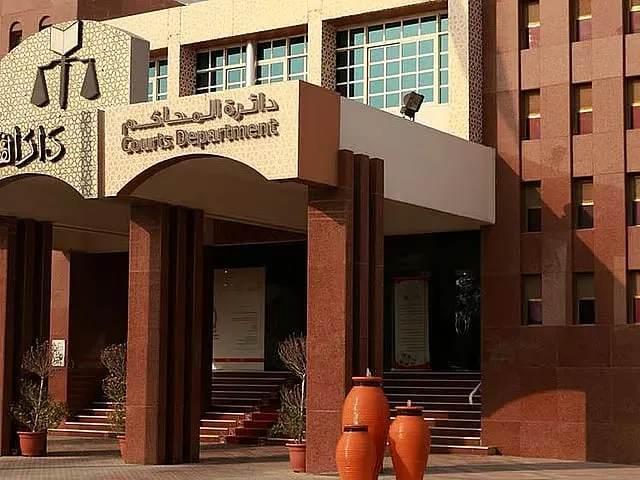
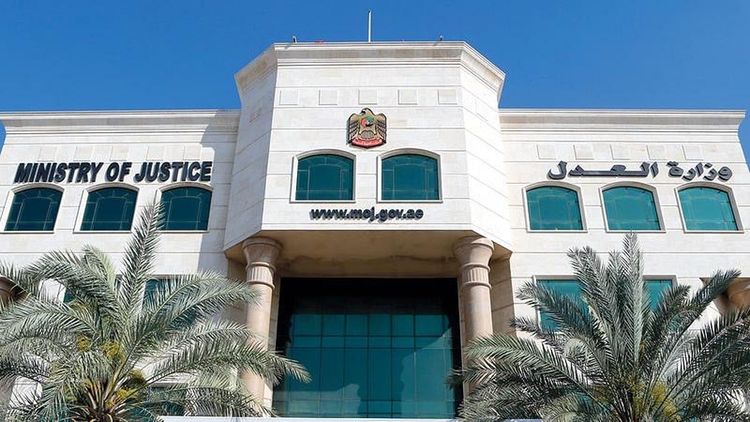
Abu Dhabi court orders Dh66,773 repayment and compensation in bank impersonation case
Two men must return Dh66,773 to a woman whose savings were stolen after a caller claimed to work for her bank. The Abu Dhabi Family, Civil and Administrative Court also awarded her Dh8,000 for material and moral damages, holding the defendants jointly and severally liable for both amounts.
 Mariam Al Mansoori

Bank details obtained in an update request
In her lawsuit, the woman said an unidentified caller persuaded her to disclose her bank account details and security code by saying her information needed updating. She sought repayment of the stolen Dh66,773, compensation of Dh20,000, and legal fees and expenses.
Of the stolen funds, Dh59,630 went into the second defendant's account, while the first defendant withdrew Dh49,700 in cash. The remaining amount was deducted for an unidentified person's benefit.
The woman said investigators found that both men had earlier fraud convictions and had also been convicted in this case.
Criminal judgment supported the repayment claim
The court cited a criminal judgment delivered in the defendants' absence that imposed suspended two-month prison sentences and ordered their deportation. That conviction concerned the fraudulent appropriation of Dh66,773 through impersonation that induced the woman to hand over her money.
Because the civil claim arose from the same facts as the criminal case, the court relied on the conviction's finding that the men had obtained the funds unlawfully. Neither man appeared at the civil hearings or submitted proof of repayment. The court therefore upheld the woman's demand to recover the full amount.
The report on this case did not identify the statutory provisions used. As general legal context, law firm Charles Russell Speechlys explains that Article 451 of the UAE Penal Code covers the unlawful appropriation of property, or the obtaining of a benefit, document or signature, through fraudulent methods, false pretenses or a false capacity. It provides for up to two years in prison or a fine of up to AED 20,000.
The firm also notes a separate offense under the Cybercrime Law, Federal Law No. 34 of 2021: cyber fraud involving a false name or online impersonation. That offense carries at least one year of detention, a fine ranging from AED 250,000 to AED 1,000,000, or both.
Compensation for financial harm and distress
The court found that the loss had prevented the woman from using her money or receiving any benefits or profits it might have generated. It also took account of the expenses she incurred pursuing the case and the psychological distress she suffered.
It awarded Dh8,000 for those material and moral damages, rather than the Dh20,000 she had requested. In addition to repayment and compensation, the defendants must cover court fees and expenses.
Civil damages claims are distinct from the limited compensation available directly through a criminal court. According to Charles Russell Speechlys, Articles 425 and 426 of the Penal Code allow a criminal court to award a fraud victim no more than AED 20,000, about US$5,400, on a summary basis. Larger damages require a separate civil claim, usually brought under Articles 282 and following of the Civil Code. Such claims are typically put on hold pending the criminal case.
Bank impersonation in the UAE's fraud data
The UAE Financial Intelligence Unit identifies impersonation as a prevalent form of fraud in its strategic analysis report covering July 1, 2023, through June 30, 2024. One of the two main forms it describes involves people posing as bank officials to obtain victims' credentials, account information and verification codes.
Drawing on questionnaire responses from 41 financial institutions, the report estimated total UAE fraud-related financial losses for 2021–2023 at AED 1,244,117,187.