For Dubai nurse Marites Rufo, caring for children goes beyond medicine
At Dubai's Family Village, children call Marites Rufo "mama." For the 49-year-old Filipina nurse, the name reflects a bond built through both medical care and the comfort she offers children growing up without their parents.
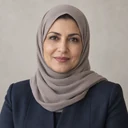 Mariam Al Mansoori
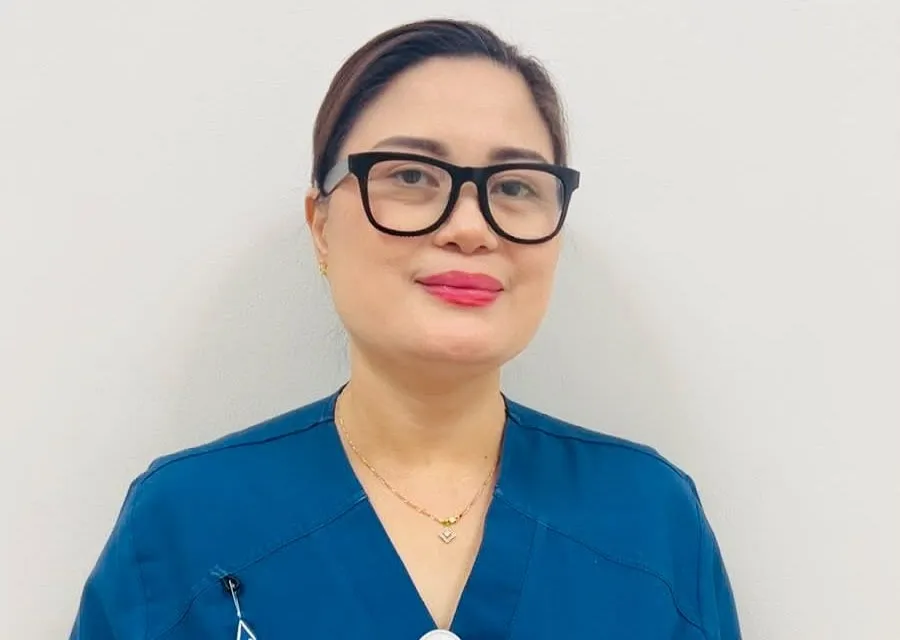
Care built on trust
As Family Village's unit nurse-in-charge, Rufo monitors children's health and gives them medication when needed. She also pays attention to changes that do not appear on a medical chart: a withdrawn child beginning to smile, accept affection or trust someone.
"They are more than patients; they are my children, my family," she told Gulf News. "Hearing that word reminds me that beyond being a nurse, I have also become a source of comfort, care, and emotional support for the child."
An October 27, 2026, report by GMA News described Rufo as the head of the facility, supervising 15 nurses and 10 caregivers. At the time of that report, Family Village in Al Warqa was caring for 30 children abandoned as infants. Most had Filipino ancestry through their mothers.
GMA News reported that the children come into the village's care through Dubai police and that the facility operates under the Dubai Health Authority in coordination with the Community Development Authority.
From nursing student to a mother figure
Rufo's route to nursing began in Capiz, in the Philippines, where she grew up with five siblings in a family struggling financially. Her father worked on a farm despite having a disability. To cover university costs and contribute to the household, she spent four years combining her nursing studies with work as a household helper.
She joined Dubai's Latifa Hospital in 2009 as a staff nurse in its pediatric isolation unit. A year later, she was promoted to unit nurse-in-charge of the area looking after orphaned children. At first, she worried that management duties would leave her with less clinical experience.
"When I saw the vulnerable children and when they started calling me 'mama,' I found the work deeply fulfilling and rewarding," she told Gulf News. She came to embrace the role, treating the children as her own and seeing her work as an expression of her faith.
Rufo was also raising two sons as a single mother. She had moved to the UAE to improve her career prospects and support them, but the separation was painful. "There were times when I felt overwhelmed by the pressure of providing for my family while adjusting to my new role and responsibilities in a different environment," she recalled.
Faith and perseverance helped her manage those pressures, as did support from colleagues, friends and relatives. She said the vulnerability and innocence of the children in her care motivated her to keep giving her best. She credits her years in the UAE with teaching her resilience, compassion and gratitude.
The opportunities she found eventually enabled her eldest son to join her in the UAE. Her other son is finishing college in the Philippines.
How Family Village supports children
Family Village shelters orphans and children of unknown parentage through a foster-family model. Foster mothers care for children, while foster fathers support young adults. Alongside a place to live, residents receive help with education, rehabilitation, living costs and other financial and social needs.
The setting is residential rather than a single institutional building. According to a 2024 World Arabia report citing Khaleej Times, the complex has 16 villas, including six rented out to generate income for the children. Each furnished, five-bedroom home has a designated "parent" who leads the household.
That report said the village had supported more than 390 children since its inception under the Dubai Ruler's patronage in 2015. It also reported that government funding covers residents' living expenses until age 21, including university fees, wedding costs and housing.
The Emirates News Agency, WAM, identified Family Village in a June 14, 2016, report as an endowment project of Dubai's Awqaf and Minors Affairs Foundation. Inaugurated by Sheikh Mohammed bin Rashid Al Maktoum in 2015, the Al Warqa 3 development had capacity for 130 children. WAM put the value of its endowments in assets and buildings at nearly AED 157 million.
Some children have been repatriated to the Philippines. GMA News reported that two returned in 2025 and one in July 2026. The latter was a girl who had entered Family Village at four months old and was nearly two when she was repatriated. She arrived at Manila's Ninoy Aquino International Airport on July 9, 2026.
The legal basis for alternative care
The UAE government portal, updated September 30, 2026, explains that adoption is not permitted in the country, but eligible families can foster children of unknown parentage. Federal Law No. 3 of 2016, or Wadeema's Law, establishes the right of a child deprived of their natural family to alternative care, either with a foster family or in a public or private welfare institution.
Federal Decree Law No. 24 of 2022 governs care for people of unknown parentage through child care homes and eligible foster families, under the supervision of the Ministry of Community Empowerment. The portal identifies Dubai's Community Development Authority as running Family Village and the Embrace program.
Recognition and support beyond the village
Rufo's work has brought formal recognition. GMA News reported on October 27, 2026, that she had recently been named grand winner of the Dakilang Manggagawang Pilipino 2026 award. She had previously received the Best Nurse 2021 honor in the second season of the Angel Awards.
The same report said she had recently received a UAE Golden Visa, a self-sponsored long-term residency lasting five or 10 years.
Her support for children also extends to her hometown in the Philippines, where she helps with a feeding program for elementary school students in her municipality. She sees that involvement as a way to give back after her own experience of financial hardship. "I believe that even small acts of kindness can make a difference," she told Gulf News.
After 17 years in the UAE, Rufo recognizes the homesickness, financial demands and family separation that many overseas Filipino workers experience. She encourages fellow nurses and Filipinos to remain hopeful and hold on to their faith.
"Remember why you chose to work abroad, whether it is for your family, your dreams, or a better future. Let that purpose guide you during difficult times," she said.