UAE Ministry of Family signs partnerships on disability employment and family research
The UAE Ministry of Family has signed two agreements covering support for graduates with disabilities and research into families' needs. The partnerships with Sharjah City for Humanitarian Services and the University of Sharjah aim to improve access to training, work and specialized services.
 Mariam Al Mansoori

Support for graduates seeking work
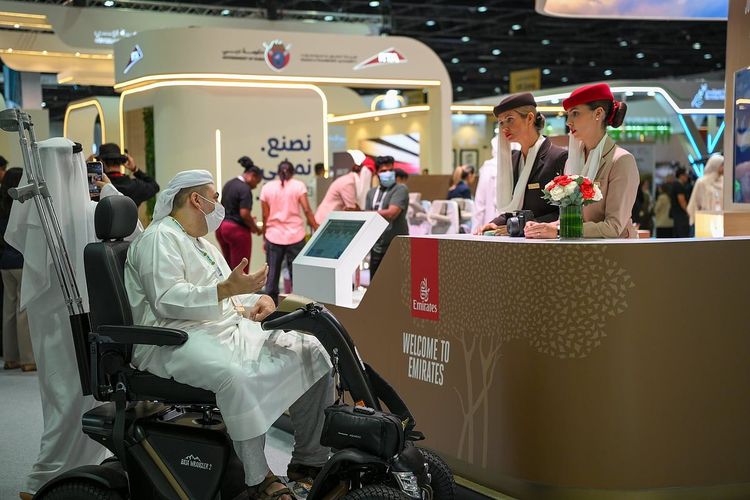
The agreements were signed on October 20, 2026, during the ministry's participation in the eighth AccessAbilities Expo. The event ran October 19-20 at the Dubai World Trade Centre. Hessa Tahlak, the ministry's Assistant Undersecretary for the Empowerment of People of Determination and Senior Citizens, signed both memoranda of understanding.
Under the partnership with Sharjah City for Humanitarian Services, eligible graduates of specialized rehabilitation programs may be referred to the ministry's Mashaghel Rehabilitation Centres or other vocational training programs. Referrals will depend on admission requirements and assessments. The work is intended to help graduates progress toward employment and independent living, while training and awareness programs will explain available services to them and their families.
Graduates' products and projects will also be promoted through events, initiatives and publicity channels. The partners plan to share rehabilitation and employment data, exchange professional expertise and develop community initiatives to improve support for people with disabilities and their families.
Mona Abdul Karim Al Yafei, director general of Sharjah City for Humanitarian Services, said bringing the organizations' expertise together would help expand opportunities for people with disabilities.
Mashaghel's training and employment routes
Mashaghel dates to January 2020, when the then Ministry of Community Development launched the vocational training, rehabilitation and employment project. Its first center opened at the Social Development Centre in Ajman, with centers planned across all seven emirates.
The project's three employment categories are transitional, inclusive and remote. It targets people over 15 for vocational training and over 18 for employment. Beneficiaries must be UAE nationals, hold a People of Determination Card and be enrolled in the online recruitment platform.
Students from Mashaghel's vocational program joined the ministry's rehabilitation graduation cohort for the first time in June 2025. At that ceremony in Ajman, the ministry honored 50 graduates of disability care and rehabilitation centers. Its rehabilitation centers serve people ages 4 to 18 in Dubai, Ajman, Umm Al Quwain, Ras Al Khaimah and Dibba Al-Fujairah.
Hiring and workplace support at the expo
The ministry also interviewed job candidates at its AccessAbilities Expo pavilion, comparing their education, work experience and skills with available positions. Several candidates were recruited through the initiative; their appointments were announced and employment contracts were signed.
Dubai Courts described its own employment arrangements at the exhibition. It employs 26 People of Determination in departments including customer service and administration, according to Khalid Al Falasi, who headed the team organizing its participation.
Al Falasi said those employees have flexible working arrangements and a reduced, five-hour workday. Dubai Courts also provides sign-language interpreters for training courses and events.
Research into families' changing needs
The University of Sharjah partnership will focus on the evidence behind family policies and services. Researchers will study family and social issues, analyze data and indicators, monitor changes in families' needs and evaluate existing programs.
Dr. Salah Taher Al Haj, the university's vice chancellor for community affairs, said the institution would contribute research capabilities and expertise to studies concerning families and the wider community.
The ministry said both partnerships would support family stability and cohesion, with attention to People of Determination, senior citizens and their families. Tahlak said cooperation with academic and specialist institutions would help keep policies and programs responsive to social change by grounding solutions in research and professional expertise.
The ministry's broader aim is closer coordination among government, universities and community organizations, more effective services and wider access to specialized support for individuals and families.
A proposed national strategy and an early-detection pilot
At the expo, the ministry reported that the UAE has approximately 49,000 People of Determination and seven specialized early intervention centers, according to Gulf News. It is preparing a new national strategy for their empowerment and inclusion. Tahlak said the proposed strategy is being developed with relevant authorities and draws on international experience.
The ministry and Emirates Health Services also presented an AI-powered pilot application intended to detect potential early signs of autism spectrum disorder in children ages 18 to 24 months. The application produces a preliminary assessment in two to three minutes and remains under study, development and testing.