El Sisi pledges to step down in 2030, unveils leadership training programme at military academy
Egyptian President Abdel Fattah El Sisi reaffirms he will not seek re-election when his current term expires in 2030 and announces a 30-month course at the military academy to prepare Egypt's next generation of leaders.
 Mariam Al Mansoori
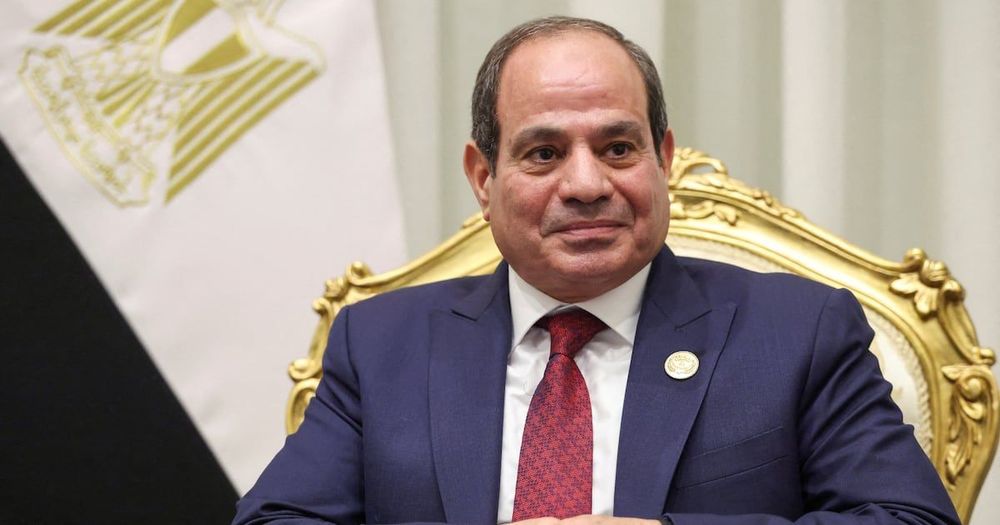
El Sisi insists he will leave office in 2030 as he outlines succession plan
Egyptian President Abdel Fattah El Sisi has pledged not to seek another term when his current mandate expires in 2030, announcing a leadership development programme to prepare the country's next generation of heads of state and government officials.
Speaking at a military ceremony marking the graduation of new cadets on Saturday, Mr El Sisi stated categorically that his presidency would conclude at the end of his current term. "My term in office ends in 2030 and this is a given and will not change," he told attendees. "But I will not abandon the state of Egypt, which is rich with its sons who can shoulder the responsibility after me."
Leadership Development Programme
The President outlined plans for the military academy to launch a specialised training programme inviting up to 300 doctorate holders from Egyptian or foreign universities to participate in a 30-month course designed to cultivate future national leaders. Mr El Sisi, himself a 1977 graduate of the Egyptian Military Academy who served more than three decades in the armed forces before becoming Minister of Defence in August 2012, emphasised that the institution would sponsor the initiative.
"The academy will prepare people to know what a nation is and how to protect it," Mr El Sisi explained. "Egypt is not sterile. It's capable of producing a leader better than me. I need the Egyptian people to support this idea."
Candidates for the programme must be between 40 and 50 years of age and will undergo interviews and vetting before enrolment. The President did not specify whether the programme would be open to both civilian and military applicants, leaving open the possibility that another military officer could emerge as a presidential candidate in 2030.
Constitutional Changes and Presidential Terms
By the conclusion of his current term, Mr El Sisi will have governed Egypt for 16 years. His ability to serve beyond the original constitutional limit stems from amendments adopted in a 2019 national referendum, which passed with 88.83 per cent voting in favour on a turnout of 44.33 per cent of eligible voters, according to Egypt's National Elections Authority.
The amendments extended presidential terms from four to six years whilst maintaining the two-term limit. However, a clause added specifically for Mr El Sisi's benefit stipulated that his first term would be counted from 2018 rather than 2014, when he was initially elected. The 2019 changes also expanded presidential powers over the judiciary, granting the president authority to appoint heads of judicial bodies and chairmanship of the Supreme Judicial Council, whilst creating an upper house of parliament with the president able to appoint one-third of its members.
Recent Electoral Performance
Mr El Sisi secured his current term in the 2024 presidential election with 89.6 per cent of the vote, representing 39.7 million ballots and a turnout of 66.8 per cent, the highest in Egyptian electoral history. This marked a shift from his previous elections in 2014 and 2018, when he won more than 96 per cent of votes but with lower turnout of 47 per cent and 41 per cent respectively.
Regional Challenges and Economic Impact
Many Egyptians regard Mr El Sisi as providing stability during a period of significant regional turbulence. The Middle East remains engulfed in conflict, with ongoing wars in Gaza on Egypt's eastern border, Sudan to the south, and persistent political instability in Libya to the west.
Regional tensions have imposed substantial economic costs on Egypt. Houthi attacks on shipping beginning in late 2023 caused Suez Canal revenues to plummet from a record $10.25 billion in 2023 to $3.99 billion in 2024, a decline of approximately 60 per cent. However, the fiscal year 2025/2026 saw revenues rebound to $4.67 billion, a 23 per cent increase, with the Suez Canal Authority projecting 2026 revenues between $5.8 billion and $6 billion.
The fallout from regional conflicts, including Houthi attacks on Saudi Arabia, has also increased Egypt's energy import costs whilst diminishing crucial canal revenue. The country's 2014 constitution, adopted via referendum three years after the removal of Hosni Mubarak, is generally regarded as a progressive document, though the 2019 amendments significantly altered its original provisions regarding presidential tenure and powers.