India's marriage checklist evolves as 'vibes' and compatibility challenge tradition
Young Indians increasingly prioritise emotional connection and shared values over traditional criteria like caste and complexion, though data shows fundamental barriers persist beneath modern vocabulary.
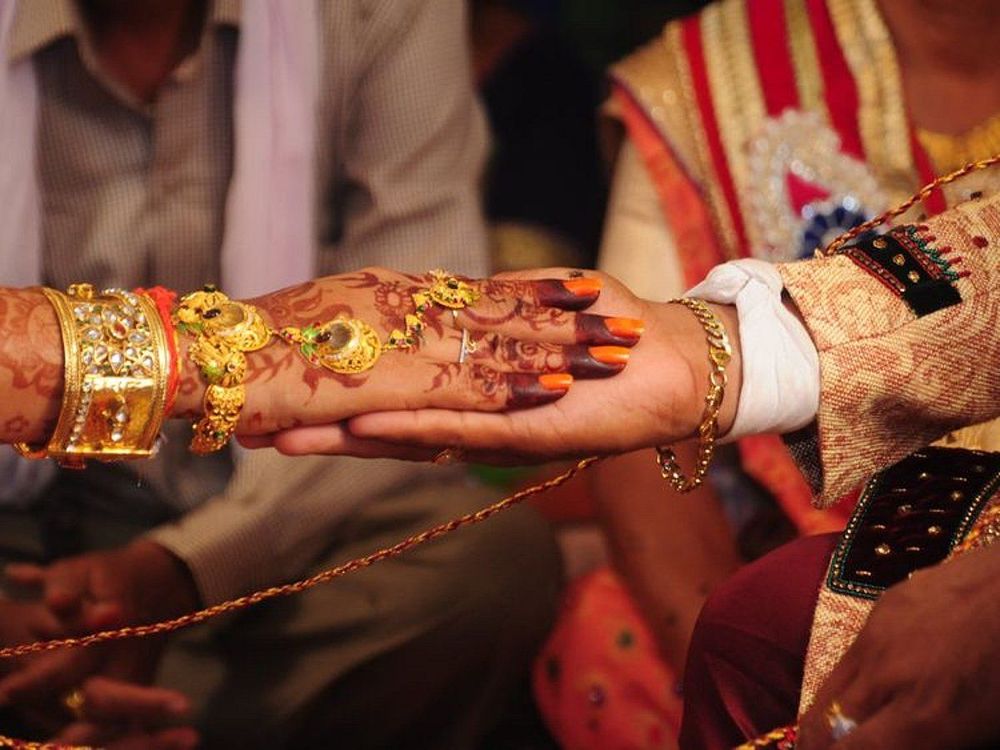
From family fit to personal connection
For generations, India's marriage biodata followed a familiar script: age, height, complexion, caste, education, salary, profession and family background. For grooms, financial security mattered most. For brides, being "fair", "homely" and skilled in the kitchen.
Today, the language sounds strikingly different. Young Indians searching for partners talk about compatibility, emotional maturity, communication, independence, career ambitions and shared values. And then there's perhaps the most modern matrimonial test of all: Do we vibe?
Yet beneath this evolving vocabulary lies a more complicated reality. India's marriage market sits caught between two generations — one focused on finding someone who fits the family, another increasingly concerned with whether two individuals can actually build a life together.
One of the biggest shifts is not what appears on marriage profiles, but who controls the process. Parents once dominated matchmaking, circulating biodatas through relatives and community networks. Now young Indians are increasingly taking charge of their own decisions.
The statistics tell a nuanced story. Approximately 90 to 95 per cent of marriages in India remain arranged marriages according to 2018 National Family Health Survey data, though the nature of parental involvement is evolving as younger generations assume more active roles.
Relationship coach Sidhharrth S Kumaar of NumroVani told The Times of India that the central question is gradually shifting from whether a family is socially suitable to whether two individuals can realistically build a life together.
That change appears particularly evident among working women. Rupali Rani, an account manager currently searching for a partner, said financial stability remains important, but she also wants to understand how a prospective partner thinks, communicates, treats people and approaches life. Her description captures the shift: the question is becoming less about whether a woman will fit into her husband's family and more about whether their lives will fit together.
Career, lifestyle and independence are increasingly part of the conversation before marriage rather than matters to be negotiated afterwards. The median age at first marriage has risen accordingly — from 17.2 years in 2005-06 to 19.2 years in 2019-21 for women, and from 22.6 to 24.9 years for men. In metro cities like Delhi, Mumbai and Bangalore, urban educated Indians marry significantly later, at 27 to 29 for women and 29 to 31 for men.
Young men are questioning traditional expectations too. Shivam Sharma, who is searching for a match, said questions about his salary, job, property and family responsibilities remain common. But a large salary or valuable property, he argued, says little about whether someone will actually be a good husband. He places greater importance on nature, compatibility and understanding, and says he would not expect his future wife to abandon her ambitions, friendships or interests after marriage.
Old filters, softer language
The decline of blunt matrimonial vocabulary does not necessarily mean the preferences behind it have vanished. Caste, complexion, height, income and family background continue to influence partner selection, though their importance varies considerably between generations, communities and families.
What may be changing fastest is how these preferences are expressed. Kumaar argues that caste can reappear as "cultural compatibility" or "similar traditions". Preferences involving appearance become searches for someone "presentable" or "well-groomed". Family status gets repackaged as "similar upbringing" or a "compatible lifestyle".
The data supports this argument about persistent barriers. Inter-caste marriages remain extremely low at approximately 5 to 6 per cent of all marriages as of 2011-12 data, with no clear upward trend visible over the past four decades despite modernisation. Inter-religious marriages are even rarer at approximately 2.1 per cent.
And then there's the phrase "our vibes didn't match" — wonderfully vague and conveniently modern. On the surface, it suggests two people lacked chemistry. But Kumaar says "vibes" can also become shorthand for discomfort involving appearance, accent, class or caste-coded habits, without anyone having to explicitly state the real objection.
Research reveals another counterintuitive pattern about breaking traditional barriers. The education level of the husband's mother significantly predicts inter-caste marriages — a ten-year increase in her education leads to a 1.86 percentage point increase in the probability — while the husband's or wife's own education shows no significant association. Family influence, it seems, shapes even the breaking of family traditions.
Digital platforms, traditional filters
India's marriage biodata has migrated from paper passed between relatives to searchable, editable online profiles. The online matrimonial market is growing at approximately 9 to 10 per cent annually, with platforms like Shaadi.com and BharatMatrimony dominating the space.
Technology has dramatically expanded the pool of possible partners. It has not necessarily eliminated the old filters. A digital profile can still ask about caste, income, profession and family background while simultaneously asking about hobbies, lifestyle and relationship expectations.
India's wedding industry — valued at approximately USD 130 billion with about 10 million weddings occurring annually, making it the second-largest retail segment after groceries — reflects the enormous economic and social stakes involved in these marriage decisions.
The persistence of some traditional barriers remains stark. Despite the Dowry Prohibition Act being enacted in 1961 and strengthened in 1984, over 6,100 dowry death cases were recorded in 2023, with conviction rates remaining under 10 per cent. The gap between stated values and actual practices can be wide.
The checklist paradox
Verona Matchmaking, one of the platforms interviewed by The Times of India, cautions against turning compatibility into another rigid checklist. The more precisely people define their ideal partner, the easier it becomes to reject everyone who doesn't match that description.
The goal, it suggests, should not be finding someone who satisfies every requirement on paper, but finding someone worth getting to know.
That may ultimately be the biggest change occurring in Indian matchmaking. The biodata has survived. Parents remain involved. Salaries still matter. Family background still matters. And caste, despite weakening as a barrier in some sections of society, has certainly not disappeared.
But alongside those old questions, a different set is demanding answers. Can we talk to each other? Do our values align? Will you respect my career? How do you see money, children and family responsibilities? Will we both have space to remain ourselves?
And, inevitably: Do we vibe?
India's marriage biodata may still fit neatly onto a single page. The definition of a good match no longer does.