IMF official says India can power next wave of global growth
IMF Deputy Managing Director Nigel Clarke assesses India's economic potential following five-day visit, citing strong fundamentals, private sector dynamism and technological capabilities as key drivers of future global expansion.
 Layla Haddad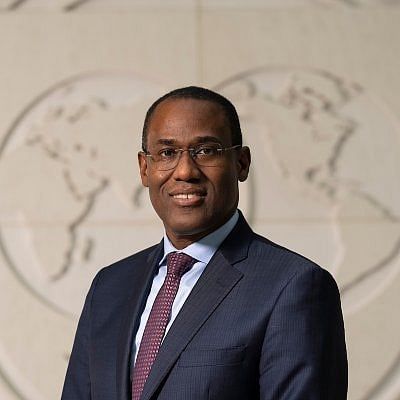
India has potential to power next wave of global growth: IMF
India has the capacity to drive the next wave of global economic expansion, supported by strong fundamentals, private sector dynamism and growing technological capabilities, according to a senior International Monetary Fund official.
IMF Deputy Managing Director Nigel Clarke made the assessment after completing a five-day visit to India that included meetings in New Delhi, Mumbai and Chennai. Clarke, who assumed his position in October 2024 after serving as Jamaica's Minister of Finance and the Public Service, succeeded Liberian economist Antoinette Sayeh in the role.
"India has the potential to power the next wave of global growth, and the IMF remains a close partner in supporting the country on this journey," Clarke said in a statement issued from Washington.
The assessment comes as India continues to demonstrate robust economic performance. The IMF projects India will contribute approximately 17 percent to global real GDP growth in 2026, the highest contribution among all countries. The Fund raised its growth forecast for India's fiscal year 2025-26 to 7.3 percent in January 2026, up from earlier projections, citing strong economic momentum in the fourth quarter.
High-level engagement
During his first visit to India in his current capacity, Clarke met Finance and Corporate Affairs Minister Nirmala Sitharaman, Reserve Bank of India Governor Sanjay Malhotra, and NITI Aayog Vice Chairman Ashok Kumar Lahiri. Malhotra was appointed as the 26th RBI Governor in December 2024 for a three-year term, succeeding Shaktikanta Das.
"I was delighted to visit India for the first time as Deputy Managing Director of the IMF and engage with senior officials, business leaders, and other stakeholders," Clarke said, thanking the officials for their hospitality and constructive discussions.
Clarke described India as the world's fastest-growing major economy and a central contributor to international economic expansion. With a nominal GDP of approximately $4.15 trillion as of 2026, India ranks as the world's sixth-largest economy. The country's share of global GDP reached approximately 8.9 percent in 2025 and is projected to reach 10.4 percent by 2030.
Policy priorities and reforms
Clarke said his discussions with Indian policymakers covered the country's economic outlook, changes in the global environment and measures needed to support sustainable and inclusive growth.
"Against a backdrop of heightened global uncertainty and evolving risks, preserving macroeconomic stability and resilience remains essential," he said. "We discussed the importance of maintaining nimble policies, keeping inflation in check, and advancing reforms that can lift productivity, strengthen competitiveness, and sustain strong growth over the medium term."
The visit follows the IMF's most recent Article IV Executive Board Consultation for India, conducted in February 2025, which represents the Fund's comprehensive annual assessment of member countries' economic and financial policies.
Private sector dynamism
During the visit, Clarke engaged with business leaders and examined the role of India's private sector in the country's economic expansion.
"I am grateful for the opportunity to engage with business leaders and was impressed by India's private sector dynamism, deep talent pool, and rapidly evolving technological and manufacturing capabilities," Clarke said.
He identified innovation, digital transformation, advanced manufacturing and wider technology adoption as important drivers of productivity and competitiveness.
"Our exchanges highlighted how innovation, digital transformation, advanced manufacturing, and technology adoption can boost productivity, strengthen competitiveness, and support higher-value activities," he said.
India's economic performance has drawn positive assessments from multiple international institutions. The World Bank, OECD, and United Nations have all reaffirmed India's status as the world's fastest-growing major economy in 2026, with growth projections ranging from 6.5 percent to 6.6 percent.
Clarke also thanked the Indian government for supporting multilateralism and assisting other countries in the region, underscoring the broader role India plays in global economic cooperation.