Saudi Arabia enforces disability rights law with penalties reaching SAR500,000
The Authority for the Care of People with Disabilities has begun direct enforcement of inspection powers over private and non-profit organisations, with fines up to SAR500,000 for serious violations of disability rights protections.
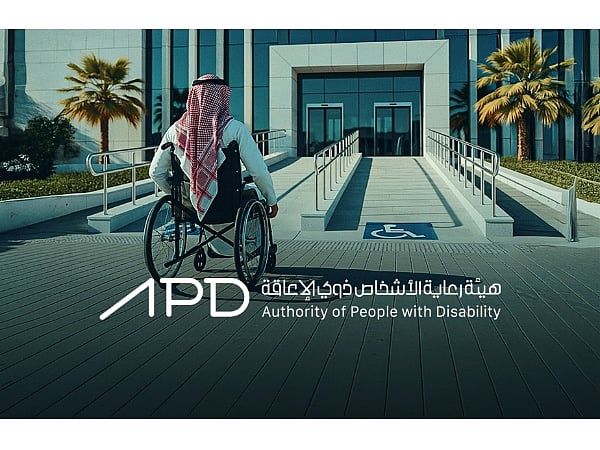
Up to SAR500,000: Saudi Arabia begins direct action against disability discrimination
Saudi Arabia has commenced enforcement of inspection and monitoring powers targeting private and non-profit organisations that violate disability rights, with penalties for the most severe infractions reaching SAR500,000 ($133,000).
The Authority for the Care of People with Disabilities announced it had activated direct enforcement under Article 25 of the Kingdom's Law on the Rights of Persons with Disabilities. The measures apply to non-governmental organisations, including private businesses and non-profit entities serving approximately 1.35 million people living with disabilities in the Kingdom, representing 5.9% of the total population.
The enforcement action marks the operational phase of legislation approved by Royal Decree in August 2023, which replaced the Disability Welfare Law that had been in effect since December 2000. Detailed inspection and enforcement regulations were published in October 2024, establishing the framework now being implemented.
Scope of violations and penalties
The inspection regime targets practices that discriminate against individuals because of disability or prevent them from accessing rights guaranteed under Saudi law. Covered violations include policies resulting in direct or indirect discrimination based on disability, discriminatory treatment of people with disabilities, and preventing them from conducting legal transactions or managing their own affairs without lawful justification.
Organisations face action for denying people with disabilities access to education, training, healthcare, insurance or financial services, or restricting their right to use transport because of their disability. Motor disabilities are the most prevalent type in Saudi Arabia, affecting 22.6% of individuals with disabilities, followed by other physical disabilities at 21.8%.
The enforcement schedule establishes tiered maximum fines based on violation severity. Discriminating against a person with a disability in organisational dealings carries a maximum fine of SAR20,000, while preventing someone from independently handling legal matters without lawful reason can result in fines up to SAR10,000. Denying access to education, healthcare, insurance, financing or transport because of disability also carries fines up to SAR10,000 for each violation category.
The highest penalty of SAR500,000 applies to organisations introducing policies involving direct or indirect discrimination based on disability. Penalties may be doubled for repeated violations within the same category under the enforcement rules.
Inspection procedures and oversight
Under the new framework, inspectors may conduct periodic compliance checks and investigate complaints. They are authorised to enter business premises during working hours, request documents and records, and question company representatives when investigating suspected violations.
A specialised committee has been established to review violations by non-governmental organisations and impose penalties under the law. The framework grants regulators discretion in less serious cases, allowing inspectors to forgo referral to the violations committee where an infringement is considered minor and the organisation has corrected it.
The Authority for the Care of People with Disabilities, established by Council of Ministers Decision No. 266 in February 2018, operates as a financially and administratively independent entity under the oversight of the Minister of Human Resources and Social Development.
Legislative framework and international commitments
The 2023 law consists of 33 articles divided into five parts, covering definitions and general principles, objectives, rights and services, social and economic support, violations and penalties, and review committees. The legislation aligns with Saudi Arabia's ratification of the UN Convention on the Rights of Persons with Disabilities in 2008, demonstrating the Kingdom's international commitment to disability rights protection.
The enforcement measures form part of Saudi Vision 2030, the national transformation plan emphasising economic diversification and social modernisation, which identifies disability inclusion and employment as key priorities. The employment rate of persons with disabilities in Saudi Arabia has reached 14.7%, exceeding the Vision 2030 target of 13.4% set for 2025.