Tamil Nadu moves to block delimitation as southern states face representation loss
Tamil Nadu prepares Assembly resolution opposing fresh parliamentary delimitation amid fears that population-based redistribution could reduce the state's Lok Sabha seats from 39, as southern states' slower population growth threatens political influence.
Tamil Nadu moves to block delimitation as southern states face representation loss
Tamil Nadu is preparing to pass an Assembly resolution formally opposing any fresh delimitation of parliamentary constituencies, escalating a political battle over representation that could reshape the balance of power between India's northern and southern states.
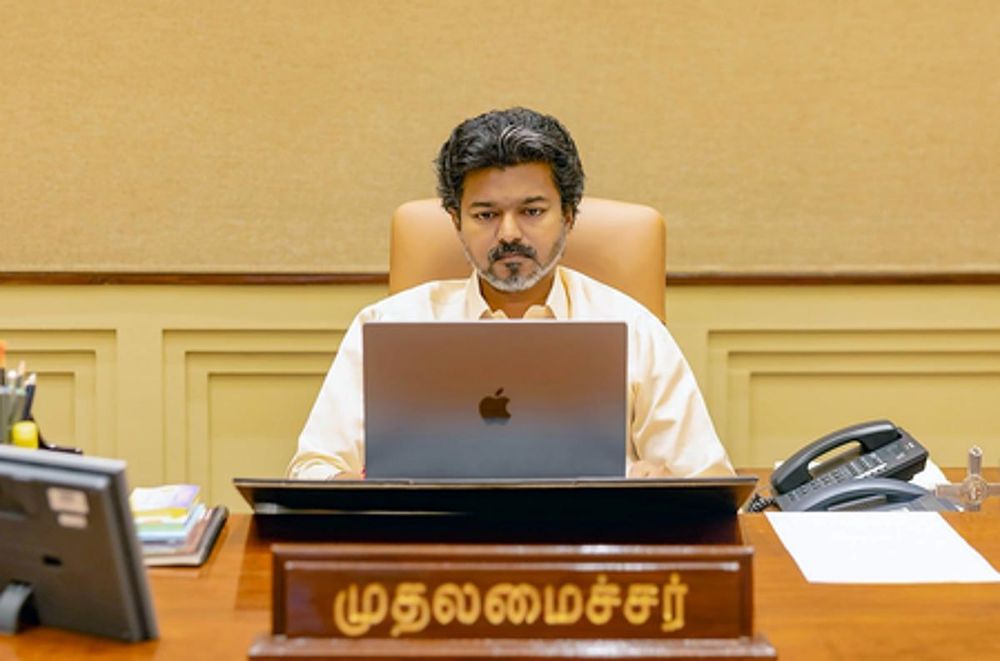
Chief Minister C. Joseph Vijay convened an all-party consultation with MPs on Saturday to discuss the potential impact of delimitation. Nineteen MPs from Congress, VCK, MDMK, IUML, CPI and CPI(M) attended the meeting and agreed to oppose any delimitation exercise, calling for the current allocation of 543 Lok Sabha seats to remain frozen for at least the next 40 to 50 years.
The state government is expected to bring a resolution in the Assembly to formalise this opposition.
Constitutional deadline drives urgency
The concern stems from Article 82 of the Indian Constitution, which mandates readjustment of Lok Sabha seat allocation and constituency boundaries after each census to ensure proportional representation based on population. The 42nd Constitutional Amendment in 1976 froze the total number of Lok Sabha seats based on the 1971 census, initially until 2001. The 84th Amendment in 2001 extended this freeze until the first census after 2026 as a motivational measure to encourage states to pursue population stabilisation.
That freeze is now ending. The Delimitation Bill, 2026, introduced in the Lok Sabha on 16 April, proposes to increase the maximum number of seats from 543 to 850, with up to 815 members from states and 35 from union territories.
The last time India increased the number of Lok Sabha seats was in 1972 following the 1971 census, when the number was fixed at 543 for a population of 548 million. India's population has since more than doubled.
Demographic success creates political risk
Tamil Nadu and other southern states fear that a population-based redistribution could penalise them for successful family planning programmes. Tamil Nadu achieved replacement-level fertility of 2.1 children per woman in 1993. According to NFHS-6 data for 2023-24, the state's Total Fertility Rate has declined further to 1.7 children per woman, well below the replacement level.
Kerala was the first Indian state to reach replacement-level fertility in 1988, followed by Tamil Nadu in 1993, and Andhra Pradesh and Karnataka in 2001 and 2005 respectively. Currently, only three states—Bihar, Uttar Pradesh and Jharkhand—record Total Fertility Rates above the replacement level of 2.1, while southern states remain significantly below this threshold.
Analysis suggests that if delimitation proceeds based on population, southern states' representation in the Lok Sabha could decline from 24 percent to approximately 19 percent, while states like Bihar and Uttar Pradesh could gain seats. Tamil Nadu currently holds 39 of the 543 Lok Sabha seats.
Multi-state resistance builds
Tamil Nadu's opposition is part of a broader regional pushback. A Joint Action Committee meeting on delimitation was held in Chennai in 2025, attended by Chief Ministers from Tamil Nadu, Kerala, Karnataka, Telangana and Punjab, demanding extension of the freeze on parliamentary constituencies for another 25 years.
However, political responses within Tamil Nadu remain divided. The DMK and AIADMK boycotted Vijay's consultation. DMK Deputy General Secretary Kanimozhi Karunanidhi questioned the meeting and urged Vijay to focus instead on Karnataka's proposed Mekedatu dam project.
Women's reservation adds complexity
The delimitation debate carries additional implications beyond seat distribution. The 106th Constitutional Amendment Act of 2023 introduced reservation of one-third of seats for women in Lok Sabha and State Assemblies, with implementation linked to the delimitation exercise. This creates a political dilemma: opposing delimitation could delay implementation of women's reservation.
The participating MPs argued that states should not lose political representation because they successfully controlled population growth through family planning and population-control measures. They maintained that the current seat allocation should remain unchanged to prevent penalising demographic responsibility.
The Tamil Nadu government's expected Assembly resolution will formalise the state's position, setting the stage for a constitutional and political confrontation over how India balances population-based representation with federal equity between states at different stages of demographic transition.