Economic resilience replaces growth as new measure of national power
As global disruptions reshape economies, the ability to maintain continuity under pressure has become more valuable than traditional growth metrics, with nations investing heavily in energy security, supply chain resilience and strategic diversification.
Why the ability to keep going has become the new measure of power
National economic strength is being redefined. Where growth rates, productivity and export volumes once dominated assessments of power, a new priority has emerged: the capacity to sustain economic function when external shocks strike. This transformation reflects what can be termed the 'Continuity Economy' — a framework recognising that resilience under pressure increasingly determines competitive advantage.
For decades, economic success followed predictable patterns. Faster growth, lower costs, larger exports and robust financial performance signalled strength. Today, those indicators tell an incomplete story. The global environment increasingly rewards economies that demonstrate staying power when disruption arrives, not merely those expanding at the highest rates.
This recalibration has unfolded through successive crises exposing vulnerabilities in even the most developed economies. Supply chains stalled, shipping routes faced uncertainty, technology exports became geopolitical instruments, and cyberattacks demonstrated how digital disruptions cascade beyond virtual boundaries. Research confirms these disruptions significantly influenced economic stability from 2020 to 2024, with studies showing major impacts on aggregate inflation and policy responses, particularly as shocks propagated through input-output networks affecting interconnected economies.
From growth to continuity
The central economic question has shifted from maximising growth to protecting it amid mounting unpredictability. Business leaders are responding tangibly: a 2022 survey of global supply chain executives found 81 per cent planned to increase dual sourcing of raw materials, 80 per cent aimed to boost inventory holdings, and 44 per cent sought to shift sourcing toward regional labour markets through re-shoring production.
The Continuity Economy framework does not propose new economic theory but offers a lens for understanding evolving national priorities. Economic strength now encompasses not only size but also the ability to function under stress, recover swiftly from disruption and maintain strategic flexibility when conditions change rapidly.
Through this perspective, disparate policies form coherent patterns. Energy policy extends beyond meeting current demand to ensuring tomorrow's economy continues regardless of external shocks. Trade policy looks beyond export expansion to avoiding dependence on single markets or supply routes. The digital economy has evolved from an innovation driver to an essential continuity layer, enabling governments and businesses to maintain services, process information and make timely decisions in a data-driven environment.
The UAE model
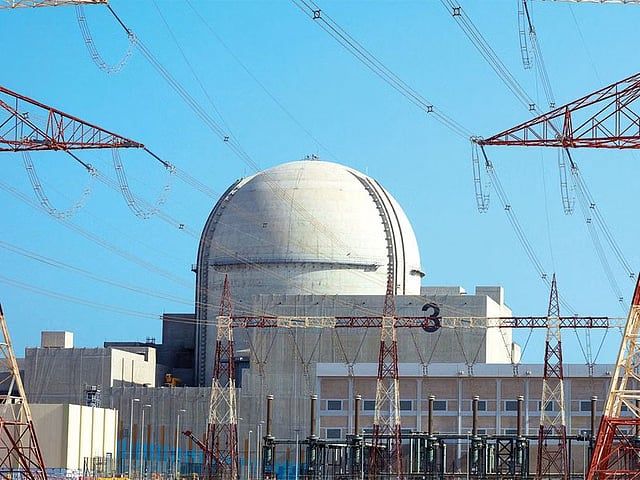
The United Arab Emirates illustrates this broader transformation. Rather than viewing major initiatives as isolated projects, they represent coordinated efforts to reduce economic vulnerability. The Barakah Nuclear Energy Plant exemplifies this approach. With total capacity of 5.6 gigawatts across four APR-1400 reactors, the facility produces approximately 40 terawatt-hours of electricity annually, meeting around 25 per cent of the nation's electricity needs. Beyond power generation, it represents long-term investment in energy security and diversification. The plant simultaneously prevents the release of approximately 22.4 million metric tons of carbon dioxide equivalent annually, demonstrating how continuity investments serve multiple strategic objectives including climate commitments.
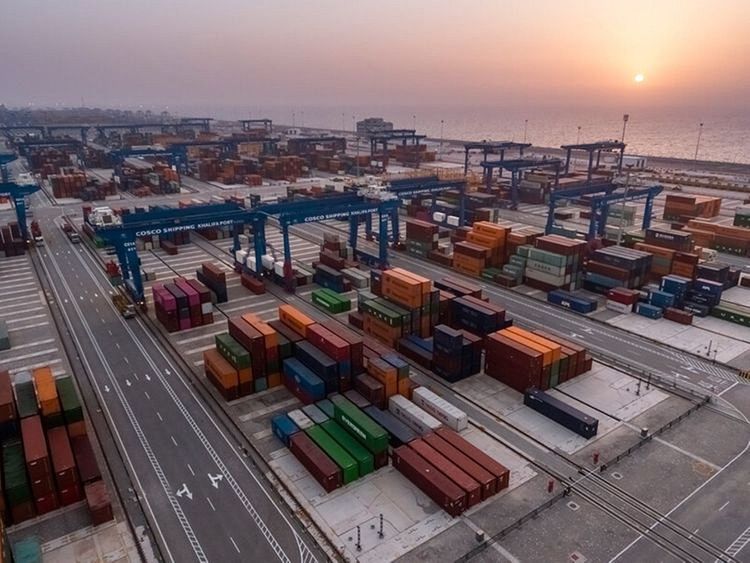
Continued expansion of ports and logistics infrastructure serves not simply to facilitate trade but to ensure trade continues during regional or global disruption. Investments in artificial intelligence, digital infrastructure and data centres reflect understanding that future competitiveness depends as much on decision-making capacity as technological capability.
The UAE's economic transformation embodies this thinking. Official data from the Federal Competitiveness and Statistics Centre shows non-oil activities reached 79.4 per cent of national GDP in the first quarter of 2026, up from 78 per cent a year earlier. More significantly, diversification has reduced dependence on a single growth source, creating an economy better equipped to absorb shocks and adapt to change.
Ongoing challenges
Yet continuity represents no final destination but an ongoing process. The greatest strategic error any nation can make is assuming today's strengths will automatically meet tomorrow's challenges. Each transformation period creates new vulnerabilities requiring governments to rethink future investment priorities.
Human capital stands among the most critical priorities. Global competition no longer centres solely on attracting investment but increasingly on attracting and retaining exceptional talent. Building economies capable of sustaining growth requires not only drawing global expertise but continuously developing national talent, ensuring both remain complementary pillars of long-term competitiveness.
Supply chain resilience represents another defining priority. Recent years demonstrated that logistics disruptions affect far more than trade, influencing manufacturing, healthcare, food security and energy markets. Climate-related supply chain disruptions alone are projected to cause net economic losses between $3.75 trillion and $24.7 trillion in adjusted 2020 dollars by 2060, with indirect losses propagating through global supply chains and affecting regions previously less impacted by warming. Strengthening supply chains through diversified sourcing, strategic partnerships and greater domestic capabilities in critical industries has become essential to economic security.
Food security warrants equal attention. In regions heavily reliant on international markets — the UAE imports approximately 80 to 90 per cent of its agricultural products — resilience can no longer be measured solely by strategic reserves. It increasingly depends on diversified sourcing, investment in agricultural technology and long-term international partnerships capable of withstanding future uncertainty. The same principle applies to pharmaceutical security, which has evolved from a public health concern into a strategic component of national resilience.
Globally, economic resilience is being systematically measured. The 2026 FM Resilience Index, assessing 18 equally weighted factors including political risk, inflation, climate exposure and supply chain resilience, ranks Denmark first, followed by Luxembourg and Singapore, demonstrating how continuity capabilities are being quantified and compared internationally.
Redefining power
Ultimately, continuity should not be mistaken for the absence of crises. No nation can eliminate uncertainty altogether. The real advantage lies in reducing vulnerability, expanding strategic options and building institutions capable of adapting before disruption becomes instability.
The traditional definition of power is therefore changing. Wealth alone no longer suffices. The countries best positioned for coming decades will not necessarily be those with the largest economies but those with the greatest capacity to protect them.
Perhaps that is the defining lesson of this era. For much of the last century, nations competed to accumulate wealth. In the decades ahead, they may compete for something more valuable: the ability to keep their economies moving when the world around them does not. That, in essence, defines the Continuity Economy.
Fatima Musabah Alremeithi is a Senior Researcher at Trends Research and Advisory