Lucid offers to unlock YouTuber's $4,100 salvage Air and a second EV
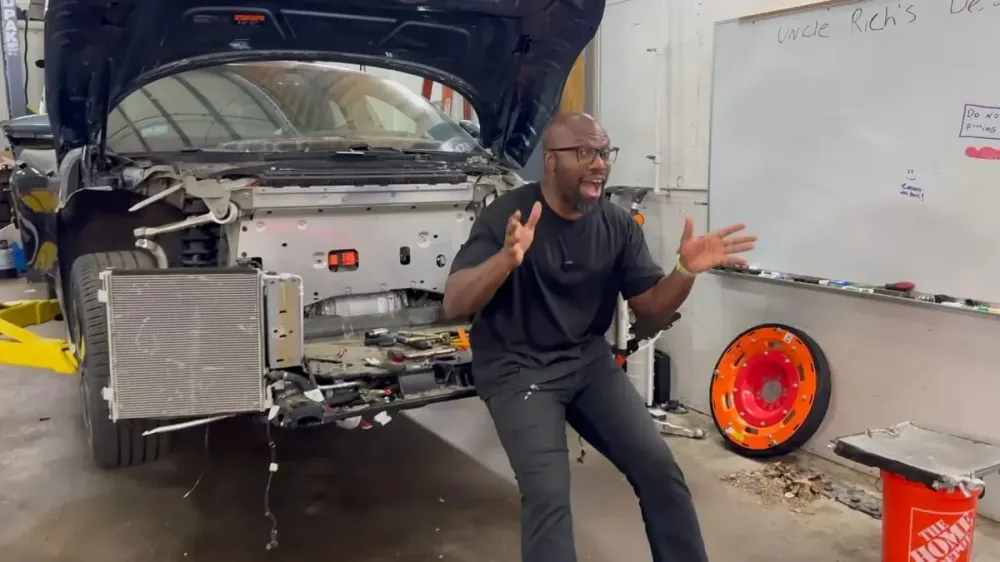
Massachusetts YouTuber Rich Benoit has handed two repaired Lucid Airs over to the automaker after it offered to clear their Service Mode restrictions. One was a wrecked $140,000 sedan he bought at auction for $4,100. Before Lucid would collect either car, both had to be able to drive onto its trailer.
 Layla Haddad
An offer after the videos went viral
Benoit's Rich Rebuilds project began with the $4,100 Air, which arrived inoperative and locked in Service Mode. That post-accident software restriction limits the car to 5 mph. He later joined forces with another Massachusetts owner whose lightly damaged Air was also disabled by Service Mode.
After videos about the two cars went viral, Benoit said, Lucid's lawyers emailed him. Rather than sending a cease-and-desist, they offered to collect both vehicles, reset their errors and remove Service Mode. But Lucid would not take cars that could not move under their own power.
Yahoo Autos / First for Autos reports that Rich Rebuilds has about 1.9 million subscribers, citing that audience as the reason the videos attracted Lucid's attention.
Getting the $4,100 Air moving
Benoit had expected a substantial repair job. "I bought a $140,000 Lucid Air for $4,100 because it's completely broken," he said in his video. His approach was equally direct: "You buy used parts, you get used parts problems. [But] if a man builds it, a man could fix it."
The dead battery pack was the first obstacle. Benoit eventually worked around the lockout by jump-starting the low-voltage system, bringing the onboard computers online long enough for the car to accept an external charge.
Restoring power did not free the wheels. Diagnostics identified an electronic parking brake fault, so Benoit went underneath the sedan and manually wound back the brake actuators. That allowed it to roll.
After improvised body repairs and work to make both vehicles roadworthy, Benoit handed them over to Lucid. The reported handoff does not establish that the software resets have been completed.
Supercar Blondie views the arrangement as favorable to Benoit: severe damage had driven down the auction price of his Air, and Lucid's offer would let him keep the repaired $140,000 car he had purchased for $4,100.
Why the second owner faced a nearly $50,000 repair
The other Air belonged to Peter, a 60-year-old retiree who bought it with a repairable salvage title. Its damage was limited to minor cosmetic damage at the front right corner.
MotorBiscuit, reporting on Benoit's investigation, says Lucid initially provided part numbers for Peter's repair, then changed course and refused to sell cosmetic parts to his independent body shop. Because the vehicle had a salvage title, Lucid told him it needed a mandatory "re-shelling."
That procedure called for transferring every electronic component, motor, battery and interior piece from the undamaged chassis into a new shell. The estimate included about $20,000 in parts and 187.2 hours of labor, bringing Peter's out-of-pocket bill to nearly $50,000.
According to the same reporting, paying for the re-shelling would not restore warranty coverage. Lucid also stated that the salvage-title vehicle would remain permanently ineligible for over-the-air software updates.
Benoit's earlier dispute with Tesla
MotorBiscuit reports that Benoit previously spent more than a decade fighting Tesla over identical software lockout policies for salvage vehicles. Following public backlash and pressure from right-to-repair advocates, Tesla introduced a standardized high-voltage recertification process that allowed independent rebuilders to unlock their cars without large fees.