Abu Dhabi mall hosts test of robotic kitchen that cooks meals in four minutes
Circus Group's CA-1 autonomous cooking robot debuts at Paragon Mall in a trial targeting locations where fresh food is typically scarce, including airports and hospitals. The German technology can prepare four hot dishes simultaneously.
 Layla Haddad
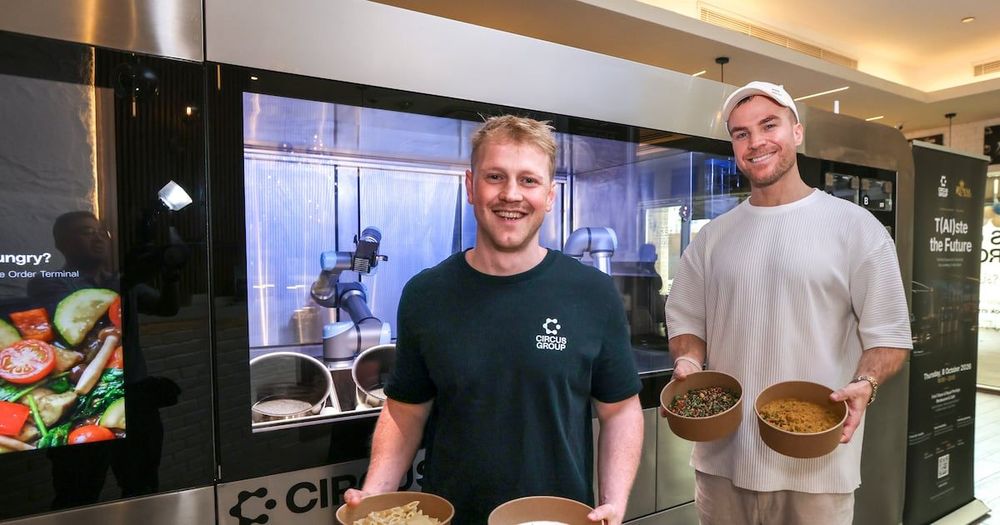
New robot that can prepare your meal in under four minutes arrives in Abu Dhabi
A robotic kitchen capable of cooking four hot meals simultaneously has arrived at Abu Dhabi's Paragon Mall, where it prepares fresh dishes in approximately four minutes each.
The CA-1 system from German manufacturer Circus Group is undergoing testing at First Clique in partnership with catering firm Royal Prestige. This marks the technology's first deployment in the UAE, following its launch in REWE supermarkets in Germany last October as the world's first autonomous cooking robot integrated into a retail environment.
The three-level shopping center on Al Reem Island's Marina Square, which houses over 100 retail stores and 34 dining facilities, serves as a proving ground for technology that Circus Group hopes to expand into hospitals, universities, airports and petrol stations across the Emirates.
"The goal is to help people have great food in places where they normally don't have food," said Michael Bassler, shareholder at Circus Group.
How the system works
The CA-1 features 36 temperature-controlled silos for solid and liquid ingredients, four induction cooking plates and two robotic arms that handle both cooking and serving. The system can produce up to 50 hot meals or 100 cold meals per hour, depending on menu configuration.
Current offerings include chicken fajita, chicken biryani, lentil soup, chicken curry and pasta. A single load of ingredients enables production of up to 200 dishes, with contents typically replaced within 48 hours.
The robot is engineered to replicate the tasks of four distinct kitchen roles: prep cook, line cook, expeditor and dishwasher. This addresses labor shortages in the food service sector, which has become the fastest-growing robotics vertical with 61 percent year-over-year growth in 2026.
Meals start at Dh40, with chicken curry priced around Dh48. The complete system costs approximately Dh1 million per unit, though leasing arrangements are available. In Germany, where the robot already operates in REWE locations and at Mercedes-Benz and Meta facilities, meals begin at €6 (approximately Dh24.50).
Market expansion plans
Circus Group, which trades on the Frankfurt Stock Exchange under ticker symbol CA1, aims to produce up to 6,000 units annually once reaching full production capacity. The company has signed agreements for up to 100 units to serve refugee accommodation centers, emergency shelters and retirement homes in Germany.
The firm recently acquired Kitchen Robotics and obtained NSF certification for US market entry, demonstrating regulatory compliance capability across multiple jurisdictions. In the UAE, robotic kitchens must comply with Federal Law No. 10 of 2015 on Food Safety and Abu Dhabi Agriculture and Food Safety Authority standards.
Bassler identified 24-hour locations as prime targets, particularly Abu Dhabi Airport's VIP terminal.
"The best locations we focus on are places where you have no food or really bad food," he said.
Customer reception
Sana Pathan, 24, from India, sampled the quinoa salad and chicken biryani during the two-month trial period at Paragon Mall.
"For something made by AI, I think this biryani is really fresh and it feels like it's made with love," she said. "It does really taste human-made."
She suggested deploying the technology at beaches, sports centers and university campuses.
The CA-1 arrival in Abu Dhabi reflects broader momentum in kitchen automation. The global kitchen robotics and automation market reached $3.15 billion in 2026 and is projected to grow to $4.61 billion by 2030, representing a compound annual growth rate approaching 10 percent. Fully autonomous kitchen systems typically cost between $250,000 and $500,000 for complete installations.
Human element remains
Despite its autonomous capabilities, the system still requires human staff to load ingredients, manage orders and serve customers. Dylan Frayne, Circus Group's culinary research and development chef, develops and tests all recipes before programming them into the machine.
Asked whether the robot threatened his position, Frayne said:
"It hasn't replaced my job. It's given me another job."
Bassler emphasized the technology supplements rather than supplants traditional restaurants.
"You will always have restaurants. You will always have chefs in restaurants," he said. "We don't replace anyone in this scenario. We offer an additional option for people to have fresh food that didn't exist before."
The company is updating the CA-1's software and visual recognition system to improve cooking precision and detect potential burning. Future features under consideration for the Abu Dhabi market include touchscreen ordering and voice interaction for dietary recommendations, already available in Germany.
Circus Group currently operates approximately 10 machines across Germany and has spent the past four years developing the CA-1 since the company's founding five years ago. The firm also produces a smaller machine, the CA-A, for smoothies and protein shakes, and is developing a larger version for military applications.