Asian Games accommodation crisis deepens as athletes describe conditions as worst ever
South Korean officials have condemned housing arrangements at the 2026 Asian Games in Japan as the worst in the event's history, with athletes facing cramped wooden cabins, leaking facilities and a severe room shortage despite organisers deploying cruise ships and shipping containers.
 Yousef Al Marzouqi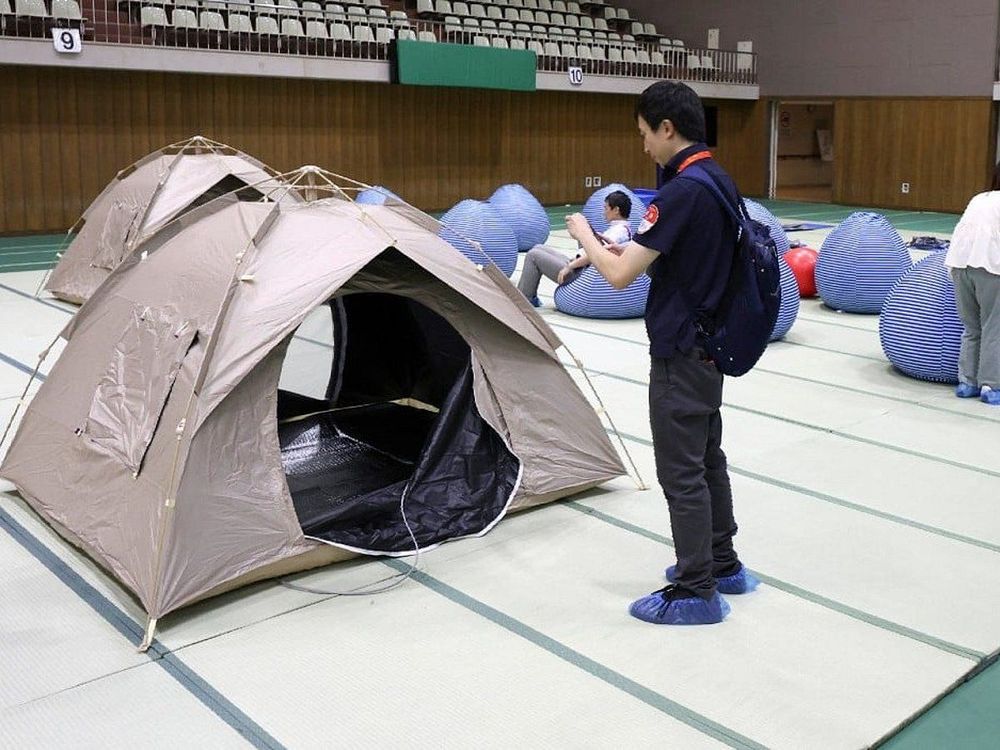
"Please help us": Asian Games face bed shortage issue
The 2026 Asian Games in Nagoya and Aichi are facing a mounting accommodation crisis just days before Saturday's official opening ceremony, with South Korean officials describing the housing situation as the worst in the event's history and warning of a serious shortage of rooms across the region.
This marks the third time Japan has hosted the Asian Games, following Tokyo in 1958 and Hiroshima in 1994, but unlike those previous editions, organisers have abandoned plans for a dedicated athletes' village. Instead, they are relying on hotels, temporary wooden cabins and a cruise ship to house the more than 17,000 athletes and officials expected to attend.
The decision to scrap the traditional athletes' village came after projected construction costs doubled from an original forecast of ¥30 billion, approximately $224 million. Organisers also cited concerns about selling off apartments after the Games in a region already facing population decline as a key factor in the decision.
Substandard conditions spark complaints
South Korean basketball officials have raised serious concerns over the size and condition of the temporary wooden cabins being used by their men's team. Jung Jae-Yong, vice president of the Korea Basketball Association, told AFP that athletes taller than two metres cannot stretch their legs on the beds provided.
"Based on my experience this is the worst it has ever been," Jung said.
Another South Korean player, Byeon Jun-Hyeong, posted a video on social media showing a leaking sink and soaked floor inside his accommodation, captioning it, "Please help us".
Around 2,000 athletes and officials are expected to stay in the wooden cabins during the Games. The accommodation problems have become so severe that Indian sports officials are making their athletes live in shipping containers before travelling to Japan so they can familiarise themselves with similar conditions.
Organisers scramble for solutions
The number of athletes and officials attending has exceeded initial estimates, with more than 17,000 now expected compared to the original forecast of 15,000. A South Korean Olympic committee official confirmed there is a serious shortage of accommodation across the Aichi-Nagoya area.
Philippine officials have turned to Airbnb to secure additional rooms, while the Italian cruise ship Costa Serena is scheduled to arrive on Tuesday to provide accommodation for between 4,000 and 5,000 athletes. The 290-metre vessel, featuring approximately 1,500 cabins, has been chartered for around 4.5 billion yen, roughly $28-30 million. This marks the first time Japan has used a cruise ship as accommodation for athletes at a major international sporting event of this scale.
The approach is not entirely without precedent internationally. Cruise ships were previously used at the 2019 Naples Summer Universiade, where the Costa Victoria and MSC Lirica hosted over 4,000 delegates from over 70 countries during an 11-day stay.
Weather compounds logistical nightmare
The accommodation challenges have been compounded by heavy rainfall, which briefly forced hundreds of athletes to evacuate last week, with more rain forecast. The timing of the Games coincides with Japan's typhoon season in September and October, raising particular concerns for those staying aboard the cruise ship.
Representatives from 45 National Olympic Committees under the Olympic Council of Asia have strongly criticized the organizing committee over the accommodation issues during a meeting of heads of delegations, underscoring the widespread nature of the concerns.
The Asian Games is the world's second largest multi-sport event after the Summer Olympics and is held every four years by the Olympic Council of Asia. The 2026 edition features 43 sports across 469 events, with athletes from 46 participating nations including the Asian Refugee Team.
Football and basketball competitions have already begun ahead of Saturday's opening ceremony, with athletes competing under conditions that have drawn unprecedented criticism from participating nations.