Qatar launches online permit system for travellers carrying controlled medicines
Qatar's Ministry of Public Health has introduced an electronic permit platform that lets travellers entering or leaving the country apply online for approval to carry controlled medicines for personal use.
 Mariam Al Mansoori
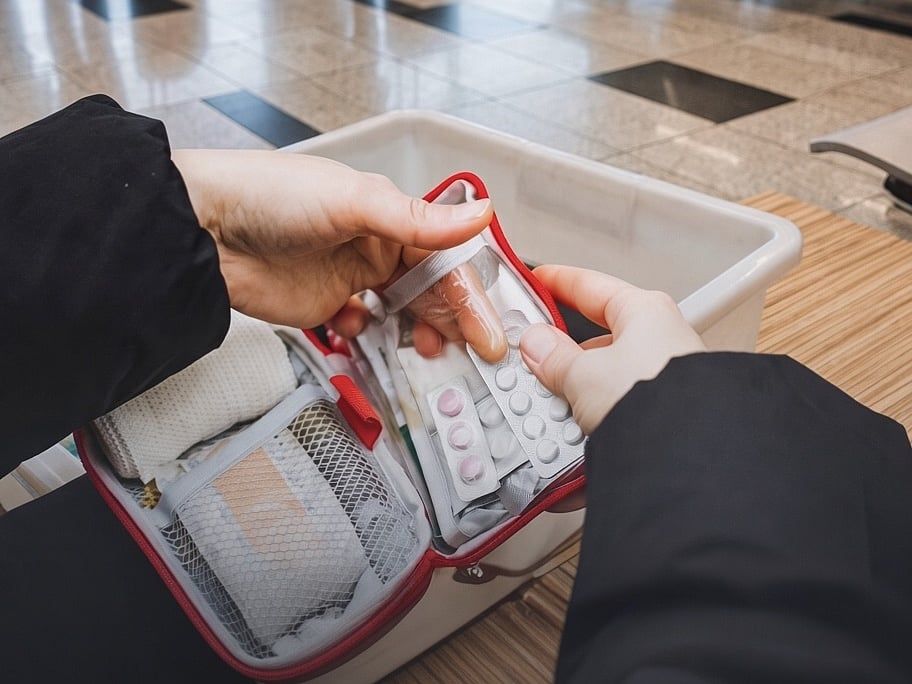
Qatar's Ministry of Public Health (MOPH) has launched an electronic permit system that allows travellers entering or leaving the country to obtain approval online to carry controlled medicines for personal use. The ministry says the move is intended to simplify procedures while keeping strict pharmaceutical oversight in place.
Through the digital platform, travellers can submit applications, upload supporting documents, monitor the status of their requests and receive permits electronically. The ministry said the initiative is designed to speed up processing and to ensure the safe and responsible use of controlled medicines in line with national regulations.
How the application works
Applicants must access the system through Qatar's National Authentication System (NAS), complete the online application and upload the required documents, including a valid medical prescription. NAS, known as Tawtheeq, was launched in 2019 by the Ministry of Transport and Communications as a unified digital identity login for government e-services. It supports a username and password with multi-factor authentication, or a smart ID card, and also offers digital signatures.
Applications are reviewed by the Department of Pharmacy and Drug Control at the Ministry of Public Health before permits are issued in accordance with the country's regulatory requirements. Once all required documents have been submitted, applications will be approved or rejected within three working days. The ministry advised travellers to apply at least five working days before their departure date to allow enough time for processing.
To support the rollout, the ministry has published a user guide explaining how to use the platform. It covers application requirements, step-by-step procedures and the supporting documents needed, and it includes a list of medicines subject to control measures.
Documents, lists and limits
According to the guidance, applicants must also provide a medical report in Arabic or English, a copy of their passport or Qatar ID, and a signed declaration that the medicines are for personal use only. Once issued, the permit must be printed and carried during travel together with the original prescription and medical report.
The accompanying guidance booklet lists 140 controlled medicines that travellers may carry under conditions. Of these, 61 appear on the "Allowed Narcotic List with Conditions" and 79 on the "Allowed Psychotropic List with Conditions".
The guidance also caps the quantity that can be brought in. Narcotic medicines are limited to 10 days of prescribed treatment, while psychotropic medicines are limited to 60 days. Travellers who run out of medication must consult a licensed doctor in Qatar, and further supplies must be obtained through Qatar-licensed physicians and local pharmacies. The guidance further states that injectable controlled medicines must be approved and administered under supervision at licensed facilities.
Travellers without prior approval
The online permit is an advance-approval route rather than the only option. Travellers who have not obtained prior approval must declare any narcotic or psychotropic medicines on arrival at Qatar's ports of entry. They must present a valid prescription and medical report, and the originals must be available on request.
Legal basis
Qatar's rules on carrying controlled medicines rest on Law No. 9 of 1987 on the Control and Regulation of Narcotic Drugs and Dangerous Psychotropic Substances. The ministry's traveller guidelines cite the law and prohibit releasing drugs listed in Sub-schedules A and B of Schedule 1.
Regional context
Other Gulf states have also set out rules on controlled medicines for travellers. In May, Saudi Arabia's Food and Drug Authority (SFDA) issued regulations for pilgrims bringing medications containing narcotic or psychotropic substances into the kingdom during Hajj. These require a clearance permit, and the permitted quantity must not exceed a 30-day supply or the length of the pilgrim's stay, whichever is shorter.