Doctors remove fish bone from Sharjah resident's airway after nearly two months
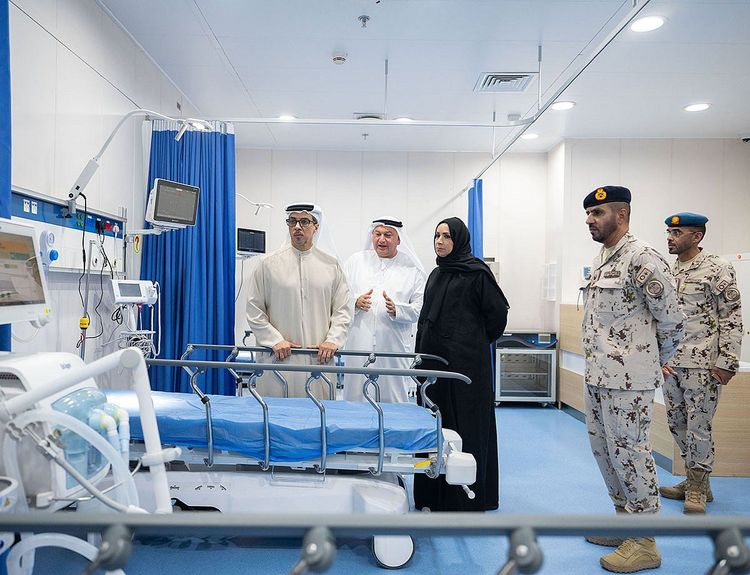
Doctors at Aster Hospital Mankhool removed a sharp milkfish bone from the airway of Unnikrishnan Sivaraman, a 60-year-old Sharjah resident, on September 11. The bone had remained lodged near his right lung for almost two months, causing persistent coughing and breathing difficulties.
 Mariam Al Mansoori
Symptoms persisted after emergency visit
Sivaraman traced the incident to a meal on July 1, when he said he swallowed a milkfish bone. Feeling unwell and nauseated, he vomited blood and sought emergency care at Aster Hospital Al Qusais, according to Khaleej Times.
His symptoms continued after that visit: a persistent cough, chest congestion and worsening difficulty breathing prompted him to seek more medical advice. Another hospital identified the bone in his lower airway on a CT scan. He was referred to Aster Hospital Al Qusais before being sent to its Mankhool hospital.
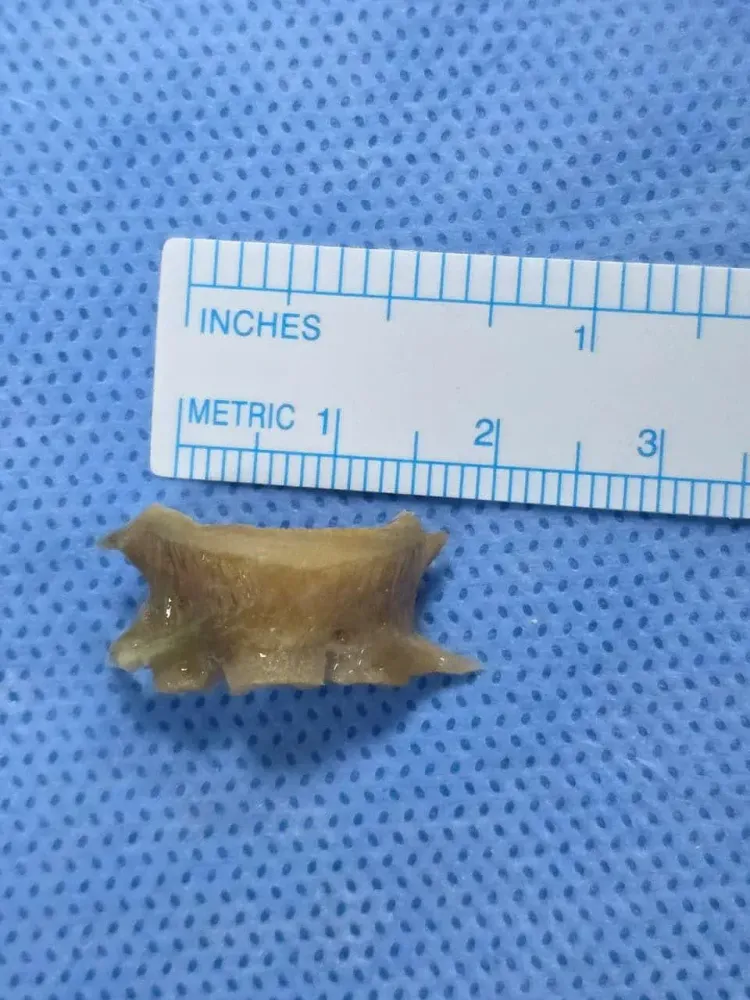
Gulf News reported that Sivaraman arrived at the Mankhool hospital on August 26, 2026. Doctors found the bone in the right main bronchus, which supplies air to the right lung. Measuring almost 2 cm long and 1 cm wide, it was surrounded by inflammation and granulation tissue. The hospital disclosed the case on Monday, October 26, 2026, Gulf News reported.
The location and tissue growth complicated removal
The medical team had to account for several risks: the bone's sharp edges could damage the airway wall or nearby structures, trigger bleeding or obstruct breathing as it was moved. Maintaining stable oxygen levels during extraction was another concern.
"When a foreign body remains in the airway for a prolonged period, inflammation and granulation tissue can make removal more challenging," said pulmonologist Dr. Jolsana Augustine. She said the bone's dimensions, sharp edges and position required carefully controlled movement.
A single-center Turkish study published in Respiratory Care in 2024 examined 45 adults whose inhaled foreign bodies were diagnosed more than 30 days after aspiration. Granulation tissue surrounded the objects in 85% of those cases, and their estimated average time in the bronchial system was 22.8 months.
A 2024 review in Respiratory Care describes foreign body aspiration into the trachea or bronchi as rare in adults and more commonly observed in childhood and advanced age. Objects most often lodge in the right bronchial system because the right main bronchus is more vertical and positioned along the midline.
A coordinated extraction
Augustine worked with ENT specialist Dr. Bharath Neranki Satish Rao and anesthesiologists Dr. Abhishek Jayaprakash Narayan and Dr. Siraj Madayi Meethel to plan the removal.
During the September 11 procedure, Augustine guided the bone upward from the right main bronchus with a bronchoscope. Rao then grasped it with forceps and removed it. He said this final step required particular care because the bone was near the vocal cords, which the team sought to protect. A second bronchoscopy allowed doctors to inspect the airway and remove secretions.
For adults, the 2024 Respiratory Care review gives a success range of 60% to 90% for foreign-body extraction using flexible bronchoscopy. A separate multicenter South Korean study covering 138 adults between 2000 and 2019 reported successful removal with that method in 91.3% of cases. Minor bleeding occurred in 3.6% and fever in 0.7%, according to the study, published in PLoS One in 2022.
Fish bones among adult food-related cases
The objects adults inhale vary by region. In the South Korean study, teeth accounted for the largest share at 37.7%, followed by chicken bones at 15.2%, nuts at 14.5% and fish bones at 9.4%. Iatrogenic events, or those related to medical care, accounted for 37.0% of cases.
Gulf News reported that fish bones are among the most common food-associated foreign bodies seen in adults, with a higher incidence reported in Asian populations.
Discharged within hours
Sivaraman was stable enough to leave the hospital a few hours after the procedure. At a follow-up appointment, he reported easier breathing and said he did not need additional treatment.
"I am very thankful to the doctors for the care and support I received," he said. "I am very happy with my recovery and the significant improvement in my breathing and overall condition."