FeedMeNot launches with pretend food orders, a Rs 0 bill and no delivery
Two founders have launched FeedMeNot to help users wait out food cravings by simulating an order rather than fulfilling one. The app borrows the ordering process familiar to Swiggy and Zomato customers, but no food arrives and users pay nothing for their pretend orders.
 Mariam Al Mansoori
A delivery simulation designed around waiting
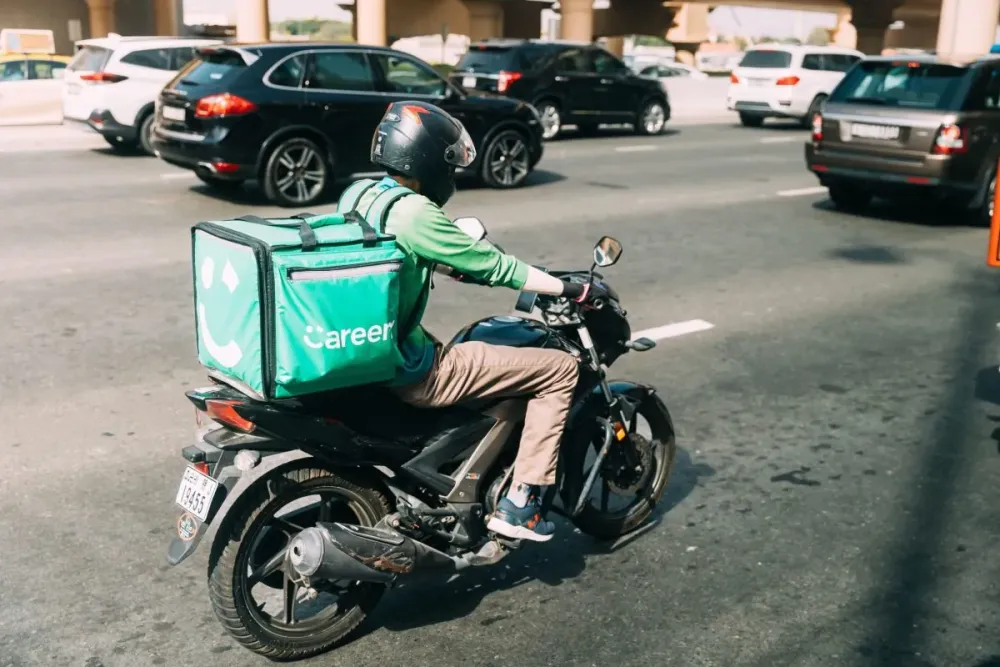
FeedMeNot's founders describe their target as the 1 a.m. craving, "where the wait is the pause". Users choose from 73 fictional restaurants, add items to a cart and check out with a bill of Rs 0. A simulated rider then travels across a map, giving users something to watch while they wait for the craving to pass.
The app records the money users did not spend, the calories they skipped and the number of cravings they let pass. Its website says the service has no affiliation with Swiggy, Zomato or other delivery platforms, and that placing an order does not contact a real restaurant.
According to FeedMeNot's website, much of a craving's pull subsides within 15 to 30 minutes when a person does not act on it. That waiting period is central to the app's premise, but the founders do not present it as a cure.
The limits of the evidence
The craving window FeedMeNot cites also underlies "urge surfing", a mindfulness technique developed by addictions specialist Dr. Alan Marlatt in the 1980s and used in relapse prevention. ChoosingTherapy.com describes the technique and cites clinical guidance that urges rarely persist beyond 30 minutes when they are not acted on.
FeedMeNot itself has not been clinically tested, its website states. Its founders acknowledge that they do not yet know whether the simulation affects actual purchases: "We are early and do not know yet how much it changes real ordering".
Experts interviewed by BBC News in September 2026 expressed skepticism about fake ordering as a way to change behavior. University of Michigan neuroscientist Kent Berridge expected the novelty to fade and said he would be "surprised" if many users came back for more than about 10 imaginary orders.
Stanford addiction psychiatrist Anna Lembke raised a different concern. Her bet was that, over time, such sites could "reinforce the same addictive neural networks they are trying to simulate".
Part of a broader pretend-consumption trend
FeedMeNot fits into the category of "dopamine sites": services that reproduce the steps of buying something without the purchase or consumption. BBC News reported in September 2026 that the genre gained traction in South Korea before spreading globally. Examples include FoodNeverComes, Dopamine Shop and FakeHaul, with simulations spanning food delivery, shopping and travel.
FoodNeverComes was built by Purvansh Parmar and Anshul Sharma, both 26-year-old software developers from Udaipur, Rajasthan. According to the BBC, the Indian site reported more than 2.7 million visitors following its June 2026 launch. Its offerings included 22 kitchens, 327 dishes and 319 real recipes.
For context, BBC reporting put Swiggy's consumer order volume alone at roughly 2.5 million a day in FY2025. The delivery industry has also seen Uber's rejected takeover bid for Delivery Hero. FeedMeNot's stated purpose differs from that of delivery services: it aims to help users let a craving pass, not generate a food purchase.
Android access, a browser demo and an iPhone plan
FeedMeNot is available free on Google Play, with some advertising and an optional paid plan that adds features, according to the company. People without an Android phone can use a browser demo that includes a zero-payment checkout and a craving timer.
Trying the simulated ordering does not require signing in. The website says craving records, streaks and statistics remain on the user's phone; an email login code is needed only for users who want to save their progress.
The founders also plan an iPhone version, but have not announced a release date.