Manila condo market enters multi-year correction as POGO exodus exposes structural imbalances
Metro Manila faces a paradox of 82,900 unsold condos amid a national housing shortage of up to 10 million units. The market correction, triggered by the Philippine government's permanent POGO ban, reveals a fundamental mismatch between supply and demand by price segment and location.
Manila condo market enters multi-year correction as POGO exodus exposes structural imbalances
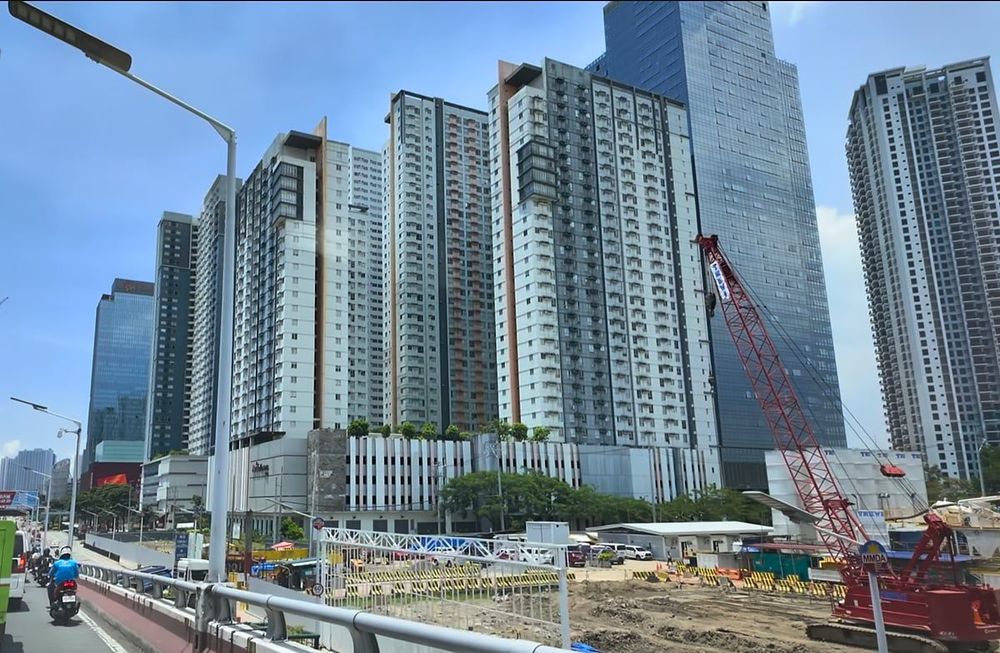
Metro Manila's condominium market has entered 2026 confronting a stark contradiction: 82,900 completed units sit vacant while the Philippines faces a national housing shortage estimated between 6.5 million and 10 million units by government and industry sources.
The disconnect illustrates what industry analysts describe not as an engineering challenge but as a fundamental mismatch between what developers built, where they built it, and who can afford it.
POGO ban triggers demand collapse
The market correction accelerated following President Ferdinand Marcos Jr.'s announcement of a comprehensive ban on Philippine Offshore Gaming Operators in his July 22, 2024 State of the Nation Address. The ban, formalized through Executive Order No. 74 in November 2024 and permanently institutionalized through Republic Act 12312 signed in October 2025, required all POGO operations to cease by December 31, 2024.
At the peak in mid-2024, 60 licensed POGOs operated across the Philippines. By December 2024, only seven remained as the deadline approached, according to PAGCOR data.
The exodus devastated rental demand, particularly in the Bay Area, where vacancy rates exceeded 50 percent during 2025. The Bay Area, built largely on land reclamation projects dating to the 1960s, had grown from 21 percent of Metro Manila's total condo stock in 2021 to nearly 30 percent by recent estimates. The concentration of four integrated resort developments — Solaire Resort & Casino, City of Dreams Manila, Okada Manila, and Westside City Resorts World — had made the area especially attractive to POGO operations.
Vacancy reaches 25 percent across Metro Manila
Metro Manila ended 2025 with residential vacancy of approximately 24.7 percent, according to Colliers. The vacancy rate is expected to remain around 25 percent in 2026 before easing to roughly 23.9 percent in 2027.
Senior Marketing and Communications Consultant Bertalan Feher, who tracks Philippine property data, noted that unsold inventory has climbed from 79,200 units at end-2025 to 82,900 units currently. Nearly 30,000 of these are ready-for-occupancy units already completed and awaiting buyers or tenants.
The oversupply reflects years of speculative building during the POGO boom, when developers launched thousands of similar towers based on expectations of sustained rental demand that evaporated with the government ban.
Market shows uneven recovery patterns
While overall vacancy remains elevated, specific submarkets demonstrate stronger fundamentals. Makati CBD, Rockwell Center, and Ortigas Center maintained vacancy rates below 15 percent through 2025, according to Colliers.
The C5 Corridor, spanning from Bagong Ilog in Pasig to Libis in Quezon City along the 44-kilometer road network, recorded an 86 percent average condominium take-up rate in Q3 2025, one of the strongest performances in Metro Manila on a per-submarket basis. The opening of the Cavitex-C5 Link Expressway Segment 3B on March 30, 2026, which cut travel time between Taguig and Parañaque from approximately 1.5 hours to 15 minutes, is expected to further strengthen the corridor's appeal.
Developers sold approximately 10,100 preselling and ready-for-occupancy units in 2025, an 8 percent increase from 2024, driven partly by aggressive promotions including discounts, extended payment terms, furniture packages, and lower cash requirements.
The mid-income segment accounted for 77 percent of net take-up in Q3 2025, indicating genuine demand exists for reasonably priced housing in accessible locations. Luxury and ultra-luxury segments have also performed relatively well, with wealthy buyers less dependent on mortgages and often purchasing for lifestyle or wealth preservation rather than rental yield.
Financing conditions ease but affordability gap persists
The Bangko Sentral ng Pilipinas cut its key policy rate to 4.25 percent in early 2026, with the overnight lending facility rate at 4.75 percent as of March. Pag-IBIG Fund has offered housing loan rates as low as 4.5 percent for homes above the socialized housing ceiling, valid through end-2026.
Despite easier financing, a fundamental affordability mismatch persists. A condominium priced at ₱4 million to ₱6 million may represent a discount from luxury levels but remains unaffordable relative to household incomes for most Filipinos requiring housing.
The housing shortage is concentrated in socialized and affordable segments for low- and middle-income families. The government's Pambansang Pabahay Para sa Pilipino Program completed approximately 438,000 units between its 2022 launch and late December 2025. The Department of Human Settlements and Urban Development estimates a more conservative 2.2 million-unit backlog and is urging private developers to invest in socialized housing.
Academic research published in March 2025 provided a higher estimate of 8.25 million units as of that date, with projections showing the backlog could reach 11.2 million by 2030 absent intervention.
New supply continues despite oversupply warnings
Approximately 13,000 new condominium units are expected to enter Metro Manila in 2026, with roughly one-third concentrated along the C5 Corridor, according to Colliers. The concentration creates both opportunity and risk, as infrastructure and employment growth can support demand while simultaneously intensifying competition among projects in an already oversupplied market.
Industry observers expect developers to become more selective, tempering Metro Manila launches while diversifying geographically and exploring niche markets including provincial cities, horizontal housing, affordable housing, mixed-use developments, transit-oriented projects, and targeted luxury developments.
Multi-year adjustment expected
Analysts describe the current phase as a repricing rather than a market collapse. Colliers expects vacancy to peak around 2026 before easing in 2027, suggesting a slow normalization rather than a rapid rebound to pre-POGO conditions.
The correction is forcing the industry back toward fundamentals including location quality, affordability relative to income levels, livability features, genuine rental demand, and connectivity to employment centers and transport infrastructure.
For end-users and patient investors, the current environment offers negotiating leverage on quality units in supply-constrained, well-connected locations. The risk remains buying generic units in oversupplied districts primarily because of developer discounts.
The next growth cycle, if it materializes, is expected to be narrower and more selective, driven by real demand rather than speculation. Units connected to MRT and LRT stations, major business districts, universities, hospitals, airports, and walkable retail districts are positioned to outperform interchangeable towers in poorly connected areas.