Thousands rally in Rio against Bolsonaro ahead of Brazil's runoff election
Student-led protests in Rio de Janeiro draw thousands opposing Flavio Bolsonaro's candidacy, as Brazil prepares for October 25 runoff between the far-right candidate and incumbent President Lula.
 Michael Reynolds
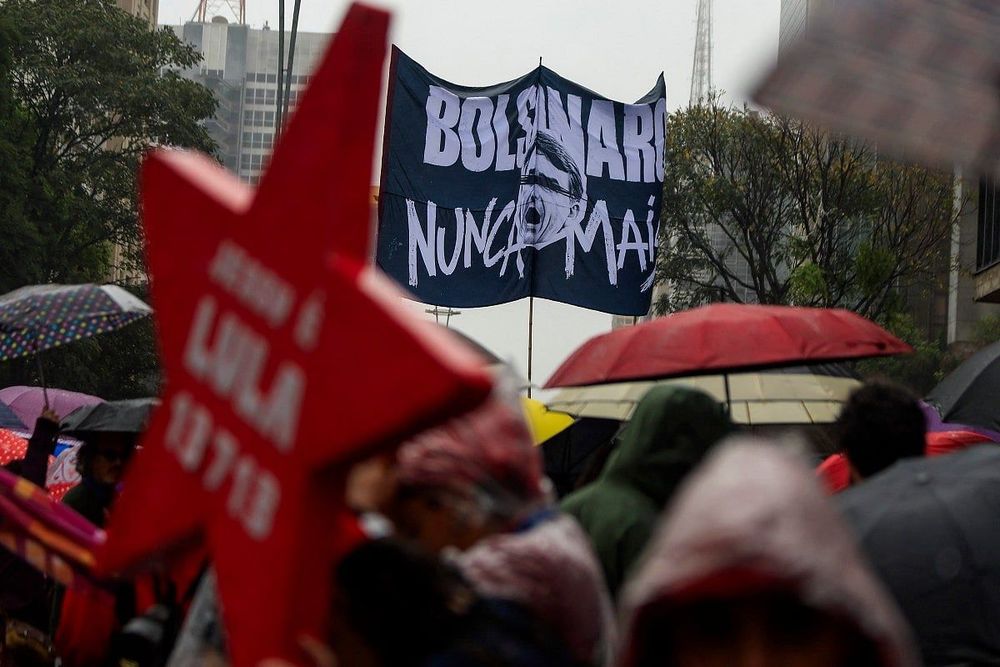
Thousands rally in Rio against Bolsonaro ahead of Brazil's runoff election
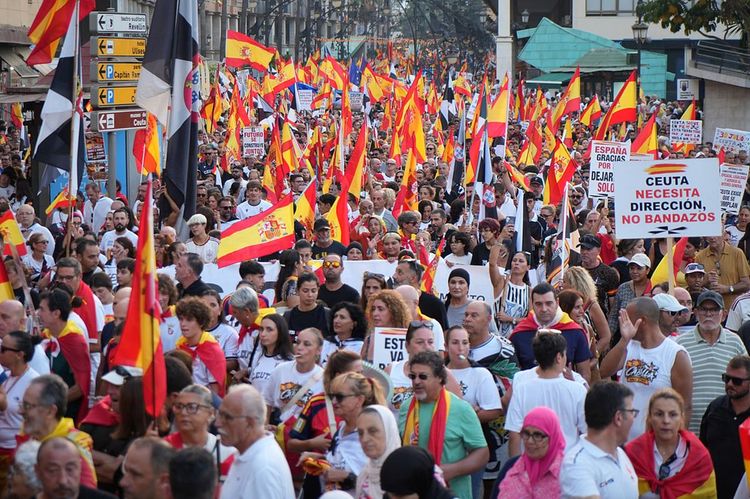
Thousands of demonstrators flooded downtown Rio de Janeiro on Wednesday in a student-led march against far-right presidential candidate Flavio Bolsonaro, as Brazil's polarized electorate prepares for a high-stakes runoff election on October 25.
The protest came just days after Flavio Bolsonaro, 45, emerged as the frontrunner in Sunday's first-round vote, shocking Brazil's left and setting up a decisive battle against incumbent President Luiz Inácio Lula da Silva.
Protesters filled the streets with drums, fireworks and chants of "Never Again Bolsonaro," expressing fears about a potential return of far-right governance to Latin America's largest democracy. The demonstration drew significantly larger crowds than Lula's rally at the same location before the first round.
"I'm here because I believe in democracy. Because I'm scared," said Alice Carneiro, a 25-year-old maritime shipping administrator, tears streaming down her face as she voiced concerns about possible repercussions for her transgender wife.
Shadow of the pandemic
Many demonstrators invoked memories of governance under Flavio's father, Jair Bolsonaro, who served as president from 2019 to 2022. The elder Bolsonaro's handling of the Covid-19 pandemic remains a painful chapter in Brazilian history, with the country recording more than 700,000 deaths—the second-highest toll globally after the United States. Jair Bolsonaro famously dismissed the virus as a "little flu."
"I remember my family's lives being at risk during the pandemic...I remember the vaccine denial," Carneiro added.
Jair Bolsonaro is currently serving a 27-year prison sentence at Brazil's Federal Police headquarters in Brasilia, following his conviction by the Supreme Court on September 11, 2025, for attempting a coup after his 2022 electoral defeat. He formally designated Flavio as his political heir in December 2025, after being barred from office both by his criminal conviction and a separate 2023 electoral court ban extending until 2030.
Economic uncertainty fuels anxiety
Flavio Bolsonaro has campaigned on sweeping budget cuts and economic reform, brandishing scissors in rallies to echo Argentine President Javier Milei's chainsaw approach to government spending. His promises have resonated with financial markets—the Sao Paulo stock exchange rallied to record highs following the first-round results.
Brazil faces mounting fiscal challenges, with general government debt projected to reach between 83.7% and 95% of GDP in 2026, depending on measurement methodology. The country's benchmark Selic interest rate stands at 13.75%, among the highest real interest rates globally, driving up debt-servicing costs.
However, protesters expressed deep concern about potential cuts to social programs. Demonstrators recalled budget reductions under Jair Bolsonaro to federal universities, research scholarships and the Farmacia Popular program, which provides free or discounted medicines to millions of Brazilians.
"It's pointless for me to pass the entrance exam only to end up at a university that lacks funding," said Emmanuel Araujo, 19, who is preparing for university entrance exams.
Democracy concerns mount
First-time voter Iara Pinheiro, 16, carried a placard reading "No to the father, no to the son." She voiced concerns about democratic backsliding: "I am a Black woman and I think we'll lose our rights if things continue the way they are and we elect Bolsonaro again. I think we will end up losing our democracy."
Flavio Bolsonaro has pledged to seek amnesty for his imprisoned father, a promise that alarmed many demonstrators. "Granting amnesty for coups gives the green light for new coups," read one protester's sign, referencing the January 8, 2023 riots when Bolsonaro supporters stormed and vandalized government buildings in Brasilia, including Supreme Court headquarters, just days after Lula's inauguration.
Several additional pro-democracy rallies are planned in the coming days as the campaign intensifies.
Campaign reset
Both candidates are retooling their strategies ahead of the October 25 runoff. Flavio Bolsonaro has focused on coalition-building and doubled down on plans to shrink the state and modernize the tax system, promising to leverage the right's strengthened position in Congress to push through constitutional reforms.
Lula, who turned 80 during the October 4 first round and will celebrate his 81st birthday just two days after the runoff, is seeking an unprecedented fourth presidential term. After serving from 2003 to 2010 and returning to office in 2023 following his defeat of Jair Bolsonaro, the incumbent president has overhauled his campaign approach.
In a notable shift, Lula posted his first video selfie on Wednesday to Instagram and TikTok, targeting the social media sphere where the right has long held advantage. "Come on, folks, let's hit the streets; let's go talk to people," he urged in the clip, signaling a more energized final push for votes.