Abu Dhabi warns livestock enclosure tenants of fines and loss of plots
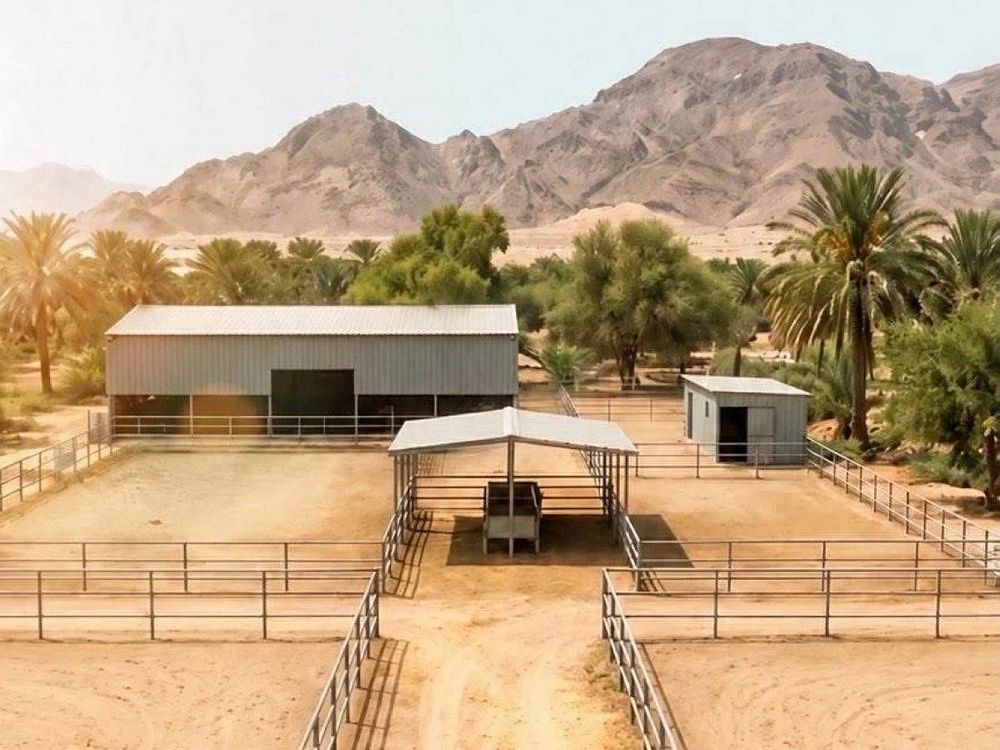
Tenants of Abu Dhabi's livestock enclosures, known locally as Izab, could face fines or repossession without advance notice if they breach rental conditions, the Department of Municipalities and Transport (DMT) has warned.
 Mariam Al Mansoori
Activity deadlines and livestock requirements
DMT outlined four rental requirements: prepare the enclosure and start its approved activity within the allotted time; keep the minimum number of animals required for the plot's size; observe the leased dimensions and boundaries; and keep the site clean, taking waste only to designated disposal locations.
The minimum livestock requirement also applies at lease renewal. DMT said tenants must understand their responsibilities for managing the enclosures. It described the rules as measures to safeguard land and natural resources, keep allocated plots in their intended use and prevent breaches that could cost tenants their rental rights.
The rental framework dates to Executive Council Decision No. 73 of 2015, issued by then Abu Dhabi Crown Prince Mohammed bin Zayed Al Nahyan. According to Al Bayan's September 9, 2015, report, the decision classified all Izab in the emirate as leased land, provided for a unified contract for each enclosure category and set rental rates per square meter through a schedule.
That decision required tenants to be UAE nationals age 21 or older. They had to own, or undertake to own, the minimum number of animals specified for breeding enclosures, with all animals registered in the emirate's animal identification and registration system. Renting another Izba was allowed only under specified conditions, and subletting was prohibited, Al Bayan reported.
Boundaries, neighbors and site upkeep
DMT also instructed tenants to follow Abu Dhabi's laws, customs and traditions, respect others' privacy and avoid disturbances. Use of each plot must stay within the dimensions and boundaries recorded in its contract, including its assigned reference number.
The department said cleanliness obligations extend beyond the enclosure to the surrounding area. Tenants must maintain the site's general appearance and arrange for waste to be taken to approved disposal facilities.
Land-use restrictions also appeared in the 2015 decision. Al Bayan reported that the combined built area of rest houses, service facilities and worker housing could not exceed 15% of an enclosure's total area. Planting was limited to Ghaf, Sidr and Samar trees; all other vegetation was prohibited.
A separate regulation, Abu Dhabi Agriculture and Food Safety Authority Board of Directors Decision No. 9 of 2020, established sanitary and technical requirements for small animal production units on farms and Izbas. According to the UNEP Law and Environment Assistance Platform (FAOLEX), its scope includes site and construction requirements, animal welfare and health care, biosecurity, food safety management, transport and waste management. It took effect six months after publication in the Official Gazette.
Merging plots and ending a lease
A tenant renting adjacent enclosures may receive municipal permission to combine them if planning restrictions do not prevent it, DMT said. The combined site would be covered by one lease as a single enclosure. The municipality may later undo the merger and return the plots to their earlier arrangement if necessary.
Once a lease expires or is not renewed, tenants must clear the land of structures, facilities, fences, equipment and other waste. They must return it to its pre-lease condition, except where the municipality authorizes additions or structures to remain.
DMT's current warning says failure to meet the rental conditions can lead to repossession without advance notice. The 2015 decision separately provided a lease-cancellation procedure: the head of the municipal affairs department, or a delegate, could cancel a lease for violations after allowing a suitable period for the tenant to vacate. According to Al Bayan, tenants could appeal to the department head within 30 days of notification.
Earlier farm leasing rules
An earlier Abu Dhabi law, issued in 2001, covered cattle, livestock, poultry and ostrich farms. Al Bayan reported on April 29, 2001, that it specified plots measuring 400 meters by 500 meters, renewable 20-year leases and annual rent of 5 fils per square meter.
Under that law, the approved farming activity had to begin within 1.5 years of allocation or the contract would be void. Violations carried penalties of up to AED 3,000, imprisonment for up to three months, or both.