UK's path back to EU hinges on resolving deep Brexit divisions
Prime Minister Andy Burnham's push for closer EU ties faces significant obstacles as Britain remains split over Brexit a decade after the referendum, with unresolved political tensions threatening any prospect of rejoining the bloc.
 Sara Khan
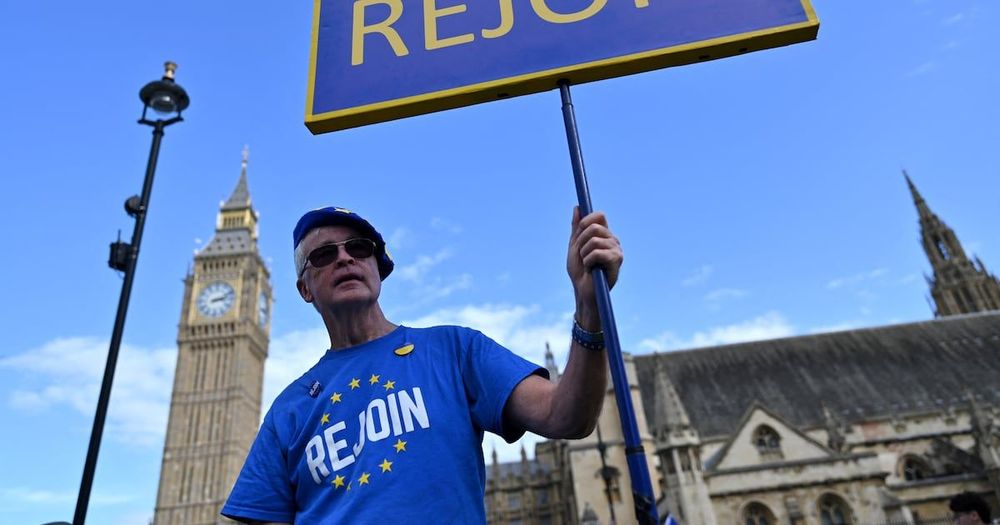
Britain must settle its Brexit argument before seeking an EU return
A decade after the Brexit referendum tore Britain apart, the country's relationship with the European Union has suddenly emerged from political dormancy to become a central diplomatic flashpoint. Prime Minister Andy Burnham, who took office on July 20, 2026 as the seventh prime minister since the 2016 vote, appears eager to pursue closer ties with Brussels. Yet his approach risks reopening wounds that never truly healed.
The confusion surrounding Britain's EU ambitions stems from contradictory signals. Burnham speaks of rapid movement toward rejoining while simultaneously insisting the British public must make the final decision. This duality threatens to resurrect the bitter, protracted battle that defined Brexit itself.
The upcoming summit and ambitious proposals
Much hinges on the upcoming UK-EU Summit on November 20, the second such gathering since Brexit. The first summit, held in London on May 19, 2025, established a strategic partnership. Now Burnham has laid out an ambitious agenda including free trade in food and beverages and expanded youth mobility. These proposals represent radical departures from the status quo, though Burnham signals they are merely initial steps rather than final destinations.
Opposition Leader Kemi Badenoch has criticized the Prime Minister for revealing his negotiating position prematurely. European officials can clearly see this as the beginning of a longer journey, not its conclusion. The question becomes whether Burnham can advance this agenda without splitting the nation once again.
Russian interference claims reignite old wounds
The Prime Minister began controversially by suggesting the referendum result was improperly obtained. Speaking on a podcast, Burnham claimed he received clear confirmation upon entering Downing Street that Russia interfered in the 2016 campaign. Given the leave vote won by just 2 percent, any foreign interference could theoretically invalidate the result and smooth Britain's path back to the EU.
Yet this is hardly a new allegation. It has been made repeatedly and consistently denied by government ministers and security officials. When pressed by the BBC to provide evidence, Foreign Office Minister Stephen Doughty declined to offer specifics, instead making vague accusations about Russian disinformation campaigns costing £1.5 billion annually.
Brexit architect Nigel Farage immediately denounced Burnham as a liar. The exchange demonstrated nothing has truly changed. Old wounds remain raw, ready to reopen at the slightest provocation.
A nation still divided
This confrontation reveals Britain is nowhere near ready for collective consensus on rejoining. While recent polling shows approximately 57 percent of Britons now believe Brexit was wrong compared to 30 percent who think it was right, with opposition to Brexit remaining consistently above 50 percent since July 2022, these are opinion polls rather than binding referendums. A significant and vocal portion of the population still argues departure was correct.
Farage has already stated Burnham's public ambitions have reinvigorated his Reform UK party's support base. Until senior pro-Brexit figures like former Prime Minister Boris Johnson and Farage himself publicly recant their positions, EU leaders have every right to question whether Britain would simply become the renegade member it was before, constantly obstructing and insulting at every turn.
The path back involves substantial hurdles
The path back involves clearing several substantial hurdles. Burnham may wish to make EU membership an election issue in Labour's manifesto. London Mayor Sadiq Khan suggests winning that mandate would eliminate the need for a separate referendum. However, the EU is likely to insist on a public ballot before commencing membership negotiations, arguing that a general election covers multiple issues beyond just the EU. A dedicated referendum would demonstrate support lasting beyond a single government's term. Nearly all countries joining the EU have held public votes.
The European Commission would need to approve readmission, as would a majority in the European Parliament. Critically, all 27 member countries would have a say, and approval is far from guaranteed. Traditional anti-British sentiment could resurface, while individual nations might pursue their own agendas. British diplomats privately indicate that simply resuming where the UK left off appears nearly impossible.
Brexit's economic toll
Brussels would rightly scrutinize Britain's motives. Why now? Why the sudden reversal after a decade? Burnham's answer is accurate: Brexit has failed to deliver. Britain ditched a free trade bloc of 450 million people and lost access to skilled EU labor. Nothing accomplished since has come close to replacing what was forfeited.
A major study by the National Bureau of Economic Research, co-authored by economists including one from the Bank of England, estimated that by the end of 2025, Brexit had reduced UK GDP by 6 to 8 percent, investment by 12 to 18 percent, employment by 3 to 4 percent, and productivity by 3 to 4 percent. At a time of heightened global competition, energy crises, supply chain disruptions and rising living costs, losing 6 percent of GDP represents an enormous self-inflicted wound. Subsequent trade deals, while welcome, have only marginally closed the gap.
Britain desires access to that massive customs-free market and help stemming illegal immigration, which it has failed to control independently. The EU recognizes Britain's desperation and understands these are prizes not to be awarded easily, particularly if they come with risks of renewed anti-EU rhetoric and the possibility that a future administration led by someone like Farage could again upend everything.
Europe's perspective on Britain's return
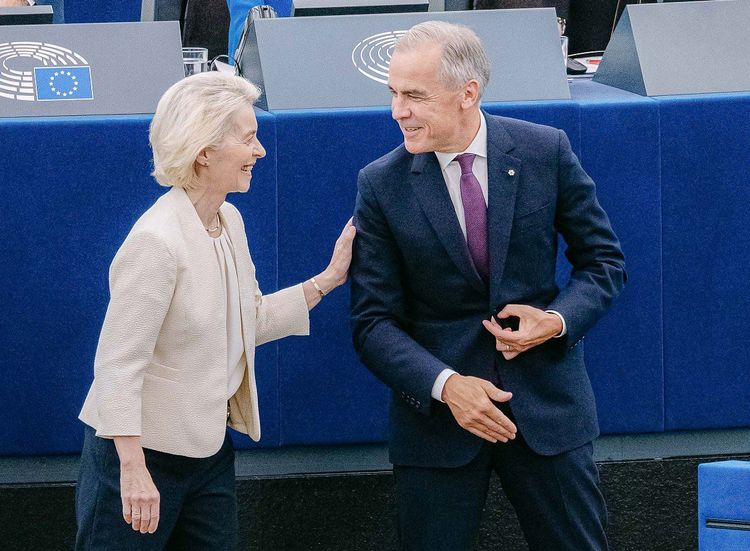
Nevertheless, some in Europe would welcome Britain's return. The UK brings 69.5 million people and could provide economic and political momentum. In a world dominated by superpowers, a united EU could match them. Canadian Prime Minister Mark Carney's September 2026 speech to the European Parliament, where he welcomed European Commission President Ursula von der Leyen's invitation for Canada to become the EU's first associate member, continues to resonate. His embrace of associate membership has met warm responses.
The EU can envision doing business with Carney and Canada. Whether they can say the same with certainty about an unclear, impatient Burnham and historically unreliable Britain remains the fundamental question. Burnham secured 94 percent of MP nominations in his leadership contest, the highest ever in a modern Labour race, suggesting strong party backing. Yet he spent nine years as Mayor of Greater Manchester before returning to Parliament in June 2026, just weeks before becoming Prime Minister following the ousting of Keir Starmer. This rapid ascent and the postponement of the originally scheduled summer summit due to that leadership change underscore ongoing political instability.
The current UK-EU relationship operates under comprehensive agreements including the Withdrawal Agreement, the Windsor Framework, the Trade and Cooperation Agreement, and the Agreement on Gibraltar, all established following Britain's 2020 departure. Altering this framework requires navigating complex legal and political terrain while managing deep domestic divisions that show no signs of healing.