Crown Prince Mohammed bin Salman and Iraqi PM hold security talks in Riyadh
Saudi Crown Prince and Iraqi Prime Minister Ali al-Zaidi discussed regional security, economic cooperation and border protection during a high-level meeting in the Saudi capital, as Baghdad pledged to prevent its territory from being used for cross-border attacks.
 Sara Khan
MBS, Iraqi PM discuss regional security amid rising tensions
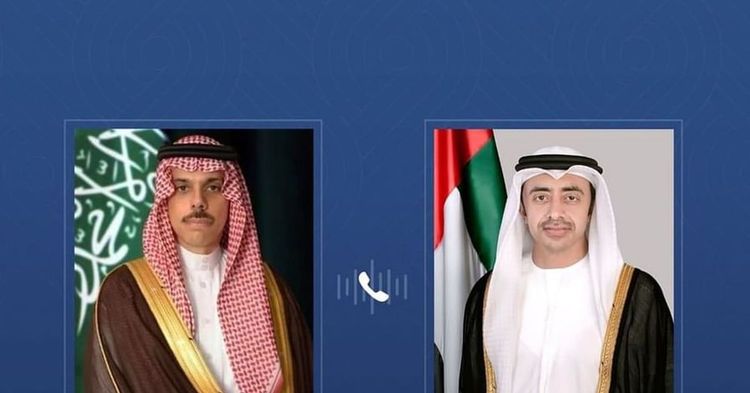
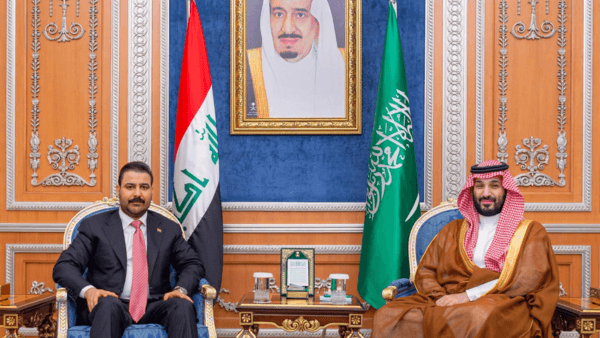
Saudi Crown Prince Mohammed bin Salman and Iraqi Prime Minister Ali al-Zaidi held talks in Riyadh on Wednesday focused on regional security and bilateral cooperation, with Baghdad reaffirming its pledge to prevent Iraqi territory from being used to launch attacks against neighboring countries.
The meeting occurred as al-Zaidi arrived in the Saudi capital to begin an official Gulf tour aimed at strengthening diplomatic ties and addressing mounting security challenges in the region. Relations between the two countries, which share an 811-kilometer border running from Jordan to Kuwait, were reestablished in 2015 after 25 years of isolation following Iraq's 1990 invasion of Kuwait.
Security coordination takes center stage
The leaders discussed regional developments and mechanisms to enhance security and stability through coordinated action, according to a statement from the Iraqi government. They reviewed opportunities to deepen cooperation across multiple sectors, with particular emphasis on security coordination to counter regional threats, the Iraqi News Agency reported.
Al-Zaidi reiterated Iraq's firm stance against allowing its territory to serve as a launching point for attacks or activities that threaten the security of Saudi Arabia and other regional nations. He emphasized Baghdad's commitment to maintaining good-neighborly relations and respecting the sovereignty of all countries in the region.
The Iraqi prime minister condemned the recent attack on King Khalid International Airport in Riyadh, as well as assaults targeting civilians and civilian infrastructure during conflicts. Between October 6 and 12, Yemen's Iran-backed Houthi militia launched attacks on three Saudi airports—Abha, Riyadh and Dammam—killing at least 20 people and injuring more than 370 others in the deadliest series of strikes in Saudi Arabia since 2015.
Crown Prince Mohammed bin Salman affirmed Saudi Arabia's support for the Iraqi government's efforts to promote dialogue and achieve regional stability.
Building on canceled July visit
Wednesday's meeting follows the cancellation of a previously scheduled trip to Riyadh in July amid escalating security tensions. In August, al-Zaidi met with Saudi intelligence chief Khalid bin Ali al-Humaidan in Baghdad, where he similarly stressed that Iraq would not permit its territory to be used for attacks against other nations. The two sides discussed strengthening security cooperation and intelligence sharing, according to the Iraqi prime minister's media office.
Economic partnership deepens
Economic cooperation featured prominently in the discussions, particularly regarding trade, transportation, investment and regional connectivity. Trade exchange between the two countries reached approximately $1.7 billion in 2025, marking a 35 percent increase from the $1.3 billion recorded in 2024. Over 30 Saudi companies currently operate in Iraq, while approximately 46 Iraqi companies maintain a presence in Saudi Arabia.
In an article published Tuesday in Asharq Al-Awsat newspaper, al-Zaidi called for an expanded strategic partnership between Iraq and Saudi Arabia, emphasizing joint planning and economic integration. He highlighted Iraq's Development Road project and transport links with Gulf countries as opportunities to broaden the nation's regional economic role.
The $17 billion Development Road project spans 1,200 kilometers from the Grand Faw Port in southern Iraq to the Turkish border. Expected to generate $4 billion in annual revenues, the infrastructure corridor is projected to create approximately 100,000 jobs. The Grand Faw Port, featuring a 14.5-kilometer breakwater—the longest in the world—is expected to handle 7.5 million containers annually when fully operational by 2028.
Al-Zaidi linked increased investment to improvements in stability, stronger state institutions, anti-corruption measures and a more favorable legal environment for businesses.
Energy security concerns
Energy security is expected to feature prominently in the discussions, with Iraq seeking to protect oil exports amid disruptions to regional energy flows and growing threats to shipping routes and infrastructure. Iraq's crude oil exports suffered severe disruption in 2026, falling to as low as 98,000 barrels per day in May due to the Strait of Hormuz crisis, though exports have since recovered to approximately 2.7 million barrels per day as of October.
In August, Iraq and Turkey signed a one-year agreement extending use of the Kirkuk-Ceyhan oil pipeline, which has a capacity of 750,000 barrels per day. Iraq is working to increase exports through this route as an alternative to Strait of Hormuz shipments.
The Iraqi prime minister is scheduled to travel to Kuwait following his visit to Riyadh as part of his Gulf tour.