UAE condemns deadly Houthi attacks on Saudi Arabia, pledges full support for Kingdom's security
Sheikh Abdullah bin Zayed Al Nahyan spoke with Saudi Foreign Minister Prince Faisal bin Farhan, strongly condemning recent Houthi attacks on Saudi civilian infrastructure and reaffirming UAE's solidarity with measures to protect the Kingdom's security and stability.
 Sara Khan
UAE Condemns Houthi Attacks on Saudi Arabia
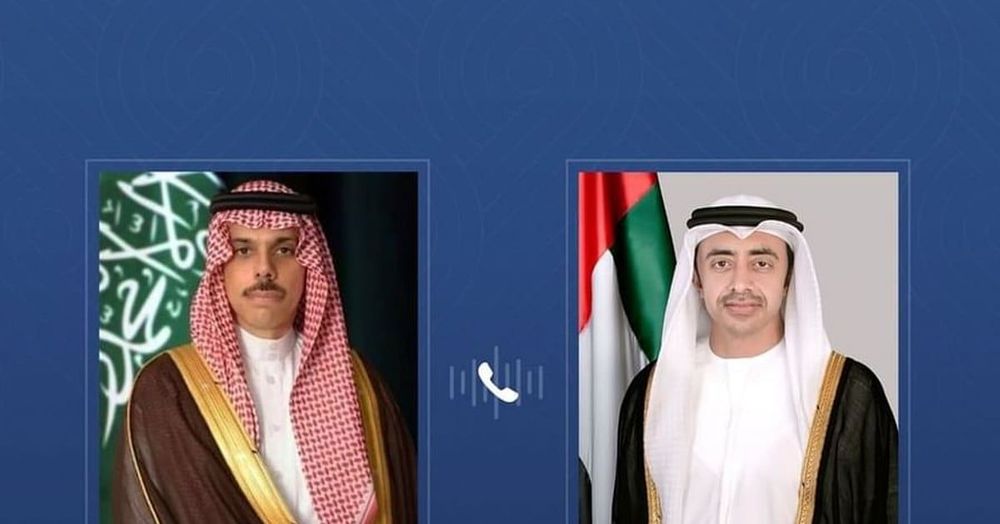
Sheikh Abdullah bin Zayed Al Nahyan, Deputy Prime Minister and Minister of Foreign Affairs, held a telephone call with Prince Faisal bin Farhan Al Saud, Saudi Arabia's Minister of Foreign Affairs, to address the escalating security situation in the Kingdom following a series of deadly attacks.
During the conversation, Sheikh Abdullah strongly condemned the Houthi group's attacks targeting civilians and civilian and economic infrastructure in Saudi Arabia. The UAE minister affirmed his country's full solidarity with the Kingdom and its support for all measures aimed at safeguarding Saudi security and stability.
Deadliest Attacks Since 2015
The attacks between October 6 and 12, 2026, targeted three major Saudi airports using ballistic missiles and drones. King Khalid International Airport in Riyadh, Abha International Airport, and King Fahd International Airport in Dammam were struck in what has become the deadliest series of attacks in Saudi Arabia since the Qatif and Dammam mosque bombings in May 2015. The strikes killed at least 20 people and injured more than 370 others.
The casualties reflected the international nature of the attacks, with victims from eight different countries including the United States, Jordan, Palestine, Syria, Sudan, Egypt, Bangladesh, and Saudi Arabia. The assault on King Khalid International Airport resulted in its closure until at least October 17, 2026, with hundreds of flights cancelled. Major carriers including Air India, Lufthansa, and Pakistan International Airlines suspended services to Riyadh in the wake of the attacks.
Regional Tensions and Yemen Conflict
The recent escalation comes amid broader regional tensions, with the attacks occurring as part of the ongoing Yemen conflict and wider regional instability. A UN-brokered ceasefire that began in 2022 had brought relative calm to the Yemen conflict before breaking down in 2026, marking a return to active hostilities after years of reduced violence. The resumption followed Saudi Arabia's July 2026 bombing of Sanaa airport and the Houthis' subsequent declaration of a maritime blockade on Saudi Arabia.
The Houthis, a Zaydi Shia Islamist movement, seized control of Yemen's capital Sanaa in September 2014, prompting Saudi-led military intervention beginning in March 2015. The conflict has been widely characterized as part of the Iran-Saudi Arabia regional rivalry.
Multiple Security Challenges
Saudi Arabia has faced mounting security challenges in 2026 beyond the Houthi threat. In March, Iran launched missile and drone attacks on Saudi oil refineries including the Ras Tanura facility, adding to the Kingdom's security concerns on multiple fronts.
The UAE's condemnation joins a broader international response to the airport attacks. Multiple countries including Qatar, Pakistan, Australia, Canada, and the United Nations condemned the strikes, with the UN Secretary-General stating that such attacks violate international law.
Regional Coordination
During their telephone conversation, Sheikh Abdullah and Prince Faisal also discussed the latest regional developments and ongoing efforts to maintain security and stability across the region. Prince Faisal has served as Saudi Arabia's Minister of Foreign Affairs since October 2019, previously holding the position of Saudi Ambassador to Germany.
The diplomatic engagement underscores the close coordination between the UAE and Saudi Arabia on regional security matters, particularly as the Kingdom navigates complex challenges from multiple directions in an increasingly volatile regional environment.