Five-year investigation leads to conviction of alleged international drug trafficking mastermind
Dubai Police have revealed details of a complex operation that led to the conviction of a man accused of coordinating large-scale narcotics shipments across international waters, with links extending to multiple countries in Africa and the Middle East.
Five-year investigation leads to conviction of alleged international drug trafficking mastermind
Dubai Police have disclosed details of one of their most complex anti-narcotics investigations, revealing how a five-year intelligence operation led to the conviction of a man investigators dubbed the "drug emperor" for allegedly running an international trafficking network responsible for moving tonnes of narcotics across international waters.
Brigadier Khalid bin Muwaiza, Director of the General Department of Anti-Narcotics at Dubai Police, said the suspect coordinated large-scale drug shipments outside the UAE without carrying out criminal activity inside the country, overseeing deliveries across international waters with links extending to Africa, Egypt, Sudan and Yemen.
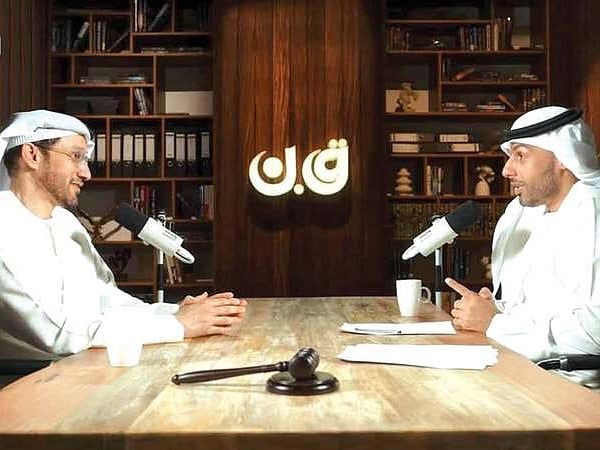
Speaking on the Q.N Podcast on ArabCast, Bin Muwaiza explained the investigation relied on years of intelligence gathering, evidence collected from multiple countries and close cooperation with international law enforcement agencies.
Years of undercover work
The operation included repeated overseas missions by investigators, coordination with foreign security authorities and testimony from suspects arrested in related cases. Bin Muwaiza said undercover informants lived inside the suspect's home for several years without revealing their identities, allowing investigators to document his movements and communications and build a case file exceeding 50 pages.
The investigation incorporated evidence from Operation Ocean Coast, conducted in 2016 in coordination with the Australian Navy off the coast of Tanzania, which resulted in the seizure of one tonne of heroin. The operation, which involved British and Australian naval forces working off the coast of East Africa near Kenya and Tanzania, was the largest heroin seizure ever made at sea at that time, with 1,032 kilograms of narcotics discovered aboard a dhow 30 miles off the coast.
The accumulated evidence ultimately led to the suspect confessing before being convicted by the UAE's federal courts.
Technology-driven trafficking
Bin Muwaiza clarified the methods used by drug traffickers have changed dramatically over the past decade, replacing traditional face-to-face transactions with technology-driven distribution. Dealers now commonly receive payment electronically before sending buyers GPS coordinates through smartphone applications, directing them to hidden narcotics without any physical meeting between buyer and seller.
He explained that Dubai Police have shut down 1,291 websites and online accounts used to promote or facilitate drug trafficking through a specialised cybercrime unit. Recent enforcement efforts have intensified, with authorities blocking 232 websites promoting illegal drugs in the fourth quarter of 2025 alone, followed by 110 additional websites blocked in the first quarter of 2026.
The force not only removes the online platforms but also tracks those behind them, lures suspects into controlled operations and refers them to the judicial authorities. In the fourth quarter of 2025, Dubai Police shared 121 intelligence leads with international law enforcement partners, contributing to 24 arrests worldwide.
Treatment alongside enforcement
The senior officer warned that one of the most concerning trends is the progression from drug use to drug dealing, saying many addicts eventually become distributors to finance their addiction. He recounted cases in which entire families, including parents and children, became involved in drug trafficking after first using narcotics, highlighting the devastating social impact of addiction.
Bin Muwaiza stressed that Dubai Police continue to prioritise treatment alongside enforcement. Under UAE law, individuals struggling with addiction can seek treatment voluntarily, or be referred by close relatives, without facing criminal prosecution under Article 89 of the country's anti-narcotics legislation. Since the provision was introduced in 2017, Dubai Police have handled 576 such cases where individuals or family members voluntarily sought help.
He said those admitted for treatment typically undergo four to six weeks of primary rehabilitation, followed by outpatient care and random drug testing. Failure to comply with follow-up testing may result in imprisonment of up to two years.
Strengthened legal framework
Bin Muwaiza said the establishment of the National Anti-Narcotics Authority, which was created by federal decree-law in August 2025 as an independent federal entity affiliated to the UAE Cabinet, reflects the leadership's commitment to strengthening the fight against drug crime. The authority, chaired by Sheikh Zayed bin Hamdan bin Hamdan Al Nahyan, replaced the General Department of Anti-Narcotics in the Ministry of Interior.
He added that the authority has already contributed to tougher penalties for offences such as secretly administering drugs to others and coercing people into drug use. In December 2025, the UAE amended its anti-narcotics law to introduce stricter penalties, including a minimum of five years imprisonment and fines of at least AED 50,000 for pharmacies dispensing narcotics without prescription and physicians prescribing controlled substances without proper licensing.
The amendments reinforce cooperation with Interpol and international partners to pursue major traffickers beyond the UAE's borders, building on the country's zero-tolerance policy for recreational drug use under Federal Law by Decree No. 30 of 2021 on Combating Narcotics and Psychotropic Substances.