Younger Gulf investors favor stocks and crypto over property, IG analysts say
Smartphone access and high property prices are reshaping how young people in the UAE and wider Gulf invest, according to IG analysts. They say younger investors increasingly prefer assets they can trade readily, rather than following earlier generations into real estate.
 Layla Haddad

A different starting point for investors
Speaking to Khaleej Times, IG MENA CEO Sharaz Hussain contrasted his generation's reliance on property to build wealth with younger investors' interest in stocks, commodities and crypto. Trading apps now put products previously reserved for institutions within reach of ordinary investors, he said. "The thing that has fundamentally shifted in financial markets is access," he said.
Hussain said property prices have become nearly unaffordable for younger buyers. He also argued that real estate returns have lagged equities over the past decade. "Property is fine as a place to live," he said, while pointing to the greater liquidity of stocks, commodities and bonds.
Angeline Ong, senior investment analyst at IG Group, said crypto has replaced property or gold as the first investment for many younger people, who subsequently branch into other investing and trading. Hussain described crypto as the first asset class in which retail investors, rather than financial institutions, have taken the lead.
Binance's global user figures offer another view of younger investors' participation across asset types. Gen Z makes up 44% of users of its Direct Stocks and bStocks products, according to Tarik Erk, Binance's Head of MENAT and Senior Officer Abu Dhabi. The generation also accounts for 48% of users who adopted all three of Binance's traditional-finance products. Those figures are not specific to the UAE.
The UAE received more than $56 billion in crypto inflows during 2024 and 2025, according to the Dubai Government Media Office. In 2025, firms regulated by Dubai's Virtual Assets Regulatory Authority, or VARA, recorded transaction volumes of almost Dh2.5 trillion ($680 billion). By mid-2026, VARA had fully licensed 50 companies.
Gold and oil draw trading interest
The interest in crypto has not displaced commodities. In eToro's fifth UAE Retail Investor Beat survey, which covered 1,000 retail investors, gold, oil and other commodities became the most widely held asset class. Commodity ownership reached 56%, compared with 47% in August 2025, while crypto holdings remained unchanged at 54%.
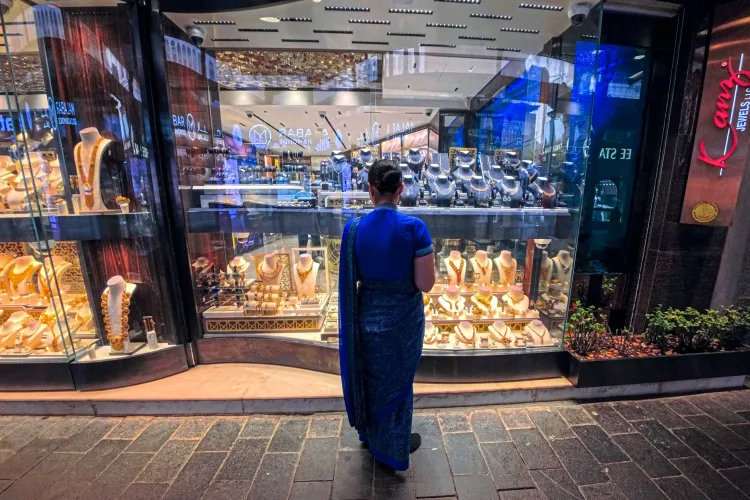
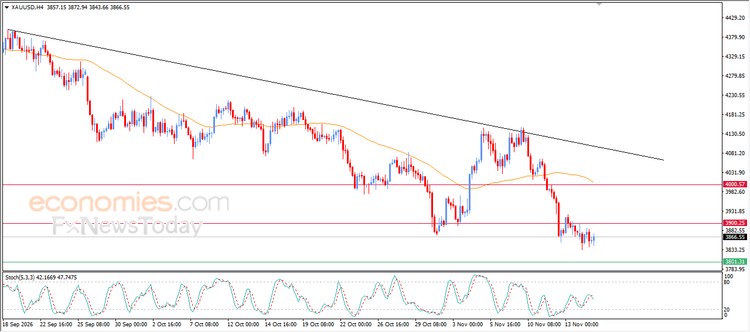
Hussain said gold and oil attract more interest in the Gulf than in other markets. IG's UAE business reported that oil trading volume increased 336% year over year from January through the end of October 2026, while gold trading volume grew 207%. A company statement also reported increases of 32% in the number of clients trading oil and 73% in those trading gold over that period.
IG's UAE active-client count rose 38% year over year in October 2026, according to the statement. Hussain linked IG's growth to broader market access and said 2026 was its "all-time record year since inception" for both revenue and clients. Ong said geopolitical volatility had also increased demand for trading platforms.
For stock investments, UAE clients tend to concentrate on US technology companies, Hussain said, mirroring preferences elsewhere. "It becomes a play on technology stocks," he said.
UAE confidence after regional conflict
Hussain characterized the preceding six months as a time of "hold or neutrality" among investors in UAE equities. Nevertheless, he said the country had recovered "incredibly fast" from six months of regional conflict. He cited a Network International report showing a 22% year-over-year increase in resident spending.
He attributed the economy's resilience to substantial cash holdings at businesses and in government, low corporate leverage and less dependence on credit than in Western markets. He also praised fiscal stimulus and the government's quick action on tourism, licensing and golden visas.
Hussain highlighted an IMF forecast for UAE GDP growth above 7% in 2027, describing that pace as remarkable for an economy with the country's income level. The IMF's assessment at the conclusion of its 2026 Article IV mission, announced November 17, projected real GDP growth of 7.3% in 2027 and non-oil growth of 5.4%.
That forecast was 0.4 percentage points below the 7.7% growth estimate for 2027 in the IMF's October 2026 Regional Economic Outlook. The Article IV assessment also projected average inflation of about 5% in 2026, declining to about 3% in 2027.
According to Hussain, oil and gas now account for only about 20% of the region's revenue. He pointed to expansion in AI, property, construction and tourism, as well as the increased weight of regional markets in MSCI indices.
IG's outlook for US stocks
Ong said IG's research spanning 25 years found an average S&P 500 gain of roughly 8% in the three months following US midterm elections for investors who stayed invested. The average gain from October to the following October was about 12%, she said.
She said divided US government has historically benefited markets by limiting policy changes through gridlock. IG remains "cautiously optimistic", she added, while warning that unexpected policy moves can quickly alter sentiment.
Retail buying during market declines has helped support stocks, according to Ong. She said technology shares were expected to lead any rally.