AI Selloff Drives Wall Street's Worst Week Since April 2025
A seventh consecutive session of losses on Friday, November 20, left the S&P 500 and Dow Jones Industrial Average more than 10% below their recent records. Selling intensified across artificial intelligence stocks as investors questioned technology valuations and the returns on massive AI infrastructure investments.
 Layla Haddad
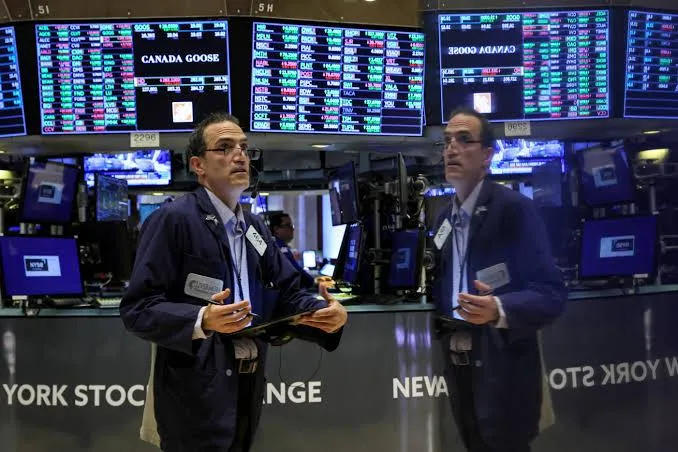
Nasdaq loses about 10% for the week
US stocks posted their weakest weekly performance since April 2025. The Nasdaq Composite lost about 10%, its steepest weekly decline since March 2020, while the S&P 500 shed 8.6% and the Dow fell 8%. The S&P 500 and Dow both entered correction territory.
Friday's largest decline among the major indexes came in the Nasdaq Composite, which closed at 22,617.73 after losing 1,261.47 points, or 5.28%. The S&P 500 finished at a seven-month low of 6,910.39, down 265.44 points, or 3.70%.
The Dow ended the session at 48,147.33, a loss of 949.73 points, or 1.93%. Smaller stocks also retreated: the Russell 2000 fell 2.82% to approximately 2,580. The CBOE Volatility Index rose about 31% to 37.28.
AI losses deepen after weeks of pressure
Concerns about the profitability of AI investments weighed on Nvidia, which lost approximately 14% on Friday and 23% over the week. Selling spread across chipmakers, with Micron Technology down 13.9%, Advanced Micro Devices down 13.3% and Broadcom down 12.1%. The Philadelphia Semiconductor Index dropped 10.7%.
Nvidia's decline also followed company-specific turmoil. By November 18, the stock was about 36% below its October 6, 2026 record-high close. Reuters attributed much of that retreat to CEO Jensen Huang's abrupt resignation the previous week amid revelations of extramarital affairs.
The broader reassessment of AI stocks was already evident before Friday. Reuters reported that the Nasdaq-100 had lost around $2 trillion in market value during November as of November 18, amid concerns about valuations, China, data-center spending and tighter regulation.
Reuters also linked pressure on the AI trade to fears that Democrats' sweeping November midterm election wins would bring tougher regulation of data-center buildouts. Those concerns had helped push the Nasdaq into correction territory earlier in the month.
Anthropic fell about 9% to $88.30 on Friday, erasing most of its first-day gains after Thursday's record IPO. According to CNN Business, the November 19 offering raised $81.3 billion, exceeding the previous record set by SpaceX's $75 billion June offering. Anthropic priced its shares at $83; they closed their debut at $97.17, up 17%, giving the company a fully diluted valuation of about $1.76 trillion.
Borrowing costs and inflation remain in focus
Alongside valuation concerns, rising financing costs have added pressure on technology companies that borrow heavily to fund expansion. Expectations of further Federal Reserve rate increases have intensified that strain. Fed Governor Lisa Cook has indicated that current borrowing costs are not high enough to contain inflation.
At its October 28 meeting, the Fed voted 10-2 to leave its benchmark target range at 3.75% to 4.00%. Cook and Cleveland Fed President Beth Hammack dissented, preferring a quarter-point increase.
According to the Associated Press, minutes released November 18 showed that nearly all Fed officials expected a quarter-point hike in December. CME FedWatch placed the probability of a December increase at nearly 95%, the AP reported.
Investors' next major inflation update is the October personal consumption expenditures report, scheduled for November 25. Admirals identified it as the last major inflation reading before the Fed's December 9 decision. In September, headline PCE inflation was 3.6% from a year earlier, while core inflation was 3.1%, according to Admirals.