Inpex maintains Middle East commitment despite Hormuz shipping disruption
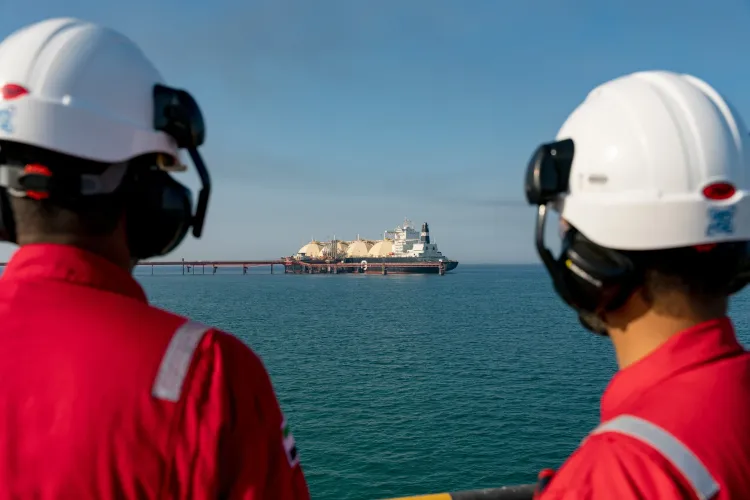
Inpex intends to keep the Middle East central to its business despite shipping disruptions that have complicated its offshore operations in Abu Dhabi. The Japanese producer's onshore output in the emirate has continued uninterrupted, according to its local managing director.
 Omar Al Nuaimi
Offshore difficulties have not changed investment plans
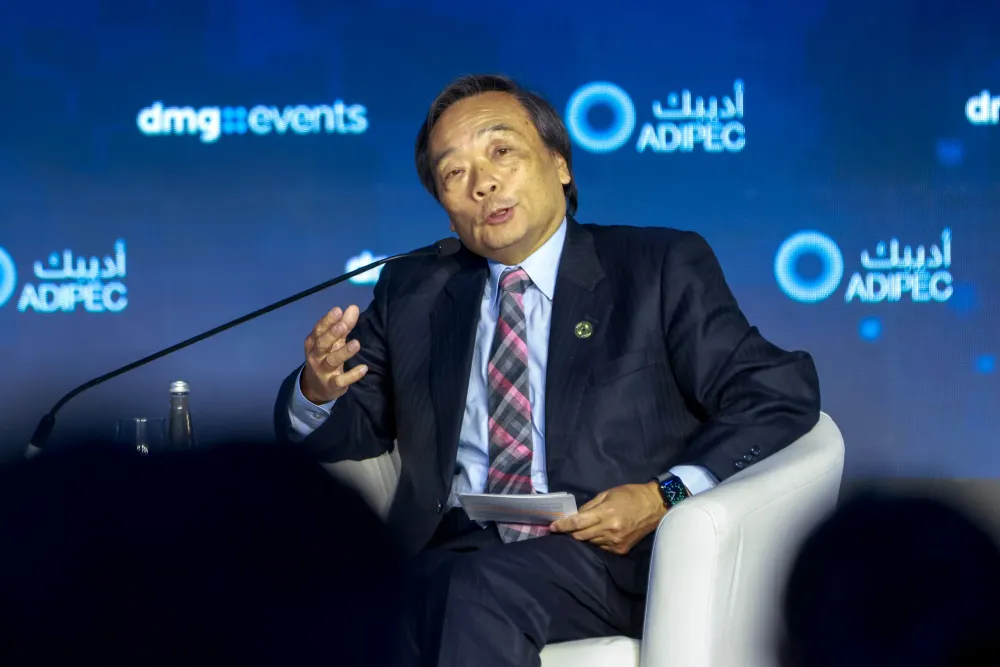
Speaking to The National at Adipec in Abu Dhabi, Masato Kamiya, managing director of Inpex's Abu Dhabi business, said he did not expect either Japan or the company to reduce its reliance on Middle Eastern oil. Inpex is Japan's largest oil and gas producer.
"We will try our best to work together with others to increase the production," Kamiya said. He expressed a desire to supply Japan with more Abu Dhabi crude, while cautioning that an increase would depend on market conditions.
Kamiya did not specify the scale of the difficulties affecting offshore operations. He said onshore production had continued "without any disruption during this crisis".
Earlier figures show the effect on the company's sales. Inpex's senior executive vice president, Toshiaki Takimoto, told Reuters that Abu Dhabi crude sales dropped about 30% from a year earlier in the six months ended June 30, 2026, because of the Iran war. He said Inpex still intended to invest in raising regional production.
Inpex has produced oil offshore Abu Dhabi since 1973. Its interests include 12% of Upper Zakum, one of the world's largest offshore oilfields, and 10% of Lower Zakum, with concessions running to 2058. Kamiya said Upper Zakum's development remained on schedule but gave no production figures. At the aging Lower Zakum field, he identified reservoir-pressure management as essential both to sustaining output and to increasing it.
Kamiya said Inpex still wanted a geographically balanced portfolio, while emphasizing the value of overseas production rights for Japanese companies because Japan lacks natural crude oil resources. As he put it, "but what I can say today [is] that Middle East is still a core area".
Japan diversifies supplies without a reduction target
Japan entered the crisis heavily dependent on the region: Middle Eastern suppliers provided about 94% of its crude imports in 2025. Shipping through Hormuz was disrupted after US-Israeli strikes on Iran began on February 28. By April, Japan's crude imports were down to roughly 850,000 barrels a day, almost two-thirds below the year-earlier level and the lowest in records dating to 1979.
Although Japan began the crisis with emergency oil stocks covering about 254 days of consumption, it started releasing 80 million barrels from government reserves in March. That was its largest-ever drawdown and part of an internationally coordinated response to supply shortages. The crisis also drove gasoline prices to record highs and constrained petrochemical production by tightening supplies of naphtha, a key feedstock.
Refiners sought replacement supplies and routes. Reuters reported that Japan imported more than 4.5 million metric tons of US crude from March through June 2026, up from less than 1 million tons in the same months of 2025. The increase of more than 400% offset a 54% decline in Middle Eastern shipments, and the US became Japan's largest oil supplier during that period. The voyage from the US takes about 29 days, compared with roughly 21 days from the Middle East.
By September, the UAE supplied 48.5% of Japan's crude imports, much of it loaded outside Hormuz, while the US accounted for 27.5%. Japanese Trade Ministry figures put the Middle East's combined share at 68.4%.
Japan's August 26 energy-resilience plan addresses both alternative supplies and transport risks, according to Reuters. It calls for financial backing through the Japan Organization for Metals and Energy Security, or JOGMEC, for pipelines that bypass Hormuz. Other provisions include a levy-funded arrangement to share refiners' and traders' extra transport costs, reinsurance for shippers, and national naphtha reserves held as crude oil.
The plan sets no target for cutting reliance on Middle Eastern crude. Specific measures, including legislative steps, are due to be finalized by the end of 2026.
Higher earnings forecast and a broader production goal
The Abu Dhabi sales decline came alongside a higher companywide earnings outlook. On August 7, Inpex lifted its full-year 2026 net profit forecast to a record 510 billion yen, about $3.22 billion. Reuters reported that the revision, an increase of up to 46% from the May forecast range of 350 billion to 450 billion yen, reflected higher oil prices and strong production at Australia's Ichthys LNG project.
First-half net profit rose 17.7% to 263 billion yen. Inpex also increased its dividend forecast from 108 yen to 112 yen per share and announced plans to repurchase up to 50 million shares for about 140 billion yen.
In its Investor Day presentation published October 21, 2026, Inpex put FY2026 net production at about 630,000 barrels of oil equivalent a day, compared with 450,000 in FY2018. Its target is 800,000-plus barrels of oil equivalent a day after the Abadi LNG project starts up in the early 2030s.
Gas projects extend the Abu Dhabi partnership
Inpex is also adding to its Abu Dhabi gas interests as the UAE develops domestic resources to strengthen energy security. At Onshore Block 4, the company discovered oil, condensate and gas in 2021 and obtained a production concession in June 2025. ADNOC subsequently became the operator, while Inpex kept a 40% interest. Well testing is continuing ahead of completion of a full development plan.
The Bab Gas Cap concession, awarded June 24, 2026, gave Inpex a 5% interest through JODCO Onshore. ADNOC holds 60%; TotalEnergies and BP each hold 10%; CNPC International has 8%; China ZhenHua Oil has 4%; and Korea GS E&P has 3%, according to the Abu Dhabi Media Office.
Abu Dhabi's Supreme Council for Financial and Economic Affairs described Bab Gas Cap as the world's largest development of its kind. Its capacity is about 1.5 billion standard cubic feet a day, equivalent to roughly 15% of ADNOC Gas' total operational gas-processing capacity.
Kamiya said Inpex would consider additional gas projects with ADNOC, potentially including "strategic infrastructure", but only where they were technically viable and commercially competitive. He linked that openness to the company's decades of work in Abu Dhabi: "That long-term experience and relationship should be [the] foundation for our global business," he said.