UNESCO designates West Bank's Sebastia and Lebanese castles as World Heritage sites amid Israeli opposition
The UN committee placed the ancient West Bank town of Sebastia and five Lebanese castles on both the World Heritage List and the List of World Heritage in Danger, bypassing standard procedures due to ongoing Middle East conflicts.
Ancient Samaria gains protected status
A United Nations committee voted Friday to inscribe the archaeological site of Sebastia in the West Bank and five medieval castles in southern Lebanon as World Heritage sites, overriding Israeli objections and placing both on the emergency danger list due to ongoing regional conflicts.
The decision at the UNESCO meeting in Busan, South Korea, adds two significant sites to the World Heritage List, which now comprises 1,248 sites across 170 countries. The committee invoked emergency procedures that bypass the standard 17-month nomination timeline when immediate action is deemed necessary for a property's survival.
Ancient Samaria gains protected status
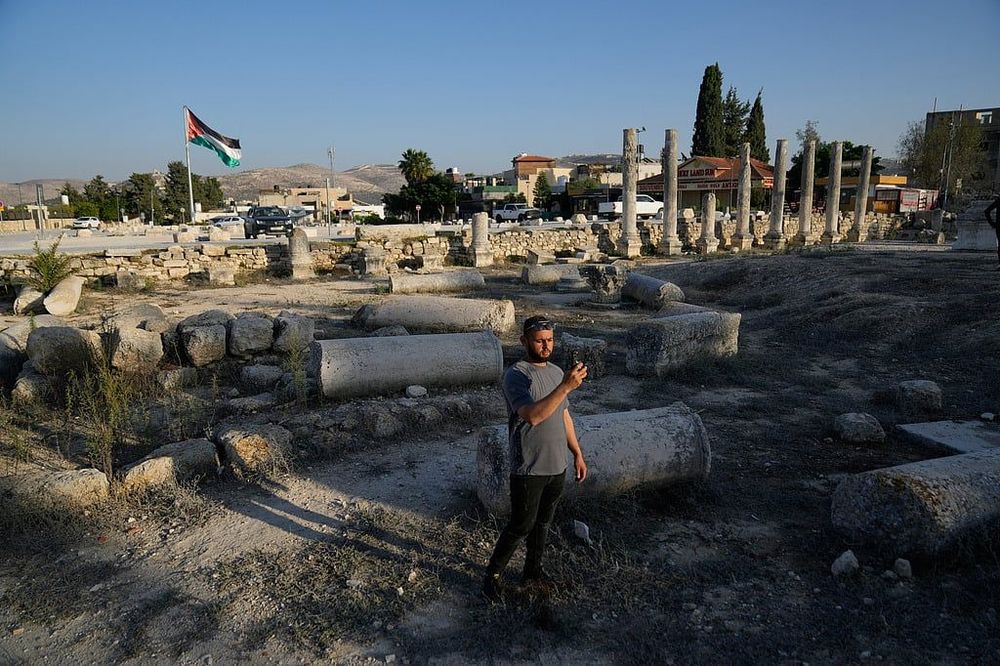
Sebastia, located approximately 10 kilometers northwest of Nablus in the Israeli-occupied West Bank, is identified by scholars as ancient Samaria, the capital of the biblical Kingdom of Israel established around 930 BCE before falling to the Assyrians in 722 BCE. The hilltop site's archaeological remains span multiple historical periods, from the Iron Age through Roman, Byzantine and Islamic eras.
Herod the Great rebuilt the ancient city during the Roman period, renaming it Sebastia and adding monumental structures that survived through subsequent Byzantine, Arab and Crusader occupations. Christian and Islamic tradition holds that John the Baptist was buried at the site.
The Palestinian delegation, which first submitted Sebastia's nomination in 2012, argued that World Heritage status was essential to preserve the site, noting it remains largely undeveloped under Israeli control and attracts tourists despite requiring additional conservation work. After the 1993 Oslo Accords, the archaeological ruins remained under complete Israeli control as Area C, while the adjacent Palestinian village came under Palestinian Authority jurisdiction, creating a divided administration that has complicated preservation efforts.
Adel Naim Daoud Atieh, a member of the Palestinian delegation to UNESCO, said the designation rewards the perseverance of Sebastia's residents, who have protected this extraordinary site through generations, despite occupation, restrictions, and repeated attempts to separate them from their own heritage.
Israeli objections and withdrawal from UNESCO
Israel's Foreign Ministry had urged the committee to reject both nominations, calling them a weaponisation of cultural heritage. In a Tuesday statement, the ministry accused the Palestinian delegation of waging a hostile, one-sided campaign at UNESCO by falsely portraying Sebastia as facing an emergency, describing the effort as a political attempt to erase the site's profound, well-documented Jewish and Christian history.
The designation comes as Israel moves to expropriate land around Sebastia, even as it faces pressure to address violence by Israeli settlers in the Palestinian territory. Israel officially withdrew from UNESCO on January 1, 2019, alongside the United States, following withdrawal notices filed in 2017 citing anti-Israel bias. The withdrawal came years after Palestine was granted full membership to UNESCO in 2011, a decision that prompted the Obama administration to freeze financial contributions to the organization. Israel's delegation attended the Busan meetings as observers rather than full members.
A member of the Israeli delegation said it was a shame politicization has ruined UNESCO and led to mockery of history.
Lebanese castles and Hezbollah allegations
The five castles in Lebanon's Mount Amel region are recognized for their layered architectural heritage, combining Crusader, Ayyubid, Mamluk and local influences that reflect the evolution of fortified architecture over nearly nine centuries.
Israel's Foreign Ministry specifically objected to the inclusion of Beaufort Castle, one of the five Lebanese sites, alleging that Hezbollah, an Iran-backed militant group, has turned it into a military stronghold by building tunnels beneath the site and launching rockets from the area. The ministry accused UNESCO of ignoring these developments.
UNESCO and the Lebanese embassy in South Korea declined to comment on the Israeli claims. At Friday's meeting, a Lebanese delegate countered that the castles have been used only for cultural and tourism purposes since Israel's withdrawal from southern Lebanon in 2000, and accused Israeli media of circulating images of tourist facilities as military tunnels.
Dual listing on danger list
Both sites were placed simultaneously on the World Heritage List and the List of World Heritage in Danger. The danger list is designed to inform the international community of serious threats to sites and to unlock emergency support, including immediate assistance from the World Heritage Fund.
The UNESCO committee on Wednesday also placed Tyre, an ancient Phoenician city in southern Lebanon, on the list of world heritage sites in danger. With the addition of Sebastia, Palestine now has multiple sites recognized by UNESCO, joining earlier inscriptions including the Birthplace of Jesus in Bethlehem, Battir, and Hebron's Old Town.