South Korean Michelin-starred restaurant owner faces prison for serving ants on desserts
A two-Michelin-star restaurant owner in South Korea faces up to one year in prison and a 20 million won fine after serving nearly 49,000 imported ants as dessert garnishes over four years, violating food safety regulations that prohibit their use.
Investigation triggered by online reviews
A two-Michelin-star restaurant owner in South Korea is facing criminal prosecution after admitting to serving ants as a garnish on desserts, an ingredient not approved for human consumption under the country's strict food safety laws.
Prosecutors are seeking a one-year prison sentence and a fine of 20 million Korean won (approximately Dh49,660) for the restaurant owner, who served ant-topped sorbets to diners over a four-year period.
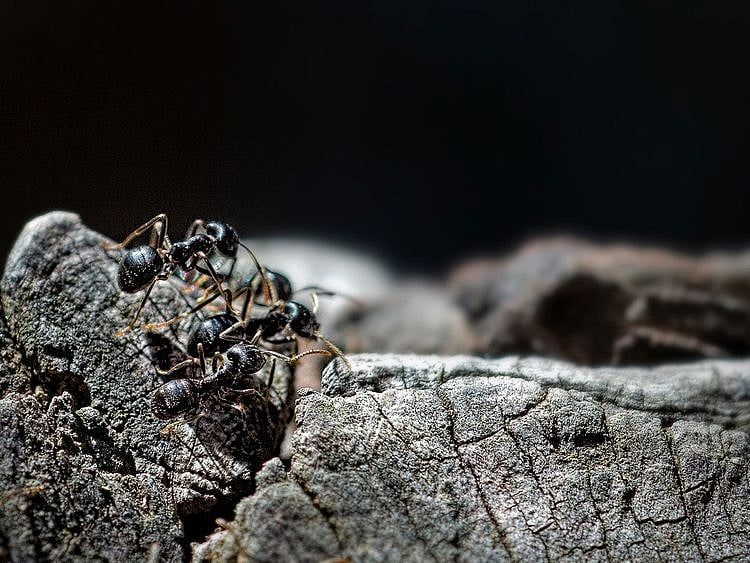
The case came to light not through customer complaints, but after officials from South Korea's Ministry of Food and Drug Safety discovered online restaurant reviews containing photographs of dishes sprinkled with ants. The subsequent investigation revealed that the restaurant had served ant-topped sorbet approximately 12,200 times, generating an estimated 120 million Korean won in revenue.
Investigators determined that around 49,000 ants imported from the United States and Thailand were used across several dishes during the four-year period. The investigation also uncovered excessive levels of heavy metals in the ant-topped dessert, adding a further food safety dimension to the case.
Restaurant owner defends culinary choice
In court, the restaurant owner acknowledged using ants but argued they featured only as a small component of the establishment's 15-course tasting menu. He stated that diners were informed they could select a different garnish, with approximately 60 percent of customers choosing to try the ants while others opted for alternatives such as fermented vinegar or edible flowers.
The owner pointed to international precedent, noting that ants are used as ingredients in restaurants in countries including Australia, Denmark, and the United Kingdom. Copenhagen's renowned Noma restaurant, which has been named the world's best restaurant multiple times, famously served dishes featuring live ants and developed fermented cricket paste as part of its innovative Nordic cuisine starting around 2012, helping popularize insects in fine dining globally.
South Korea's strict regulatory framework
While edible insects are consumed in many parts of the world, South Korean law permits only specific insect species for human consumption. The country's approved list currently includes 10 species:
- Oxya chinensis sinuosa (grasshopper)
- Bombyx batryticatus (stiff silkworm)
- Bombyx mori (silkworm pupa)
- Tenebrio molitor (mealworm larva)
- Gryllus bimaculatus (cricket)
- Protaetia brevitarsis (white-spotted flower chafer larva)
- Allomyrina dichotoma (rhinoceros beetle larva)
- Zophobas atratus (giant mealworm)
- Apis mellifera (male honeybee pupa)
- Locusta migratoria (locust)
Ants are notably absent from this list.
Authorities assess insects before approving them as food based on multiple factors including food safety risks, toxicity, nutritional value, and whether they can be bred and processed hygienically. The regulatory system requires years of safety reviews before an insect species can be recognized as a food ingredient, even if it has long been consumed safely in other countries. The process includes an initial approval followed by an additional monitoring period of about three years to identify potential food safety risks.
The approved list continues to evolve. In June 2026, South Korea approved a new grasshopper species (Parapodisma mikado) as a food ingredient, demonstrating ongoing expansion of permitted edible insects.
Under South Korea's Food Sanitation Act, using unapproved food ingredients may result in penalties of up to five years in prison or fines reaching 50 million won, along with the suspension or revocation of business licenses. The one-year sentence being sought in this case represents a more moderate penalty within the legal framework.
Global context for ant consumption
The case highlights cultural and regulatory differences in attitudes toward insect consumption. Weaver ants and their eggs are traditional ingredients in Thai and Lao cuisine, particularly in dishes like ant egg soup (Gaeng Kai Mot Daeng), where the eggs are prized for their sour flavor and creamy texture. In Colombia, queen ants are considered a delicacy, illustrating how culinary norms vary significantly across cultures.
Identity remains confidential
Court documents do not identify either the restaurant or its owner. The Michelin Guide notes that 10 restaurants in South Korea currently hold two Michelin stars, all located in Seoul. These establishments include alla prima, Evett, Jungsik, Kwonsooksoo, La Yeon, Mitou, Mosu, Restaurant Allen, Soigné, and Sosuheon.
The 2026 Michelin Guide Seoul & Busan marks its 10th anniversary and features a record number of new and promoted Michelin-starred restaurants since the guide's debut in South Korea in 2017, with a total of 46 starred restaurants across the country.
The Michelin Guide awards up to three stars based on criteria including ingredient quality, mastery of flavor, cooking techniques, the chef's personality expressed through the cuisine, and consistency. Two stars signify restaurants offering excellent cooking that is worth a detour.
The court is expected to deliver its verdict on September 2. The outcome will clarify how South Korean courts balance culinary innovation against food safety regulations, particularly for establishments operating at the highest levels of gastronomy.