House approves $95 billion spending plan linking Iran war funds to voting restrictions
The House narrowly passed a $95 billion budget framework allocating $73 billion to the Pentagon for Iran war operations and $10 billion for election programs tied to new voter ID requirements, setting up a Senate showdown ahead of November's midterm elections.
House approves $95 billion spending plan linking Iran war funds to voting restrictions
The House of Representatives approved a $95 billion budget framework on Wednesday in a narrow 216-214 vote, allocating the bulk of funding to military operations against Iran while linking election spending to controversial new voting restrictions.
The package directs $73 billion to the Pentagon and intelligence agencies for operations related to the conflict with Iran, which began in February when the United States and Israel launched Operation Epic Fury against Iranian military and government targets. The airstrikes killed Supreme Leader Ali Khamenei and other senior officials, triggering a months-long conflict that has disrupted global energy markets and trade routes.
Iran responded to the initial attacks by closing the Strait of Hormuz, a critical passage for international oil shipments. Despite a memorandum of understanding reached in June aimed at reopening the waterway, Iran fired at multiple commercial vessels in early July, prompting renewed American military action and underscoring the ongoing nature of the conflict.
Voting restrictions tied to budget
The measure includes $12 billion in relief for farmers affected by President Donald Trump's trade policies and $10 billion for election-related programs. The election funding is linked to Trump's push to implement nationwide voting restrictions under the SAVE America Act, which would require documentary proof of citizenship to register for federal elections and photo identification to vote.
The House previously passed an expanded version of the SAVE America Act on February 11 by a 218-213 vote, but the legislation has stalled in the Senate. Research indicates that approximately 21.3 million eligible voters either do not have or could not quickly locate proof of citizenship records that would be required under the proposed law. Half of all Americans lack passports, which would serve as primary documentation under the new requirements.
Reconciliation strategy
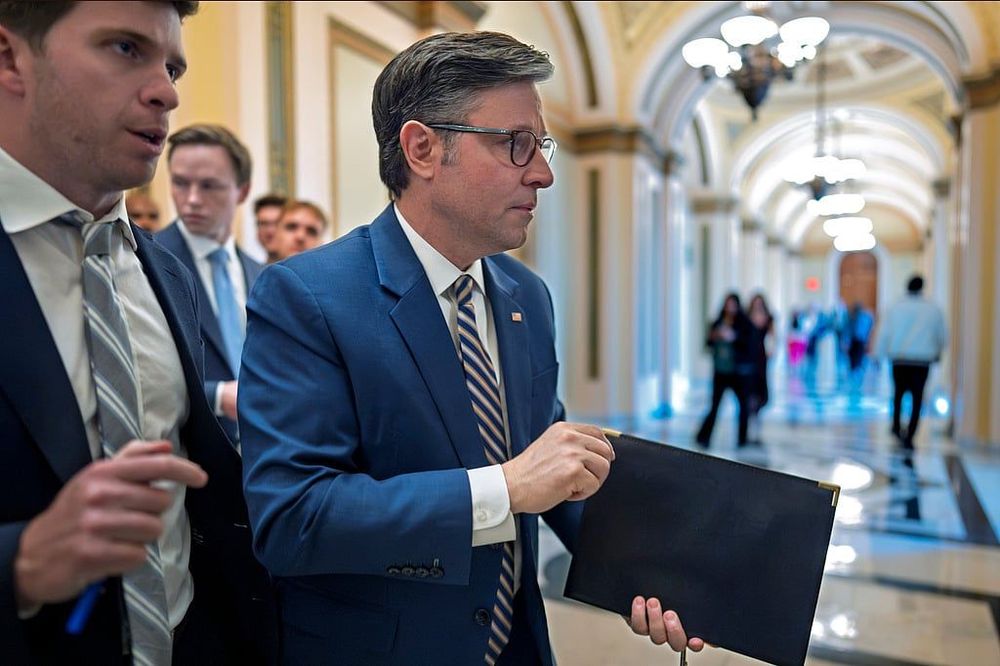
House Speaker Mike Johnson described the framework as putting "Congressional Republicans on a path to enacting two fundamentally simple and crucial goals: securing American elections and strengthening our homeland."
The budget resolution now moves to the Senate, where its passage remains uncertain. If approved, it would enable Republicans to draft detailed legislation later this summer using the budget reconciliation process, a mechanism established by the Congressional Budget Act of 1974 that allows the Senate to pass certain budget-related bills with a simple majority of 51 votes rather than the usual 60-vote threshold needed to overcome a filibuster.
Republicans currently hold 53 seats in the Senate, giving them a majority but not enough votes to advance regular legislation without Democratic support. The reconciliation process has been employed for major legislation in recent years, including the 2017 Tax Cuts and Jobs Act and the 2021 American Rescue Plan.
Economic and political stakes
Democratic Representative Rosa DeLauro criticized the measure, arguing that "the American people do not want more open-ended, aimless, expensive, and deadly wars in the Middle East. They want the price of basic necessities like food, housing, healthcare, childcare, and gasoline to go down."
Inflation has emerged as a central concern ahead of November's midterm elections. The annual inflation rate stood at 3.5 percent in June, down from 4.2 percent in May, which marked the highest level since April 2023. The May spike was driven primarily by a 23.5 percent jump in energy costs linked to the Iran conflict.
The narrow House vote reflects Republicans' razor-thin majority in the chamber, where they secured 218 seats in the 119th Congress. The recent death of Representative Doug LaMalfa further reduced Speaker Johnson's working margin, making every vote critical as the party works to maintain control through the November elections. Johnson has raised more than $53 million in 2026 to support vulnerable Republican incumbents and challengers.
The outcome of the midterm elections will determine whether Republicans retain their congressional majorities and continue to shape the legislative agenda for the remainder of Trump's second term.