Dubai-based Filipinos face mounting losses as balikbayan boxes fail to reach families
Overseas Filipino workers in Dubai report undelivered balikbayan boxes sent months ago through Makati Express Cargo, leaving families waiting and senders facing financial losses despite government warnings issued earlier this year.
 Omar Al Nuaimi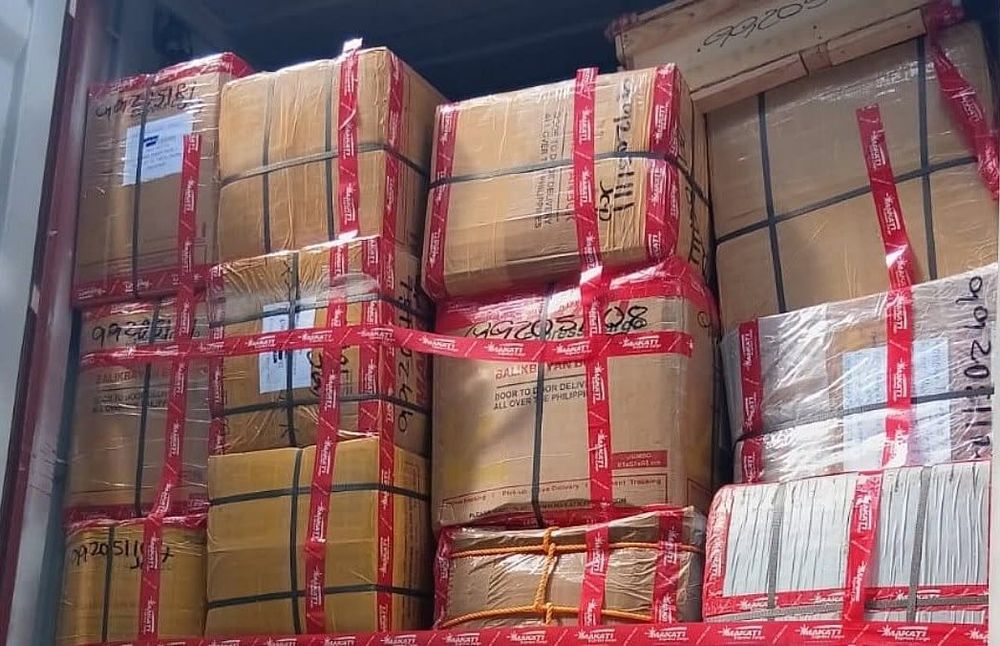
Dubai-based Filipinos face mounting losses as balikbayan boxes fail to reach families
Overseas Filipino workers in Dubai are experiencing prolonged delays and financial losses after balikbayan boxes shipped through Makati Express Cargo have failed to reach their families in the Philippines, with some packages now missing for more than seven months.
The balikbayan box tradition, which began in 1973 when the Philippine government introduced the Balikbayan Program, has become a cornerstone of Filipino expatriate life. Rooted in the custom of 'pasalubong'—bringing gifts when returning home—the modern tradition evolved when overseas Filipinos unable to visit regularly began sending large boxes filled with goods and gifts instead.
The situation has drawn official attention. In February, the Department of Migrant Workers, established under Republic Act No. 11641 and tasked with protecting the rights and welfare of overseas Filipino workers, issued a warning in coordination with the National Bureau of Investigation advising OFWs and their families not to transact with Makati Express Cargo or its partners and affiliates abroad.
The advisory came months after the Bureau of Customs ordered a 60-day suspension of Makati Express Cargo, Inc. in October 2025 due to non-compliance. The BOC continues to monitor the situation and work with the DMW to ensure affected balikbayan boxes are properly accounted for and delivered to their intended recipients.
Additional charges and extended delays
Rosalie Aquino Peralta, a sales assistant in Dubai, sent her balikbayan box in February. After being contacted by Makati Express Cargo about cargo being held at a port due to the regional situation, she was asked to pay an additional Dh290 for the box to be rerouted via Oman.
The box contains adult diapers and milk for her 91-year-old mother. Despite the additional payment, the package remains undelivered.
Tina, a sales executive in Dubai who sent two boxes collected in May, faced similar circumstances. Her boxes contained carefully selected items including shoes, bags, clothes, accessories, and household goods for her mother, nieces, sisters, and brothers-in-law. She also included equipment intended to help establish a small home-based business, such as a mini doughnut maker, ice cream maker, electric griller, and heavy-duty blender.
Beginning in August, Tina attempted to follow up through WhatsApp. By September, the company's main WhatsApp account went offline, and calls and messages were no longer answered. When her sister in the Philippines contacted the company's Cavite branch, she was eventually directed to the Bureau of Customs, which informed her that shipments were on hold due to pending cases.
Widespread pattern of complaints
DMW Secretary Hans Leo Cacdac publicly identified Makati Express as one of the cargo forwarders with the largest number of abandoned and undelivered balikbayan boxes. He described some forwarders as scammers that victimize OFWs and indicated the DMW is working with the Bureau of Customs to deliver thousands of long-delayed boxes.
Customer complaints on review platforms have documented similar experiences, including boxes sent in November 2025 arriving at Manila port in February 2026 but never delivered, closed branches without notification, and unanswered customer inquiries.
The issue carries particular weight given that approximately 780,000 Filipinos live in the UAE, representing about 6.8 percent of the total population. Around 450,000 reside in Dubai alone, making up roughly 21.3 percent of Dubai's population. The UAE is the second-largest employer of overseas Filipino workers globally, after Saudi Arabia.
Regulatory framework and reforms
Under Philippine regulations, balikbayan boxes sent by qualified Filipinos containing personal and household effects are exempt from duties and taxes, provided they do not exceed three boxes per year and do not exceed a cumulative value of ₱150,000 (approximately $2,650 USD) annually. Since the late 1980s, when these duty-free policies were introduced, balikbayan boxes have become packed with more items, as families can send goods without worrying about extra taxes or fees.
In June 2025, Finance Secretary Ralph G. Recto signed a Joint Administrative Order with multiple government agencies to overhaul customs regulations for balikbayan boxes. The JAO aims to prevent abuses by clearly identifying legitimate international freight forwarders and addresses longstanding issues of deconsolidators failing to process and release balikbayan boxes.
Christmas concerns and business impact
The prolonged delays have disrupted plans for the final months of the year, when shipping companies typically offer special services and discounts for balikbayan boxes during peak seasons like Christmas. Tina expressed concern about missing the final-quarter period when families normally expect to receive boxes.
She also worried about items intended to support her family's future livelihood, noting she cannot replace them now as they were purchased on sale.
The DMW has urged OFWs and their families to exercise extra vigilance when choosing freight services and to regularly check the status of freight forwarders with the Bureau of Customs. Verifying whether a consolidator is registered and compliant with regulations can help minimize the risk of undelivered packages and other irregularities.
For the affected senders, the immediate concern remains whether their carefully packed boxes will finally reach their families. As Peralta stated, the motivation is simple: giving something to family brings mutual happiness.