Dubai Taxi Company Q2 profit plunges 90% as airport disruption weighs on demand
Dubai Taxi Company's second-quarter net profit fell 90% to Dh10.4 million as weakened airport and tourism activity cut trip volumes by 24%, though June showed signs of recovery with the annual decline narrowing to 11.2%.
Dubai Taxi Company Q2 profit plunges 90% as airport disruption weighs on demand
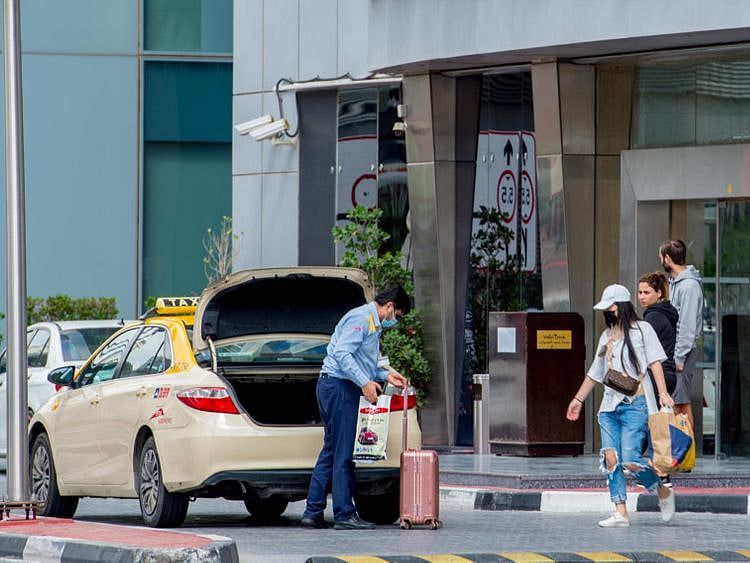
Dubai Taxi Company reported a sharp decline in second-quarter profitability as disrupted airport operations and reduced tourism activity weighed heavily on taxi demand across the emirate, though monthly performance data showed improving conditions towards the end of the period.
The company's net profit for the three months ended June reached Dh10.4 million, down from Dh105.4 million in the same quarter of 2025. Revenue fell 22.5% year-on-year to Dh484.5 million, while trip volumes declined to 10.3 million from 13.6 million a year earlier.
Airport traffic decline drives demand weakness
The sharp deterioration in performance followed significant disruption to airport operations during the quarter. Dubai International Airport handled 18.6 million passengers in the first quarter of 2026, representing a 20.6% decline from a year earlier, with March traffic dropping 65.7% to 2.5 million passengers as regional airspace restrictions affected operations.
DTC completed 53 million taxi and limousine trips during the full year 2025, making the 10.3 million quarterly figure a substantial decline from the company's typical run rate. Taxi revenue fell to Dh396.8 million from Dh539.7 million, while limousine revenue decreased to Dh24.5 million from Dh30.5 million.
Despite the challenging operating environment, DTC maintained full operations across all service segments throughout the quarter without any service disruptions.
Recovery accelerates through second quarter
Monthly performance data revealed a progressive improvement in activity levels as the quarter advanced. The year-on-year decline in trips narrowed from 36.7% in April to 24.4% in May and 11.2% in June, with taxi trip volumes in June running 30.9% higher than in April.
The improvement coincided with the lifting of aviation restrictions. UAE aviation authorities removed all precautionary airspace restrictions in late April 2026, with Dubai International Airport operations gradually returning to full strength in May.
Tourism data showed Dubai welcomed 5.3 million international visitors in the first quarter of 2026, a 3% year-on-year increase, indicating demand remained resilient before the disruption intensified during the second quarter.
While the operating environment remained challenging across much of the quarter, particularly in airport- and tourism-related demand, we remained fully operational across all segments and continued to serve customers across the UAE. We are encouraged by the sequential improvement in mobility activity through May and June, which provides early signs of normalisation.
Mansoor Rahma Alfalasi, group chief executive of Dubai Taxi Company, said.
Profitability margins compress under lower volumes
Quarterly earnings before interest, taxes, depreciation and amortisation declined 57.2% to Dh77.2 million, with the EBITDA margin falling to 15.9% from 28.9% a year earlier as fixed costs spread across lower trip volumes.
First-half revenue totalled Dh1 billion, down from Dh1.2 billion in the same period of 2025, following strong demand in January and February before conditions weakened from March onwards. First-half net profit reached Dh61.1 million.
The company maintained a conservative financial position with cash and cash equivalents of Dh409 million at the end of June and a net debt-to-EBITDA ratio of 1.1 times.
Non-taxi segments show resilience
Performance outside the core taxi and limousine operations remained more stable during the quarter. Bus revenue increased 2.3% year-on-year to Dh32 million, supported by long-term government contracts that provided revenue visibility.
Delivery bike revenue rose 53.1% to Dh27.9 million, benefiting from continued demand across the UAE's on-demand delivery market. The segment has shown consistent growth as e-commerce and food delivery activity expanded across the country.
Fleet expansion continues amid market consolidation
DTC's total operating fleet reached 11,928 vehicles by the end of June, including a taxi fleet of 6,522 vehicles. The company continued investing in fleet electrification, with 669 fully electric vehicles in operation.
The company acquired 600 additional taxi licence plates through a Dubai Roads and Transport Authority auction in April, increasing its Dubai market share to 46% before the inclusion of National Taxi. The RTA also recalculated monthly taxi vehicle fees covering March to May, resulting in Dh25.6 million in fee reductions that will benefit third-quarter results.
DTC completed its acquisition of National Taxi after the reporting period in a transaction valued at Dh1.45 billion. National Taxi operates approximately 2,500 licensed taxi plates and a fleet of more than 2,700 vehicles across Dubai, Abu Dhabi and Al Ain. The company, founded in 2000, holds 1,734 taxi plates in Dubai and 800 plates in Abu Dhabi and Al Ain, where supply is tightly regulated and subject to controlled issuance.
For the year ended 31 July 2025, National Taxi generated net revenue of Dh774 million, EBITDA of Dh183 million and net profit of Dh101 million. The company completed 25.4 million trips and recorded a 98% fleet utilization rate during the period.
The combined business now operates the UAE's largest taxi fleet, exceeding 9,000 vehicles, with an approximately 59% taxi market share in Dubai and about 12% in Abu Dhabi. DTC expects the acquisition to contribute to earnings from the first full year of ownership, supported by identified operational synergies. The transaction is fully funded through new bank debt facilities with no equity issuance and is expected to increase DTC's net debt-to-EBITDA ratio by approximately 2.5 times.
Dividend decision deferred to year-end
DTC's board will consider any shareholder distribution for the 2026 financial year at year-end instead of following the company's usual semi-annual payment cycle. The decision provides greater flexibility to balance financial resilience, investment in long-term growth and shareholder returns during the current operating environment.
The company also expanded its geographic footprint during the period, entering the Ajman market and extending the Bolt ride-hailing platform into Abu Dhabi, initially through limousine services and later through taxis, as part of its strategy to build a larger multi-emirate mobility platform.