At 35, UAE property investor Shabbash Khan plans to retire before 40
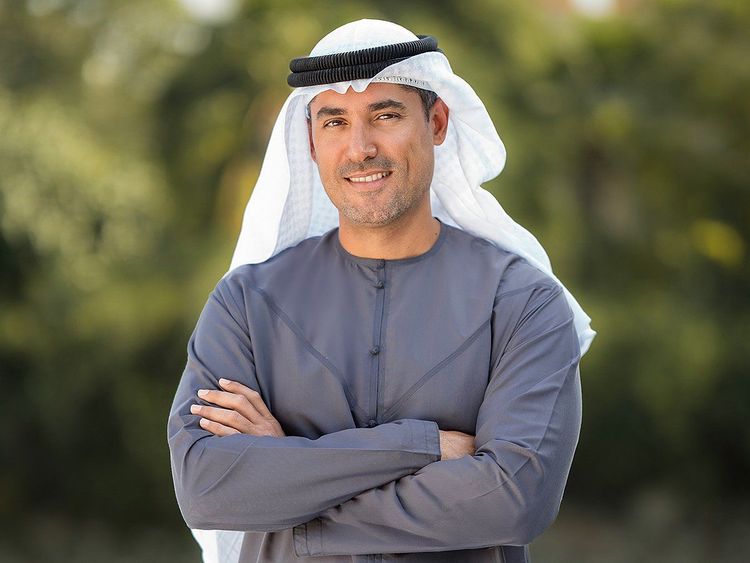
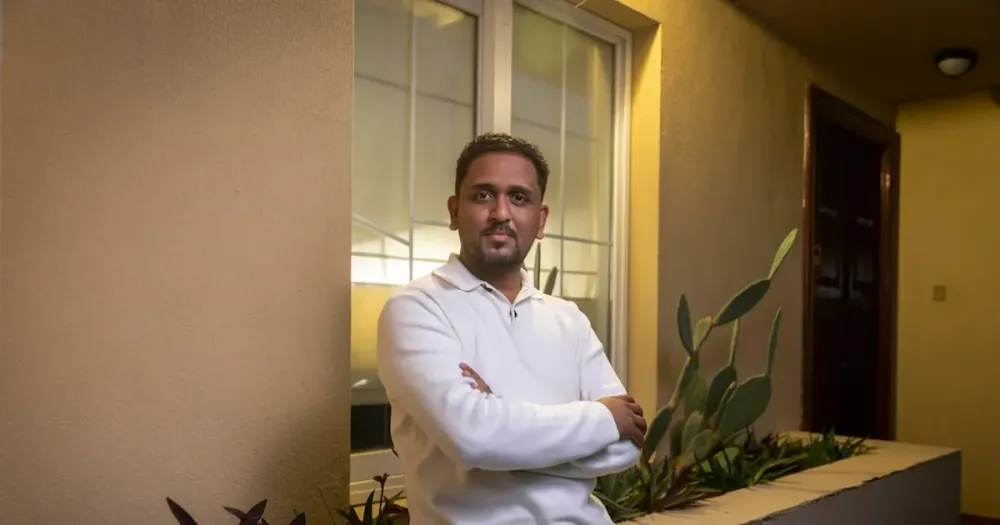
Shabbash Khan has built an eight-property portfolio worth about AED 25 million while working as a performance director at a digital media agency. With his net worth now close to AED 10 million, he says he intends to stop working before his 40th birthday.
 Mariam Al Mansoori
Building a portfolio while renting
For nine years, Khan kept renting rather than moving into any of the UAE properties he owned. He put rental income back into his investments and drew on equity to make further purchases as the properties gained value. Last month, he moved into one of his own homes for the first time, he told The National.
His holdings span three emirates: five properties in Dubai, two in Abu Dhabi and one in Sharjah. Khan, 35, says the portfolio grew much faster than his pay, which has increased only modestly while he has remained in the same job.
He began his career in India as a marketing executive at a digital agency, earning less than 1,000 rupees. His father later lent him money to cover expenses when he arrived in Dubai. Comparing investment opportunities in India and the UAE, Khan favored Dubai, citing the dirham's dollar peg and what he considered better rental returns.
Khan puts rental returns in India at 2% to 3%, compared with what he describes as "easily" 6% to 8% in the UAE. He says he invested all the money he saved during his first two years in Dubai in real estate.
Reaching his first million was "super hard," he says, requiring salary income, savings and a personal loan. The second and third million followed more quickly. He attributes that acceleration to owning several properties whose individual gains added to the portfolio's value.
Rental yields and a slowing pace of growth
Dubai market reports provide context for Khan's account, without measuring the performance of his holdings. Engel & Völkers reported an average gross residential rental yield of 6.6% in June 2026. Apartments averaged 6.9%, townhouses 5.1% and villas 4.5%, according to its Dubai Residential Property Market Report H1 2026.
The same report counted 80,509 residential sales totaling AED 226.5 billion during the first half of 2026. By sales value, it was the second-strongest first half on record. Off-plan properties represented 71.3% of residential sales.
Cavendish Maxwell's Dubai Residential Market Performance Q1 2026 report recorded gross yields of 7.2% for apartments and 5.0% for villas and townhouses. Residential sales prices reached AED 1,683 per square foot, a 0.6% increase from the previous quarter and a 9.6% rise from a year earlier. That annual increase was the smallest since the first quarter of 2023.
Rents in the Cavendish Maxwell report reached AED 76.1 per square foot annually, up 10.2% year over year. The annual pace of rental growth was the slowest since the fourth quarter of 2022.
Earlier in the year, ValuStrat had forecast a moderation in price growth. Its Dubai Market Outlook 2026, reported by Khaleej Times in January, projected capital growth of about 10% for 2026 after nearly 20% in 2025. It expected villa and townhouse prices to increase 17.7%, apartment prices to rise 7.4%, and rental growth to flatten at around 0%.
Purchase costs and residency eligibility
Buyers also face transaction costs. Dubai government services provider EGSH says the mandatory Dubai Land Department transfer fee is 4% of the sale value in 2026, making it the largest single government cost. Fixed administrative charges typically add AED 4,000 to AED 5,000. Buyers using a mortgage also pay a registration fee equal to 0.25% of the loan value.
Property ownership can provide eligibility to apply for residency, subject to Dubai Land Department rules. An investor with one or more wholly owned properties whose purchase value is at least AED 2 million can apply for a renewable 10-year UAE residence permit and sponsor a spouse, children and parents. The department lists total government fees of AED 9,884.75 and a processing time of seven to 10 business days.
Choosing property over status purchases
Khan regards real estate as his best investment. Although he acknowledges that others have found their niche in cryptocurrency, his preference is for property and gold, which he describes as assets "you cannot make more of".
His view of spending changed after he bought a BMW, fulfilling a childhood ambition. Two years into ownership, he says, he had found it more expensive than expected and concluded that it "just takes me from point A to point B".
Owning a home carries more meaning for him: he values the security and emotional satisfaction it provides. He particularly cherishes his first property purchase and says he already owned several properties before turning 30.
Wealth measured in time
Khan says his childhood taught him to value control over his time rather than an expensive house or car. A high salary alone does not meet his definition of wealth if someone remains dependent on the next paycheck. As he puts it, "if you trade time, you can never win that game".
He urges younger investors to begin early, arguing that starting in their 20s puts them further ahead than waiting until 40. His advice to his younger self also extends beyond investing: read books to learn from other people's experience and philosophies, and pursue work with passion rather than simply going through the motions.