Philippines Urged to Earmark Mining Revenue for Maharlika Fund
Congress should establish a dedicated channel for mining revenue to flow into the Maharlika Investment Fund, a Gulf News commentary argues, proposing that the Philippines invest part of its mineral earnings for future generations rather than rely on them mainly for annual government spending.
 Layla Haddad
A proposed mineral savings channel
The proposal would require lawmakers to amend or supplement Republic Act 11954, the law that created Maharlika in July 2023 as the Philippines' first sovereign wealth fund. A new Mineral Wealth Window would direct a fixed share, or an amount determined by a formula, of eligible national mining receipts into the fund.
Existing law leaves room for such funding but does not make it automatic. Section 6(d) identifies royalties and special assessments under the national fiscal regime as potential additional sources. The commentary argues that a dedicated allocation would give Maharlika a lasting source of capital while preserving some of the financial value of resources that cannot be replaced.
The proposed transfers would come only after other legal obligations were met. Under Republic Act 12253, host local government units are entitled to 40% of qualifying national government mining collections. For mines within mineral reservations, 10% of royalties is allocated to the Mines and Geosciences Bureau (MGB) and the Metals Industry Research and Development Center. The commentary says the fund should receive a share of the national government's eligible receipts remaining after these and other mandated allocations.
Mining tax changes create an opening
The Enhanced Fiscal Regime for Large-Scale Metallic Mining Act, or RA 12253, was signed on September 4, 2025. It introduced progressive royalties and a windfall profits tax, providing a possible revenue stream for the proposed savings mechanism.
Large-scale metallic mines outside mineral reservations face royalty rates of 1% to 5%, with a minimum royalty for low-margin operations. The law also imposes windfall profits taxes ranging from 1% to 10% when profit margins exceed 30%.
The Department of Finance expects the regime to generate an additional ₱25.08 billion from 2026 through 2029, or approximately ₱6.26 billion a year. Separately, mining taxes, fees and royalties totaled ₱32.97 billion in 2024, according to the Philippine Extractive Industries Transparency Initiative.
Another policy measure addresses development of the industry itself. The Philippine Resources Journal reports that Executive Order No. 122, signed on August 18, 2026, established a national framework for critical minerals. It instructs the Department of Environment and Natural Resources to prepare a Philippine Critical Minerals List and designates critical mineral projects as national priority projects.
Maharlika's capital and early returns
Maharlika began with a ₱125 billion capital subscription: Land Bank of the Philippines provided ₱50 billion, the Development Bank of the Philippines ₱25 billion, and the national government ₱50 billion. Planned funding sources also included dividends from Bangko Sentral ng Pilipinas, part of the national government's earnings from the Philippine Amusement and Gaming Corporation, and proceeds from government asset privatization.
For the nine months ended September 30, 2026, the Maharlika Investment Corporation reported comprehensive income of ₱2.85 billion, including net income of ₱2.18 billion. Active investments generated ₱756.5 million, representing 31% of revenue for the period. Cumulative capital deployment stood at ₱24.7 billion.
The Gulf News commentary views those results as evidence that invested capital can produce returns. Its argument for earmarking mining receipts is that Maharlika needs a more durable funding base to become a substantial source of wealth for future generations.
Higher mineral values, a limited economic share
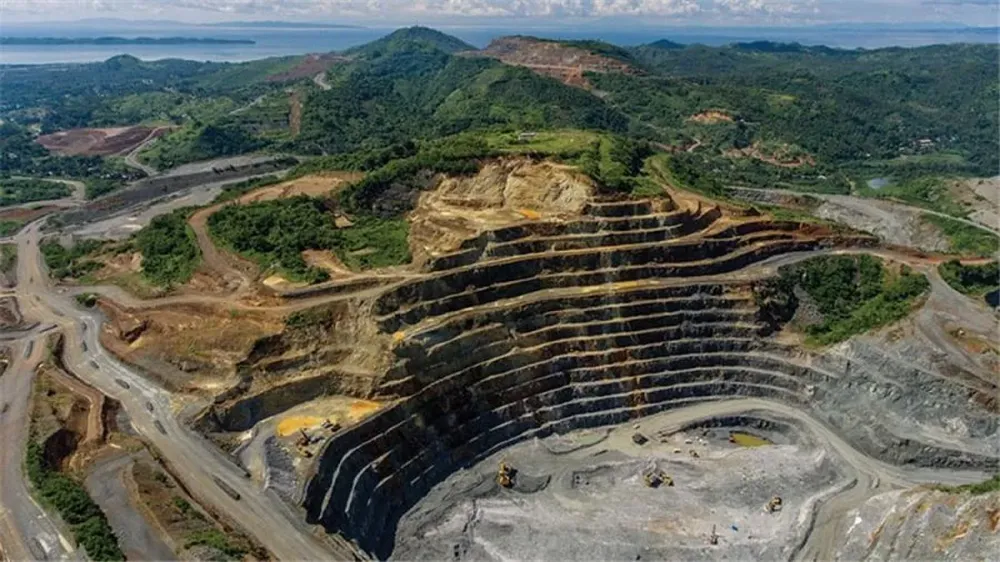
MGB figures put the value of Philippine metallic mineral production at ₱252.9 billion ($4.42 billion) in 2024. In the first half of 2026, mineral output was worth ₱202.18 billion, compared with ₱142.99 billion a year earlier. Higher gold prices more than offset weaker production volume.
Gold supplied nearly 57% of that first-half value. Its output was valued at ₱114.50 billion, up 42% from ₱80.43 billion in the comparable period.
The Philippines also holds a significant position in nickel and cobalt production. According to the U.S. Geological Survey, it ranked second worldwide in nickel in 2024, supplying 9.5% of global output, and seventh in cobalt, with an estimated 1.0% share.
The Philippine Resources Journal reports that the country retained its second-place ranking in mined nickel in 2025, accounting for approximately 10% of world production. Industry data cited by the journal put China's share of Philippine nickel-ore exports at about 66%, down from 78% in 2024 as Indonesia bought more.
Despite that international role, mining and quarrying accounted for 0.9% of Philippine GDP in 2024, down from 1.0% in 2023, according to the USGS country review. Employment rose from 210,000 to 292,000 over the same period, reaching 0.58% of total employment.
Reserves and untapped potential are different measures
The scale of Philippine mineral wealth depends on what is being measured. Confirmed, commercially recoverable metallic reserves, classified as Class A, are valued at ₱588.12 billion, or about $10.23 billion. Philippine Statistics Authority figures identify gold, at ₱308.79 billion, and nickel, at ₱217.74 billion, as the largest components. Confirmed oil, natural gas and condensate reserves are valued separately at ₱41.73 billion.
Broader assessments by the MGB and industry reports estimate untapped metallic wealth at roughly $1 trillion. That geological potential is not the same as confirmed, commercially recoverable reserves.
Only about 5% of the country's 9 million hectares of high-potential mineral land has been explored, the commentary notes. Further exploration could increase the assessed resource base.
Norway's example and the proposed safeguards
The commentary draws on Norway's approach to saving petroleum income. The Government Pension Fund Global receives the state's net petroleum cash flow, while Norway's fiscal framework generally restricts budget use to the fund's expected real return rather than its principal.
Norges Bank Investment Management, the fund's manager, says the fund invests exclusively outside Norway to avoid overheating the domestic economy. Its first capital transfer arrived in 1996, and its value passed NOK 20,000 billion, about $2 trillion, in 2024.
By the end of 2025, the fund's value had increased by more than NOK 1,500 billion to just under NOK 21,300 billion. Its return for that year was slightly above 15%, equivalent to almost NOK 2,400 billion. Norway's Ministry of Finance said the country's financial wealth was now roughly five times the value of its petroleum resources still underground.
For the Philippines, the commentary proposes the same underlying savings principle, not an identical investment mandate. It suggests investing part of mining revenue across domestic and international assets, with returns available to support infrastructure, education, research, energy security and future economic development.
It also calls for congressional oversight of the fund's transparency and efficiency. Any mineral-revenue allocation, it says, must leave adequate funding for environmental rehabilitation, indigenous peoples, host communities and responsible mining oversight.