Dubai gold rebounds after Dh14-per-gram drop
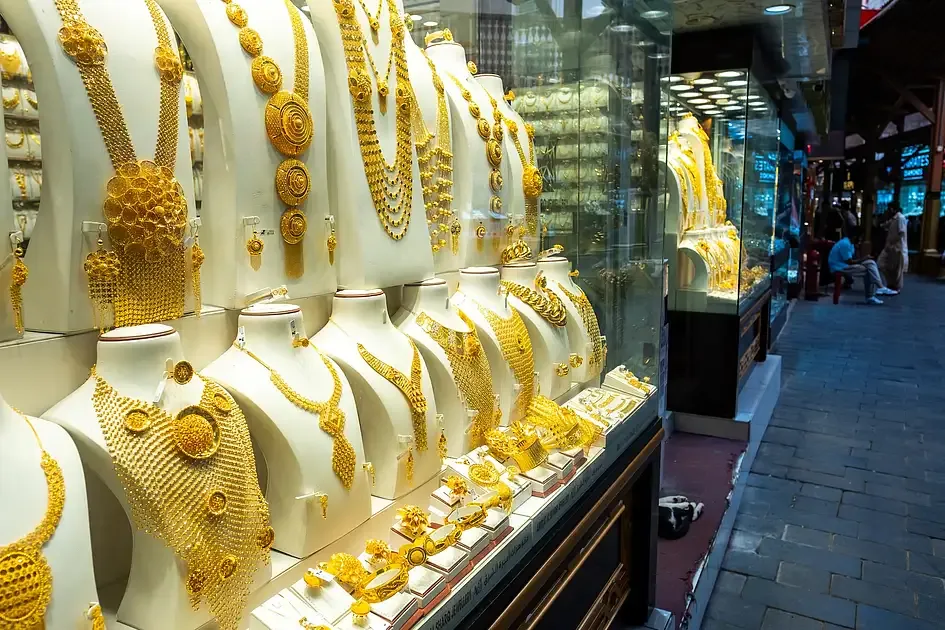
Dubai's 24K gold price rose to Dh471.5 per gram Friday morning, November 13, from Thursday's closing price of Dh465.25, according to Dubai Jewellery Group. The recovery followed a global sell-off of more than 3% as investors weighed inflation pressures and expectations of higher U.S. interest rates.
 Layla Haddad
Prices recover from Thursday's sell-off
The rebound extended across Dubai's other gold grades: 22K reached Dh436.75 per gram, while 21K stood at Dh418.75 and 18K at Dh358.75. International spot gold gained 0.83% to $3,914 an ounce.
Thursday's decline had knocked Dh14 per gram off the UAE's 24K price. Globally, gold reached its lowest price since October 2025.
Kelvin Wong, a senior market analyst at Oanda, attributed Friday's recovery largely to traders adjusting their positions after the sell-off. "Today's move is more of a positioning adjustment, given that several intraday short-term momentum indicators had kind of hit an extreme oversold level after yesterday's dramatic fall," he told Reuters.
Wong also said a sudden turn in U.S. Treasury yields could slow the dollar and provide short-term support for gold.
Inflation data and December rate expectations
Analysts said attention was turning to upcoming U.S. inflation data. Investors were awaiting the producer price index release scheduled for Friday, November 13, for further signals about inflation and the monetary policy outlook.
Jim Wyckoff of American Gold Exchange cited several pressures on gold as of Thursday: the hot U.S. inflation reading on November 10, hawkish comments from Federal Reserve officials that week and a dollar index rally to a near 19-month high.
Rising oil prices added to concerns about inflation and elevated interest rates as prospects for peace in the Middle East faded. On Thursday, President Donald Trump said on social media that the United States did not need a deal with Iran, quashing hopes for an agreement to end the conflict. The fighting began with U.S.-Israeli strikes on Iran in late February 2026 and has spread across the region.
CME's FedWatch tool put the probability of a quarter-percentage-point U.S. rate increase in December at 89%, with an 11% chance of a half-point increase. At its October 28 meeting, the Fed left its target range at 3.75% to 4.00%; two officials voted for an increase, according to the FOMC statement.
Goldman lowers forecasts but retains longer-term optimism
The Fed's more hawkish stance has also prompted Goldman Sachs to revise its outlook. In a November 6, 2026, note, the bank cut its year-end 2026 gold forecast from $4,650 to $4,150 an ounce and its year-end 2027 forecast from $5,400 to $4,800. It cited the Fed's shift in recent months and the resulting effect on investor positioning.
Goldman nevertheless retained a constructive longer-term view based on central bank buying. It projected purchases of about 60 metric tons a month through 2026 and 2027, compared with a monthly average of 17 metric tons before 2022. Its nowcast estimated current buying at 85 metric tons a month on a seasonally adjusted three-month basis.
World Gold Council data cited by Admirals showed that central banks purchased 321 metric tons in the third quarter of 2026, 42% more than a year earlier. Global gold exchange-traded fund holdings reached a record 4,256 metric tons in September 2026.