UAE passport achieves record leap in global rankings over two decades
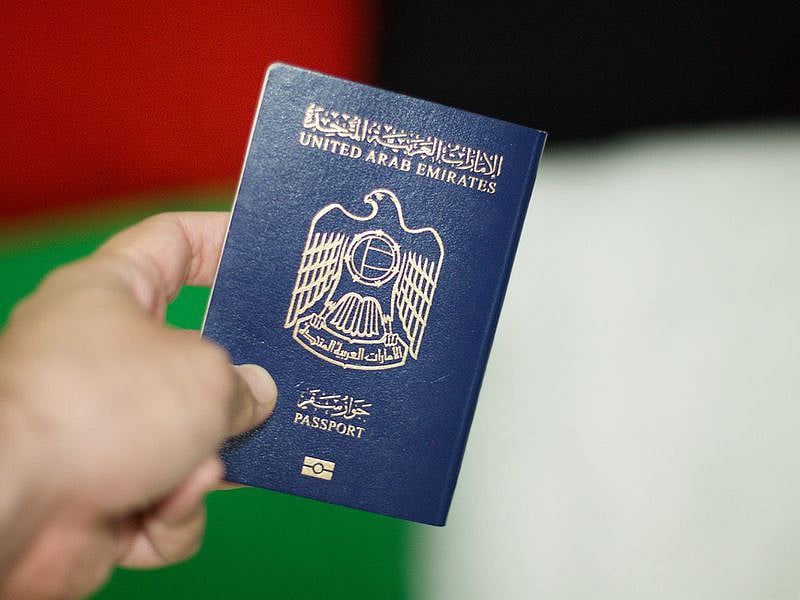
The UAE passport has climbed to second place globally, adding 153 visa-free destinations since 2006 in the biggest rise recorded in the Henley Passport Index's 20-year history.
UAE passport achieves record leap in global rankings over two decades
The UAE passport has secured second place among the world's most powerful travel documents, marking an unprecedented transformation in global mobility rankings over the past two decades.
According to the July 2026 Henley Passport Index, which tracks 199 different passports across 227 travel destinations and is updated monthly, Emirati passport holders now enjoy visa-free or visa-on-arrival access to 188 destinations. The UAE shares the No. 2 position with Japan and South Korea, trailing only Singapore, which holds the top spot with access to 192 destinations.
A historic transformation in passport power
The UAE's ascent represents the most dramatic improvement recorded since the index began tracking passport strength. In 2006, when the index was first launched as the Henley & Partners Visa Restrictions Index, the UAE passport ranked in the middle tier globally with access to just 35 destinations. The addition of 153 visa-free destinations over 20 years stands as the largest gain in the index's history, which was renamed the Henley Passport Index in January 2018.
This achievement becomes even more significant when viewed against global trends. The average passport worldwide now provides visa-free access to 108 destinations, up from just 58 in 2006, meaning global mobility has nearly doubled over the past two decades. The UAE's growth has far outpaced this global average.
By comparison, Singapore's passport gained 70 destinations over the same period, rising from 122 to 192 destinations. While Singapore maintained its position at the top, the UAE's percentage growth from a lower starting point of 35 destinations demonstrates a more dramatic trajectory of diplomatic and economic expansion.
Diplomacy driving passport strength
Dr Christian H. Kaelin, Chairman of Henley & Partners and creator of the passport index, emphasised that passport power reflects geopolitical influence.
Passport power is one of the clearest expressions of a country's geopolitical capital. The strongest passports belong to nations that other countries want as partners — for trade, investment, security, or cooperation.
The UAE's diplomatic efforts continue to expand visa access for its citizens. In 2025, the UAE and Moldova signed a mutual visa exemption agreement, allowing Emirati citizens visa-free entry to Moldova as part of broader diplomatic and economic cooperation. More recently, in June 2026, the UAE expanded its visa-on-arrival program to include nationals of six countries — South Africa, Kenya, Philippines, Thailand, Indonesia, and Vietnam — demonstrating reciprocal openness as part of national strategies to strengthen inbound tourism and diplomatic engagement with key Asian and African markets.
Rising demand for global mobility options
Henley & Partners reported that interest in global mobility solutions among UAE-based residents has surged, with enquiries for residence and citizenship-by-investment programmes increasing 41 per cent since conflict escalated in the Gulf in February 2026. The regional security situation has prompted many residents to seek alternative mobility options and citizenship pathways.
The February 2026 conflict, which involved major military operations across the Gulf region, has had significant economic and security implications for Gulf Cooperation Council countries. The disruption underscores how passport strength and mobility options have become increasingly valuable in times of regional instability.
Global passport rankings and the widening gap
While passport power has expanded worldwide, the gap between the world's most and least mobile citizens has reached a record high. Singapore's access to 192 destinations contrasts sharply with Afghanistan's position at the bottom of the index, with access to just 22 destinations — a 170-destination gap that represents the widest disparity in the index's history.
The United States, which held the world's strongest passport alongside Denmark and Finland in 2006 with access to 130 destinations, now ranks 10th with access to 180 destinations. With several countries sharing rankings, 36 passports now rank ahead of the American passport. The United Kingdom has also declined from third place in 2006 to sixth place currently.
The weakest passports in the 2026 ranking include Afghanistan with 22 destinations, Syria with 26, Iraq with 29, Yemen with 31, and Pakistan and Somalia each with 32. Afghanistan has remained the lowest-ranked passport since 2006, although its access has increased from just 12 destinations two decades ago. Bolivia is the only passport to have recorded a decline over the past 20 years, losing six visa-free destinations.
More than travel freedom
The UAE's improved ranking reflects more than convenient international travel. It highlights the country's expanding diplomatic ties, economic partnerships and emergence as a global centre for business, investment and talent attraction.
Dr Kaelin noted that mobility increasingly measures opportunity in an uncertain world.
For twenty years, we have measured how nations build freedom of movement for their citizens. Today, we are witnessing the same shift in how families think about their future. In an increasingly uncertain world, the greatest privilege is no longer simply the freedom to travel — it is the freedom to choose, to have access rights.
As countries compete for trade, investment and talent, passport strength has evolved beyond a travel benefit into a measure of global connectivity, opportunity and international influence. The UAE's two-decade transformation demonstrates how sustained diplomatic engagement and strategic partnerships can fundamentally reshape a nation's position in the global mobility landscape.