Spanish expats in Dubai celebrate historic World Cup triumph as Spain's composure and unity shine
Spanish residents in Dubai joined global celebrations after Spain's second World Cup victory, praising the team's composure and tactical excellence while reflecting on football's power to unite communities across borders.
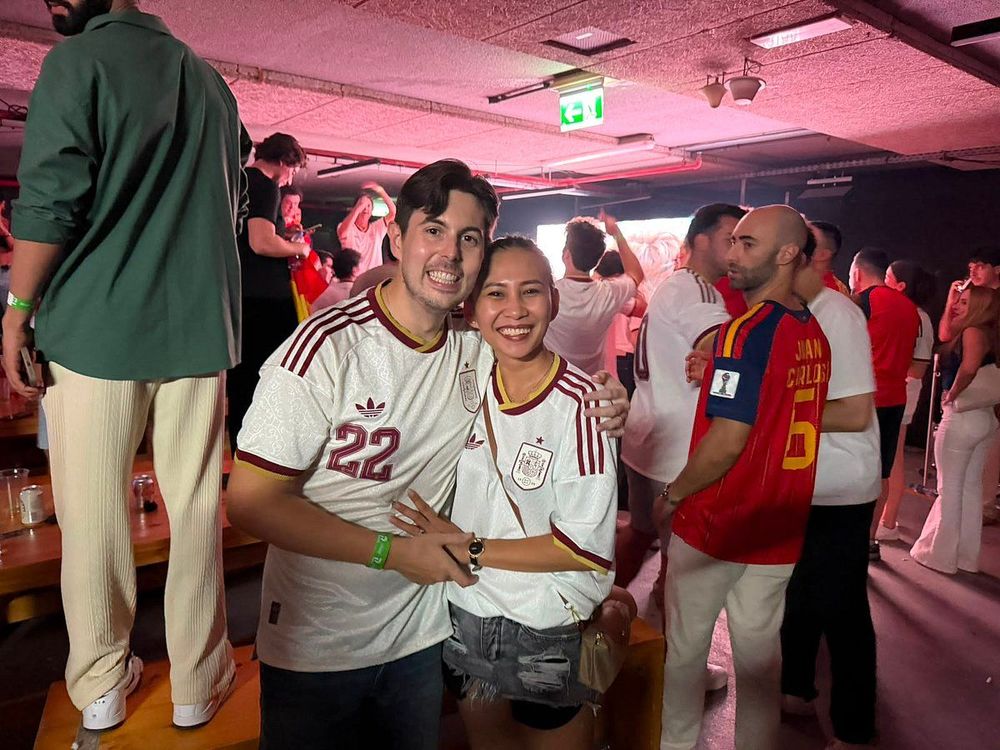
Spanish expats in Dubai celebrate World Cup triumph as Spain's composure, family ties and football's unity shine
Thousands of kilometres from home, Spanish expatriates in Dubai erupted in celebration as their national team secured a historic World Cup victory, defeating Argentina 1-0 in extra time at MetLife Stadium in New Jersey before more than 70,000 fans.
The triumph marked Spain's second men's World Cup title, coming exactly 16 years after their 2010 victory in South Africa, where they also won 1-0 in extra time. More significantly, it made Spain the first nation in history to simultaneously hold both the men's and women's FIFA World Cup titles, following the women's team success in 2023.
"It was so exciting, but also nerve-racking," said Blanca Franco Medina, a Spanish resident in Dubai. "You never know what can happen until the very last minute. I was so anxious watching it, but it was absolutely worth it."
The tension was understandable. Argentina's goalkeeper Emiliano Martínez set a World Cup final record with 11 saves before Ferran Torres finally broke through in the 106th minute to secure Spain's victory.
A multinational celebration
What made the experience particularly special for Spanish expats was Dubai's diversity. With expatriates comprising approximately 88% of the city's 4.47 million population, the celebrations brought together supporters from across the globe.
"Living abroad made it even more special because there were people from so many different nationalities supporting Spain," Blanca explained. "The atmosphere in Dubai was amazing, it almost felt like celebrating back home."
While approximately 2 million fans gathered at Madrid's Cibeles Square to welcome the team home alongside King Felipe VI and Prime Minister Pedro Sánchez, Dubai's fan zones created their own vibrant atmosphere of shared celebration.
Mixed reactions to Argentina's response
The aftermath of the final sparked discussion among Spanish residents about sportsmanship. Some Argentine players drew criticism for their reactions immediately following the defeat.
"I have Argentinian friends, so it was definitely an entertaining night watching everyone's Instagram Stories," Blanca said. "We all saw a few reactions that weren't ideal, but I don't think it's fair to judge an entire country based on the actions of a few people."
Elena Naranjo took a sympathetic view. "It's understandable that the players were devastated. Losing a World Cup final, especially after coming so close, is emotionally overwhelming."
Paz, a lifelong football enthusiast, was less forgiving. "I didn't like their reaction at all. It was disappointing to see some players turn their backs on the champions instead of showing respect. The players are role models for millions of people, especially children. It's important to show respect whether you win or lose."
The match carried particular weight for Argentina, with Lionel Messi becoming only the second player in history to appear in three World Cup finals, matching Brazil's Cafu.
The formula for success
Spanish residents consistently pointed to one quality that defined their team's victory: composure.
"They stayed focused, played as a team, and kept believing until the end," Blanca said. "Talent is important, but teamwork, resilience, and staying calm under pressure are what win finals."
The statistics support this assessment. Spain conceded only one goal throughout the entire tournament across eight matches, the fewest goals allowed by any World Cup winner despite playing more games than any previous champion. The victory also extended Spain's unbeaten streak to 38 games in all competitions, breaking Italy's European record of 37 unbeaten games set between 2018 and 2021.
Paz emphasized Spain's tactical approach. "Spain has a very young generation and doesn't depend on one superstar. They stuck to their style the entire competition, wanting the ball, never dropping back just to protect the score. They dominated from start to finish and probably deserved to win by more than one goal."
The achievement also marked a milestone for Spain's coach Luis de la Fuente, who at 65 became the oldest coach to lead a team to a World Cup title.
Football as family heritage
For many Spanish expats, the victory resonated on a deeply personal level, connecting them to family traditions spanning generations.
"My dad would take my siblings and me to the Real Madrid stadium, so I grew up surrounded by football," Blanca recalled. "My dad was also a football coach, my brother played football, and our family lunches somehow always ended up being about football."
Elena's household bridges two football cultures. "My children's father is Emirati, and I am Spanish, so they are growing up with two football cultures. Their uncles also played football, so you could say football runs through our veins. It wasn't only about the goals or the trophies. It was about the emotions, the respect, the unforgettable moments. Football isn't just in our home, it runs in our blood."
A victory shadowed by loss
For Ana Manjavacas Abad, the final carried profound emotional significance. Her uncle, who had introduced her to football, had passed away just a week earlier.
"It was a very emotional moment," she said. "My uncle, who ignited my passion for football, just passed away last week, so this victory felt like life honouring him, and it made my family and I feel closer, especially as they live in Spain and we are far in these tough times."
Even amid grief, Ana's response to the match emphasized grace. "We need to respect one another and be kind. Being kind will always lead to winning long term, regardless of the outcome."
A tournament that captivated a nation
Beyond the final result, Paz highlighted what made the 2026 World Cup particularly memorable.
"Spain right now holds the World Cup championship for male and female, it is something big," she said. "What I liked most was how unpredictable the tournament was. There were so many surprises, with teams nobody expected to go far, putting the biggest teams under real pressure."
The tournament's reach extended far beyond typical football audiences. As Blanca noted: "Even people I know that don't really follow football, they were into it with their heart and soul."
For Spanish expatriates watching from Dubai's diverse, multicultural environment, Spain's World Cup triumph became more than a sporting achievement. It transformed into a celebration of shared passion, family connections, and the universal language of football that transcends borders and brings communities together.