Tennessee death row inmate Christa Pike conscious and speaking after surviving failed lethal injection
Christa Pike, 50, remains hospitalised under guard six days after a botched execution attempt in which she received two full doses of pentobarbital. Her legal team calls her survival medically unprecedented.
 Omar Al Nuaimi
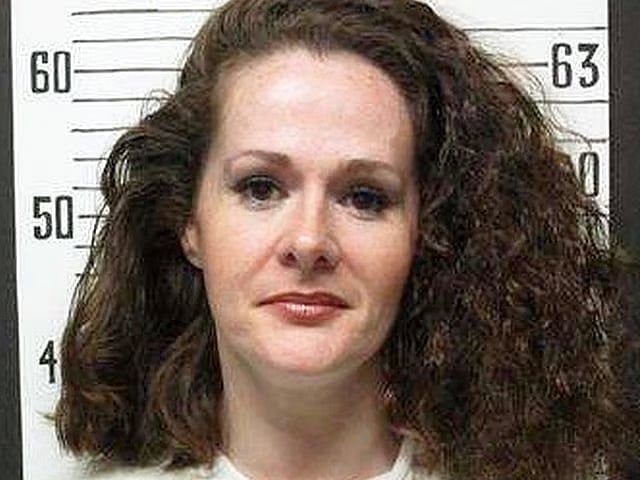
Death row inmate regains consciousness after failed execution
Tennessee death row inmate Christa Pike has regained consciousness and is able to speak six days after surviving a failed lethal injection execution, her attorneys confirmed Tuesday. The 50-year-old remains hospitalised at an off-site medical facility under police guard, where she continues to be restrained with handcuffs and shackles despite severe medical trauma.
Pike's defence team described her survival and ongoing recovery as medically unprecedented, noting she is the only known person in modern United States history to survive after lethal injection chemicals were fully administered.
After remaining unconscious and placed on a ventilator for days following the aborted execution on September 30, Pike's condition has improved significantly. Her lawyers announced that she is now conscious, communicating and receiving critical medical care.
However, her prognosis remains uncertain. Attorneys noted she suffered severe vascular and physical damage during the execution attempt, including severe burns and blistering on her arms where technicians attempted to establish intravenous lines.
Two doses of pentobarbital administered
During the failed procedure, state executioners administered two full doses of pentobarbital, a short-acting barbiturate historically prescribed as a sedative and anti-seizure medication. The drug is now rarely used in clinical medicine but remains widely employed in veterinary euthanasia and state execution protocols.
Standard lethal injection doses of pentobarbital for executions typically range from 2.5 to 5 grams administered intravenously, far exceeding clinical therapeutic doses. Death normally occurs at 2 to 10 grams in most adults.
Despite receiving two full doses, complications during the procedure forced prison authorities to halt the execution more than an hour after it began. Pike was transported by ambulance to a civilian hospital.
Political and administrative fallout
In the wake of the failed execution, Tennessee Governor Bill Lee placed a temporary hold on all upcoming state executions and appointed a former US Attorney to oversee an independent review of state execution protocols. The head of the Tennessee Department of Correction subsequently resigned.
Pike's botched execution adds to a troubling national trend. In 2022, botched executions represented 37 percent of all execution attempts in the United States, with seven out of 19 attempts failing. Research shows lethal injection has been more frequently botched than any other execution method used since 1900.
Renewed clemency appeals
Pike's defence attorneys have renewed calls for Governor Lee to commute her death sentence to life imprisonment without the possibility of parole, arguing that subjecting her to a second execution attempt would constitute unconstitutional cruel and unusual punishment.
However, legal precedent complicates this argument. In the 1947 case Louisiana ex rel. Francis v. Resweber, the US Supreme Court ruled 5-4 that executing a prisoner a second time after mechanical failure did not violate the Eighth Amendment, though that case involved equipment failure rather than drug administration issues.
Criminal history and sentencing context
Pike was sentenced to death in 1996 at age 20 for the 1995 murder of 19-year-old Colleen Slemmer in Knoxville, a crime committed when Pike was 18 years old. Both Pike and Slemmer were enrolled in the Knoxville Job Corps center, a federal job-training program for troubled adolescents, at the time of the murder.
Pike became one of the youngest women sentenced to death in the United States during the post-Furman period and remains the only woman on death row in Tennessee. Since 1976, when the Supreme Court allowed capital punishment to resume, only 18 women have been executed in the United States, representing approximately one percent of all 1,641 executions during that period. The last woman executed was Amber McLaughlin in Missouri in January 2023.
Tennessee has executed only 17 people since 1976, and the state experienced a 40-year gap with no executions from 1960 to 2000.
The sentencing disparities among co-defendants have become a central argument in Pike's clemency appeals. Her boyfriend Tadaryl Shipp, who was 17 at the time of the murder, received a life sentence and is eligible for parole in November 2025. The third participant, Shadolla Peterson, who was 19 at the time, testified against Pike and Shipp and received probation.
In 2001, while already on death row, Pike strangled fellow inmate Patricia Jones with a shoestring, nearly choking her to death. Jones survived the attack.
A court hearing regarding Pike's medical status and legal proceedings is scheduled in Davidson County Chancery Court.