UAE Rolls Out AI-Powered Compass to Help Universities Track Performance in Real Time
The Ministry of Higher Education and Scientific Research has launched the Higher Education Institutions Indicators Compass, a secure national platform that gives universities real-time dashboards, benchmarking tools and AI-assisted data support.
 Mariam Al Mansoori
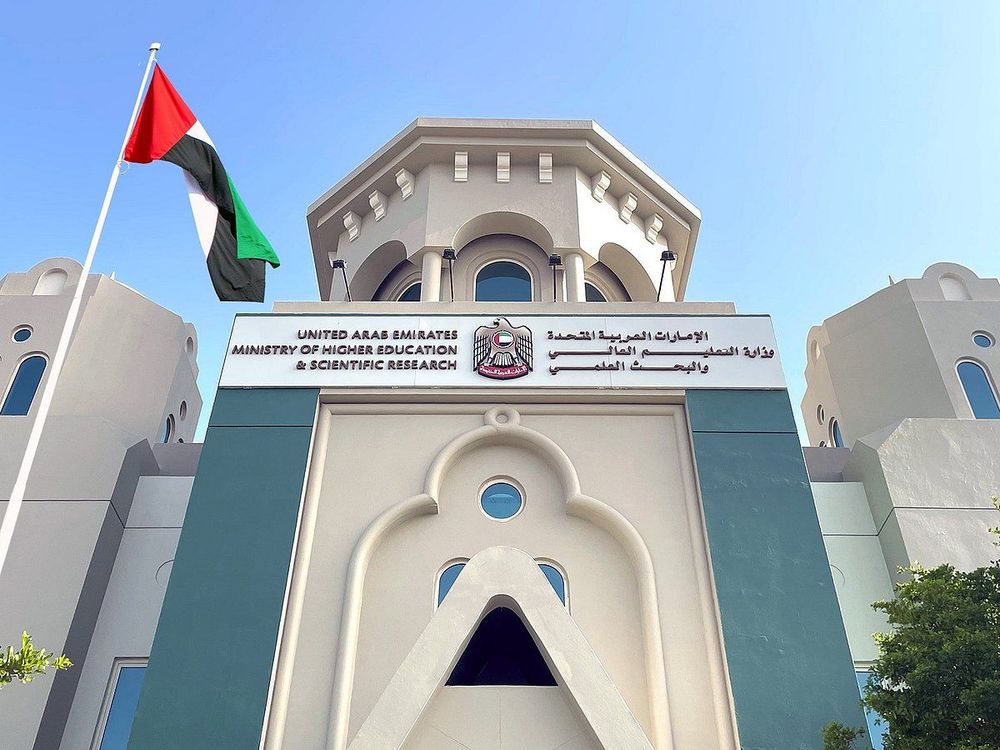
The UAE's Ministry of Higher Education and Scientific Research (MoHESR) has officially launched the Higher Education Institutions Indicators Compass, a secure, unified national electronic platform that lets higher education institutions (HEIs) monitor their performance and make decisions based on data. Centralised, interactive dashboards bring together performance indicators and data quality measures in one place.
The Compass allows institutions to track performance in line with the Outcomes-Based Evaluation Framework (OBEF), monitor data quality indicators, benchmark themselves against peers and identify their strengths and strategic areas for growth. According to the ministry, objective, real-time and reliable data helps foster continuous institutional improvement and supports strategic planning.
A shift to predictive performance management
Dr. Ahmed Sultan Al Shuaibi, Undersecretary of MoHESR, described the launch as a turning point for the sector.
"The launch of the Higher Education Institutions Indicators Compass represents a paradigm shift in our mission to modernise the higher education ecosystem. By equipping institutions with real-time, comprehensive performance insights, we are enabling a critical evolution from retrospective monitoring to proactive, predictive performance management. The Compass embodies MoHESR's commitment to institutionalising continuous evaluation, leveraging advanced data analytics to improve performance and integrating AI to elevate the calibre of our academic outputs and support strategic decision-making."
AI tools and benchmarking
The platform includes artificial intelligence tools that help users navigate the dashboards, understand key indicators and answer data-related queries. The ministry says this speeds up access to insights that support planning and decision-making.
Its benchmarking tools let institutions see where they stand nationally against peer HEIs and compare their results with national averages. The platform visualises overall scores, institutional rankings, relative market positioning and the distribution of results, giving the national context needed to spot competitive advantages and areas for improvement.
Access is restricted to authorised HEI personnel to protect data security. Users can view the latest processed and integrated datasets and check the timestamp of the most recent data refresh. The ministry describes the Compass as a reporting and analytics engine for strategic planning and quality assurance.
What the framework measures
The OBEF, which the Compass tracks, scores institutions on six weighted pillars:
- Employment Outcomes (25%)
- Learning Outcomes (25%)
- Industry Collaboration (20%)
- Research Outcomes (15%)
- Reputation (10%)
- Community Engagement (5%)
It covers 24 key performance indicators, most of them measured at both institution and programme level. That volume of data helps explain why data quality indicators are a central feature of the platform.
MoHESR published an updated OBEF University Guidebook in 2026. Workshops with 735 representatives from all UAE-based HEIs helped refine KPI definitions, calculation methodologies and application procedures. The OBEF itself was adopted in 2025 as part of a streamlined licensing and accreditation system, which the ministry said cut institutional licensure for new institutions from six months to one week and new programme accreditation from nine months to one week.
MoHESR describes the OBEF as part of a system aligned with the UAE's Zero Government Bureaucracy programme, streamlining evaluation and removing the need for institutions to submit extensive, redundant documentation.
Training for university teams
To support the rollout, MoHESR held two introductory workshops attended by more than 370 academic and administrative leaders, quality assurance officers and digital transformation teams from UAE-based HEIs. Participants were introduced to the OBEF methodology and trained to use the platform to improve data quality and achieve strategic outcomes.
Legal and policy backdrop
The ministry presents the Compass as a cornerstone of its wider agenda to future-proof the higher education sector. It supports the aims of the Federal Decree-Law on Higher Education and Scientific Research, which sets a modern framework for governing and developing the sector. That framework centres on the quality of educational outcomes, the use of advanced technologies to improve data efficiency, transparency, and evidence-based planning and decision-making.
Federal Decree-Law No. 31 of 2025 applies to all higher education and technical and vocational (TVET) institutions across the UAE, including those in free zones, and makes all licensed institutions subject to periodic classification and evaluation by MoHESR. It sets out five national frameworks:
- licensing of higher education institutions
- the national qualifications framework
- classification, quality performance and oversight
- scientific research in HEIs
- technical and vocational education and training
The Compass sits within the classification, quality performance and oversight strand.
It also fits alongside other recent measures. In July 2026, the UAE approved a unified national licensing framework for universities, which is aligned with the National Higher Education Institutions Classification Framework introduced in 2024. In its first phase, that framework assessed institutions on four pillars: research and innovation (35%), teaching quality and student life (35%), employment and labour market alignment (20%), and international collaboration (10%). Institutions were split into research and non-research clusters, each with four levels.
Early follow-up
On 1 November 2026, MoHESR's Higher Education Advisory Committee reviewed progress on higher education data governance through the Compass. The Compass gives institutions greater visibility into data quality and performance through real-time data integration with the Ministry.
MoHESR says the platform strengthens institutions' ability to improve the quality of their academic outcomes and align them with labour market needs and national priorities. Through the Compass, it aims to establish a unified national architecture for higher education data management, so that institutions can respond to national development priorities and the demands of the future economy.