UAE's FBMI plans expansion as product sales fund health and education
The Fatima bint Mohamed Bin Zayed Initiative plans to take its commercial model to another 50 regions as it heads toward nine-figure revenue in 2026. The UAE initiative sells carpets and agricultural products to finance community programs, an approach chief executive Maywand Jabarkhyl wants more philanthropic organizations to adopt.
 Mariam Al Mansoori
Sales rather than fundraising
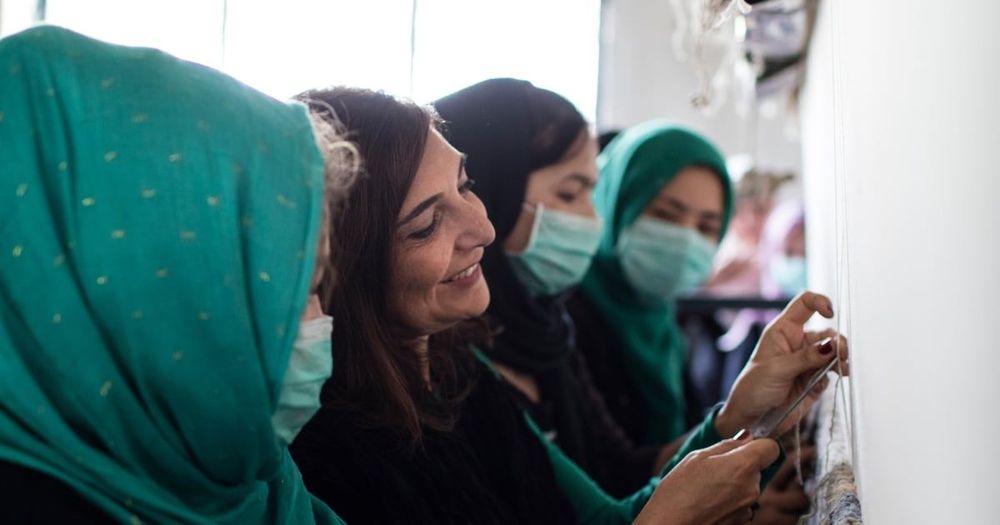
Established by Sheikha Fatima bint Mohamed in 2010, FBMI began with carpet weaving. Its approach starts with identifying retail demand, then helping producers in disadvantaged communities meet that demand and reach international buyers. Profits go back into healthcare, education and other community support.
"We have to change the way the world gives money," Jabarkhyl told The National. "You can look at profit in a very positive manner. You just have to make sure that it's ethical and responsible."
Women receive training to make goods that meet international standards, while FBMI's commercial network connects their work with customers abroad. The initiative also works with rural farms. Buyers include luxury brands, five-star hotels and Emirates airline, which serves produce sourced from rural Afghanistan and Tanzania.
Jabarkhyl contrasts this approach with philanthropy centered on repeated fundraising. He wants customers to choose the products for their quality, whether they are buying a carpet, dried fruit or saffron, rather than treating the purchase simply as a donation.
Revenue is on track to reach nine figures this year, helping pay for healthcare, education, research and development. FBMI is researching opportunities in Kenya, Senegal and Kurdistan as part of its planned expansion into another 50 regions. Separately, its website sets a goal of operating in 50 countries by 2050.
Employment and community services
FBMI's workforce has grown substantially since its early years. In a 2018 Gulf News interview, Jabarkhyl, then identified as executive director, described an increase from 1,800 workers in three Afghan provinces in 2010 to more than 4,000 across 11 provinces. Women accounted for 70% of those employees; about half of the women were widows and their families' sole breadwinners.
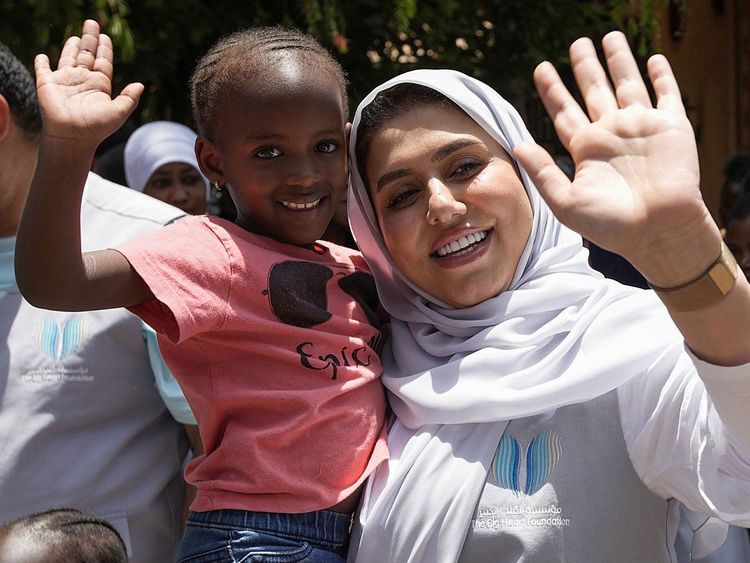
The initiative's current published figures report more than 8,000 people employed, with women representing about 70% of the workforce. FBMI also reports more than 2 million total beneficiaries, more than 20,000 children in school and more than 1.8 million healthcare beneficiaries.
Its health services reach more than 25,000 people a month. They include clinics for mothers and children and vaccination programs covering 11 diseases, among them polio. Other work has addressed sanitation and water access, assisted farmers in Tanzania and delivered digital education to Afghan girls who cannot attend school.
After introducing a strategic advisory arm in 2015, FBMI developed four areas of work: health, education, arts and culture, and strategic advisory, alongside its social enterprises. It has worked with UNICEF and UNHCR and hosted discussions at the World Economic Forum's Annual Meeting in Davos.
Carpets as products and diplomatic gifts
Carpets remain central to both FBMI's business and its cultural work. Gulf News has reported commercial relationships with Bloomingdale's and hotels including Madinat Jumeirah's Minaa Salam. The initiative's carpets also furnish UAE embassies in cities including Washington, London, Brussels and Beirut.
UAE leaders have commissioned carpets for dignitaries including former U.S. President Joe Biden, former French President Nicolas Sarkozy and the late Pope Francis. In 2016, Sheikh Mohamed, now the UAE president, presented Francis with the Tolerance Carpet, woven by Afghan women. UAE Foreign Minister Sheikh Abdullah bin Zayed Al Nahyan also gives FBMI carpets as diplomatic gifts.
"We've become a tool for diplomacy," Jabarkhyl said.
Another strand of that work is the Peace Carpet Project, established in 2014 to counter Afghanistan's "war rug" tradition. According to the UAE Ministry of Foreign Affairs, weavers were invited to work without a predetermined design. The resulting carpets use no chemical dyes and are made entirely from ethically sourced Afghan wool.
Afghan weaving meets UAE art and design
FBMI has commissioned limited-edition carpet designs from Zaha Hadid and Norma Kamali, as well as regional and Emirati creatives including Roudha Al Shamsi and Nada Debs. It is now developing an Abu Dhabi center for arts, crafts, heritage and design, examining contemporary uses for traditional Emirati materials and techniques.
That effort also includes a planned project connecting hand-knotted carpets with Talli and Al-Sadu, Emirati weaving traditions on UNESCO's Intangible Cultural Heritage list. FBMI hopes to restore traditional regional methods for processing goat and camel wool.
For Intimaa: Sacred Threads, ten UAE-based artists and designers are contributing designs for female Afghan master artisans to weave into carpets. Participants include Shamsa Al Omaira, Dhabia Al Qubaisi, Azza Al Sherif and Noura Al Serkal. The project coincides with the Year of the Family.
Emirates News Agency (WAM) and Khaleej Times identify Mubadala Foundation and Dolphin Energy as FBMI's partners, with Abu Dhabi's Cultural Foundation serving as venue partner. They list the exhibition's run as October 15, 2026, through January 9, 2027, under UAE-based independent curator Aysha Al Hemeiri.
The finished carpets are to be exhibited at the Cultural Foundation and auctioned in December. WAM reports that all auction proceeds will support FBMI's health and education work for children in disadvantaged communities.
FBMI also plans to appear at Frieze Abu Dhabi in November. Jabarkhyl sees the wider recognition of its craft and art work as part of the initiative's development, but his ambition extends beyond its own growth: "I'd like to see more organisations undertaking the model that we have," he said. "We just can't keep asking for more and more money every year when it comes to livelihoods."