Real progress means removing barriers, not celebrating women for overcoming them
As the UAE marks Emirati Women's Day with the theme 'We Emerge Stronger and Better,' a critical question arises: should we measure women's strength by how much they can endure, or by how many obstacles we remove from their path?
 Mariam Al Mansoori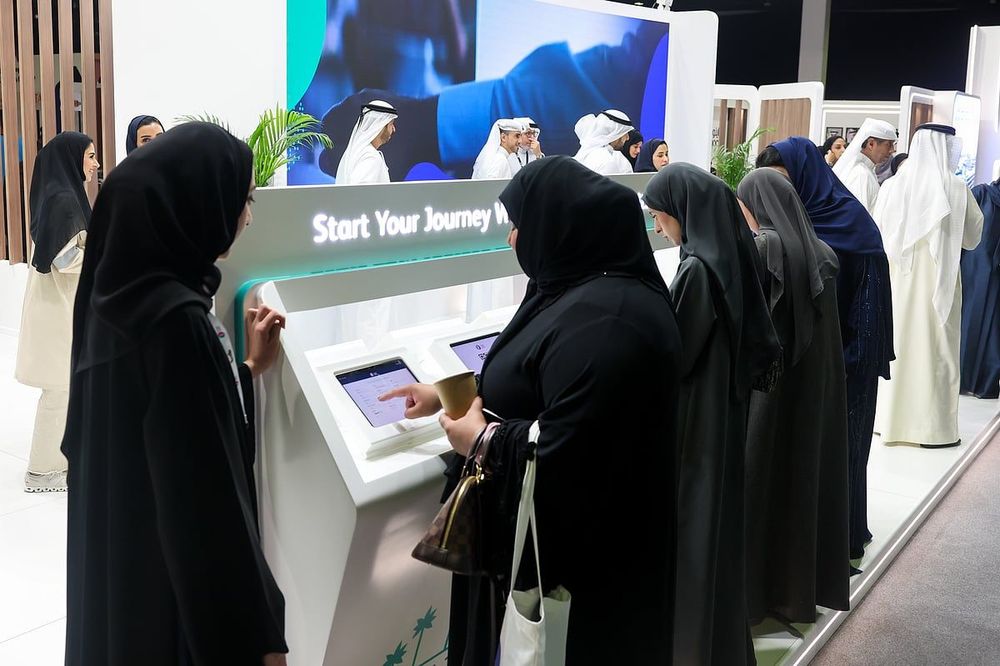
Real progress means removing barriers, not celebrating women for overcoming them
Throughout years of work in humanitarian and development sectors, one lesson has emerged with clarity: genuine strength is rarely displayed through dramatic gestures. Instead, it manifests in the daily decisions women make—to rebuild after setbacks, to nurture families while pursuing personal ambitions, or to begin anew when circumstances shift unexpectedly.
These observations have instilled deep respect for women's resilience. Yet they have also raised an uncomfortable question about a narrative society has perhaps embraced too readily: why do we continue to gauge a woman's worth by her capacity to shoulder burdens, overcome obstacles, and endure hardship?
Celebrating women who succeed despite difficult circumstances is important. But romanticising endless resilience carries a hidden danger. When we repeatedly applaud women for thriving under pressure, we risk normalising those very pressures. Recognition of resilience matters, but it must never substitute for eliminating the need for that resilience in the first place.
Genuine advancement requires reframing the question. Instead of asking how much more women can overcome, we must ask what structural changes are necessary to ensure they no longer face the same barriers repeatedly.
A national model of institutional support
The UAE demonstrates what becomes achievable when women's aspirations align with national vision, deliberate policy, and sustained institutional backing. Emirati women now represent 70 percent of university graduates, while accounting for 56 percent of STEM graduates from government universities. Women's representation on the boards of UAE-listed public joint-stock companies has surged by 200 percent since 2021, rising from 47 board seats to 142 in 2025.
This dramatic shift followed concrete policy action. In 2021, the UAE Securities and Commodities Authority mandated that all public joint-stock companies listed on Abu Dhabi and Dubai stock markets include at least one woman on their boards. A 2024 directive extended this requirement to private joint-stock companies, taking effect in January 2025.
These figures reflect remarkable achievement. Yet behind every statistic lies a complex reality that numbers alone cannot capture. A woman may simultaneously be a leader, entrepreneur, researcher, or professional, while also serving as mother, daughter, caregiver, or mentor. Her ambition does not vanish when her responsibilities evolve. But the conditions enabling her to pursue that ambition may.
This distinction is fundamental.
Beyond linear trajectories
Women's journeys seldom follow straight lines, and neither do their careers. They may pause, return, change direction, assume new responsibilities, or discover entirely different ambitions later in life. Society must not mistake a change in pace for diminished potential, or interpret a career pause as abandonment of ambition.
Yet many systems measuring professional success still privilege continuity above all else. When an uninterrupted career becomes shorthand for commitment or capability, we overlook the experience, judgment, and perspective women bring when they return, redirect, or restart.
This reality demands harder questions—not of women, but of the systems surrounding them.
Can a new mother still envision a credible path to leadership? Is a woman re-entering the workforce recognised for her accumulated value, rather than defined by her time away? Can an entrepreneur access the finance, networks, and markets needed to transform an idea into something sustainable? Can women navigate different life stages without each transition requiring them to prove their dedication anew?
These questions cannot be answered through individual determination alone. They require responses from policymakers, institutions, and communities.
Closing the gap between participation and leadership
While progress is evident, significant gaps persist. Women constitute 66 percent of the UAE public sector workforce, yet hold only 30 percent of leadership positions and just 15 percent of technical and academic roles within that sector. This disparity reveals that representation alone is insufficient—pathways to leadership and technical advancement require deliberate construction.
The UAE's transformation in women's education provides essential context. In 1975, adult literacy stood at 54 percent among men and just 31 percent among women. Today, literacy rates for both genders approach 95 percent, with the female literacy rate reaching 95.8 percent. This educational foundation, built over five decades, underpins current achievements in workforce participation and professional advancement.
Policy milestones have reinforced this progress. In 2018, then-President Sheikh Khalifa bin Zayed Al Nahyan directed authorities to allocate 50 percent of Federal National Council seats to women. A 2020 decree mandated equal pay for women and men performing the same work, embedding gender equality into the country's legal framework.
NAMA's approach to sustainable empowerment
At NAMA Women Advancement—founded in 2015 by His Highness Sheikh Dr. Sultan bin Mohammad Al Qasimi, Ruler of Sharjah, and chaired by Her Highness Sheikha Jawaher bint Mohammed Al Qasimi—our approach rests on a straightforward premise: women do not need institutions to create their potential; they need environments that recognise it, invest in it, and enable its translation into meaningful opportunity and lasting impact.
Through its three affiliates—Sharjah Business Women Council, Irthi Contemporary Crafts Council, and Badiri Education and Development Academy—NAMA has positively impacted over 35,000 beneficiaries across more than 35 countries. Our responsibility extends beyond understanding what women aspire to achieve. It requires identifying what stands between their capabilities and their progress, then working with partners to change those conditions.
A meaningful celebration
As the UAE marks Emirati Women's Day under the theme 'We Emerge Stronger and Better'—now expanded for the first time to a month-long nationwide campaign running from August 28 to September 28, 2026—this distinction becomes particularly significant. The celebration coincides with the UAE's Year of the Family, underscoring the connection between family prosperity and women's roles in societal advancement.
Emirati Women's Day, established in 2015 by Her Highness Sheikha Fatima bint Mubarak, commemorates the founding of the General Women's Union on August 28, 1975. The decision to extend this year's observance to a full month reflects the growing national commitment to women's empowerment.
Yet strength should not mean asking women to carry more simply because they have demonstrated that capacity.
The strength of a society must also be measured by its willingness to evolve: through institutions that dismantle unnecessary barriers, workplaces that recognise diverse pathways to contribution and leadership, and communities that create space for women's ambitions to grow as their lives change.
Emirati women have already demonstrated the depth of their contribution. The measure of the next chapter of progress should not be how many barriers women can continue to overcome, but how many of those barriers society is prepared to remove.
Perhaps that is what becoming 'stronger and better' should mean today: not expecting women to develop infinite resilience, but building institutions, workplaces, and communities capable of evolving alongside them.
The next chapter of women's progress should not be defined by endurance. It should be defined by the opportunities they can pursue, the ambitions they can realise, and the impact they can create at every stage of their lives. When women no longer must prove their strength through what they can withstand, we will have created the space for that strength to be measured by what they can achieve.