Singapore ministers receive first salary increase in 15 years despite already holding world's highest political pay
Prime Minister Lawrence Wong announces significant salary increases for cabinet ministers, raising benchmark pay from S$1.1 million to S$1.8 million annually, while defending the move as essential to attract top talent and maintain clean governance.
 Mariam Al Mansoori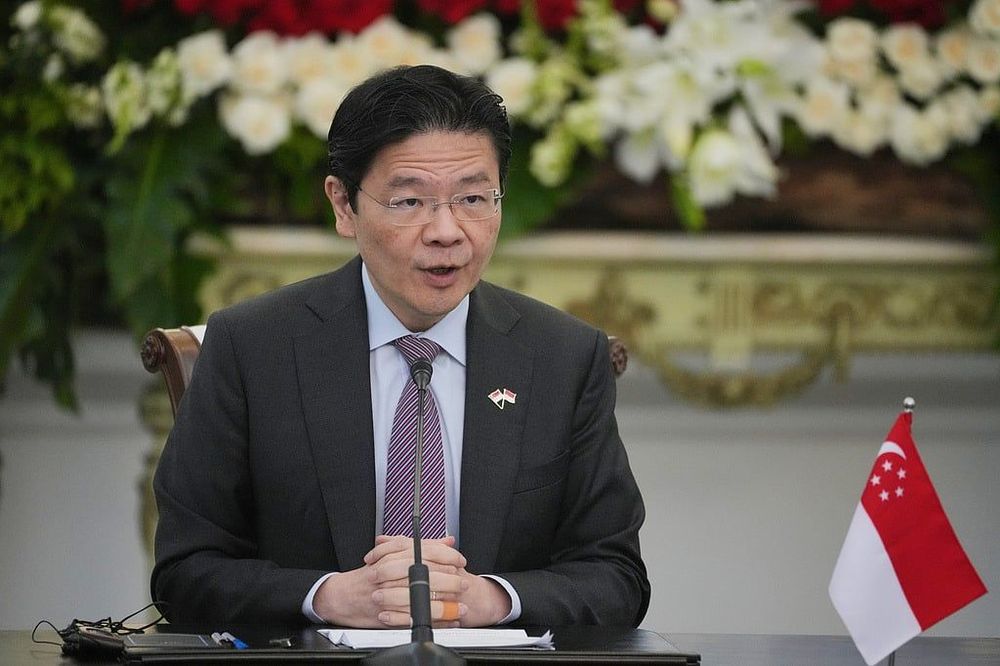
Salary increases: Singapore ministers, among world's highest paid government officials, get first raise in 15 years
Singapore's government ministers will receive their first salary increase in 15 years, Prime Minister Lawrence Wong announced to Parliament on Tuesday, implementing a revised framework that maintains the city-state's position as having the world's highest-paid political leadership.
Under the new structure, the benchmark annual salary for an entry-level minister will rise from S$1.1 million (US$868,330) to S$1.8 million (US$1.42 million), while Wong's own benchmark compensation will increase from S$2.2 million (US$1.7 million) to S$3.6 million (US$2.8 million). Deputy Prime Ministers will see their benchmark salaries jump from S$1.87 million to S$3.06 million, with cabinet ministers earning between S$1.80 million and S$2.88 million depending on seniority and portfolio responsibilities.
Wong, who became Singapore's fourth Prime Minister in May 2024 after succeeding Lee Hsien Loong's 20-year tenure, emphasized that the increases will not be immediately applied at full benchmark levels. Instead, ministers will receive a one-time adjustment of up to 9 percent beginning October 15, with actual amounts determined by individual performance and responsibilities. Most entry-level ministers are expected to earn approximately S$1.35 million (US$1.06 million) by the end of the current parliamentary term.
The Prime Minister announced he would donate his entire salary increase to charity for the next five years, a gesture that would amount to substantial contributions given that a 9 percent adjustment would raise his current compensation to approximately S$2.4 million (US$1.89 million).
Salary methodology and international comparisons
The government's salary framework uses the median income of Singapore's top 1,000 citizen earners as its baseline, applying a 40 percent discount to reflect the nature of public service. For the Year of Assessment 2024, this median stood at S$3.1 million. This benchmark group comprises senior executives including CEOs, CFOs, and company presidents across various industries, as well as high-earning professionals in financial services, law, accounting, medicine, and engineering.
To contextualize the scale of these salaries, Singapore's median monthly wage for workers stood at S$5,775 in 2025, translating to approximately S$69,300 annually. This demonstrates the substantial gap between typical worker compensation and ministerial pay that makes political remuneration a sensitive public issue.
International comparisons further highlight Singapore's exceptional position. According to data from PoliticalSalaries.com, the United States President earns US$400,000 annually, while the British Prime Minister receives US$230,000, both substantially lower than Singapore's prime ministerial salary.
Defending the framework
Wong defended the high compensation structure as fundamental to attracting capable individuals from the private sector and civil service while maintaining governmental integrity. He told Parliament that Singapore addressed political remuneration transparently, with no hidden salary components or undisclosed perks outside the published framework.
Good government did not come naturally to Singapore. It was built deliberately over many years. And there is nothing automatic about sustaining this.
The government pointed to empirical evidence supporting its approach to clean governance. Singapore ranked third out of 182 countries in Transparency International's 2025 Corruption Perceptions Index with a score of 84, maintaining its position as the least corrupt nation in the Asia Pacific region.
Wong acknowledged public scrutiny of ministerial salaries but argued the issue required direct engagement rather than avoidance. He stated that ministerial compensation had increasingly fallen behind comparable earnings in both the private sector and civil service, making the review necessary to give current and future prime ministers better prospects of recruiting capable Singaporeans into political service.
Historical context and political sensitivity
The current salary framework was established following a 2011 review, debated in Parliament in 2012. That review resulted in salary cuts of approximately 36 percent, implemented after the ruling People's Action Party's vote share fell to 60 percent in the 2011 election, an all-time low at that point, amid public concerns over rising housing and transportation costs.
A subsequent review in 2017 recommended salary adjustments, but the government declined to implement them, demonstrating restraint that preceded the current increases. A review scheduled for 2023 was also deferred before this 2026 announcement.
Under the new system, the government will conduct salary framework reviews every five years. The framework will continue to use performance-based compensation rather than automatic progression to benchmark levels, with salaries varying according to individual responsibilities and achievements rather than universal application of the published benchmarks.